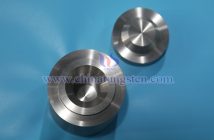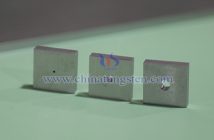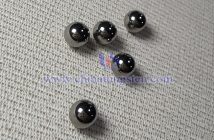
These processes aim to improve surface smoothness, wear resistance, corrosion resistance, and overall performance to meet the application needs of various fields.
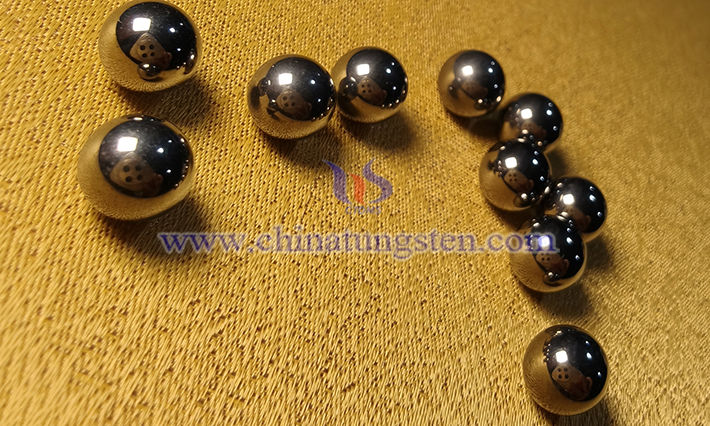
I. Common Tungsten Bead Surface Treatment Processes
1.1 Polishing
Grinding: Using sandpaper or other polishing machines to grind the surface of the tungsten beads to remove layered textures and improve surface smoothness.
Vibration Polishing: Polishing is achieved through collision and friction between the model and the medium; suitable for batch processing of tungsten beads.
Retouch 3D: Using an electrically heated tool, the tool head is heated to a high temperature and then contacts the area to be polished to achieve the polishing effect.
Chemical Polishing or Electrolytic Polishing: Can achieve a mirror finish, further improving the surface quality of the tungsten beads.
1.2 Sandblasting
The operator holds a nozzle and aims it at the tungsten beads for polishing. The machine uses high-speed jets of small beads to smooth the model surface; this method is fast and efficient.
1.3 Coating Treatment:
Tungsten Carbide Coating: Applying tungsten carbide coatings to the surface of tungsten beads using techniques such as physical vapor deposition (PVD) and chemical vapor deposition (CVD) can significantly improve the hardness, wear resistance, corrosion resistance, and high-temperature resistance of the tungsten beads. The hardness of tungsten carbide coatings can reach HV1200 or even higher, depending on the tungsten carbide content in the coating, the spraying process, and post-treatment.
Multilayer Evaporation Coating: Evaporating multiple layers of tungsten, ceramics, and high-temperature metals can comprehensively leverage the advantages of various materials, greatly improving the performance of tungsten beads in extreme environments. For example, the tungsten coating can be used as an intermediate or bottom layer, utilizing its high melting point and good thermal conductivity to withstand high-temperature environments; ceramic coatings (such as tungsten carbide and silicon carbide) can significantly enhance wear resistance; high-temperature metal coatings (such as nickel-based alloys and cobalt-based alloys) can enhance the adhesion between the coating and the substrate, further improving the overall performance of the coating under high-temperature and complex stress environments.
1.4 Surface Alloying
Through specific processes, other elements are uniformly deposited onto the surface of tungsten beads, forming a dense protective film with special properties. This process involves complex chemical reactions and microstructure construction, significantly improving the wear resistance and corrosion resistance of the tungsten beads.
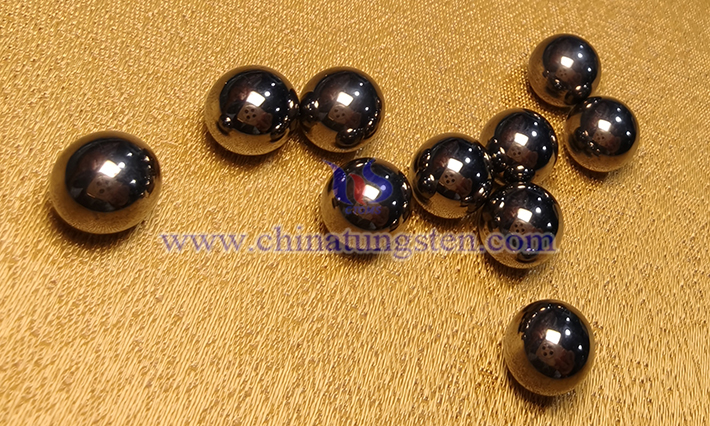
II. Basis for Selecting Tungsten Bead Surface Treatment Processes
2.1 Application Areas: Different fields have different performance requirements for tungsten beads. For example, the aerospace industry requires high wear resistance and high-temperature resistance, therefore tungsten carbide coatings or multi-layer vapor deposition coatings are often used. Meanwhile, grinding and polishing machinery, bearings, and other fields prioritize surface smoothness and wear resistance, thus polishing or sandblasting are more common.
2.2 Performance Requirements: The appropriate surface treatment process should be selected based on the specific operating environment and requirements of the tungsten beads. For example, tungsten beads used in high-temperature environments require coatings with high-temperature resistance; tungsten beads used in corrosive environments require coatings with corrosion resistance.
2.3 Cost Considerations: Different surface treatment processes have different costs, requiring selection based on actual needs and budget. For example, tungsten carbide coatings and multilayer vapor-deposited coatings are relatively expensive but offer excellent performance; while polishing and sandblasting are relatively inexpensive and suitable for applications with lower performance requirements.