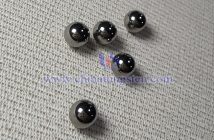
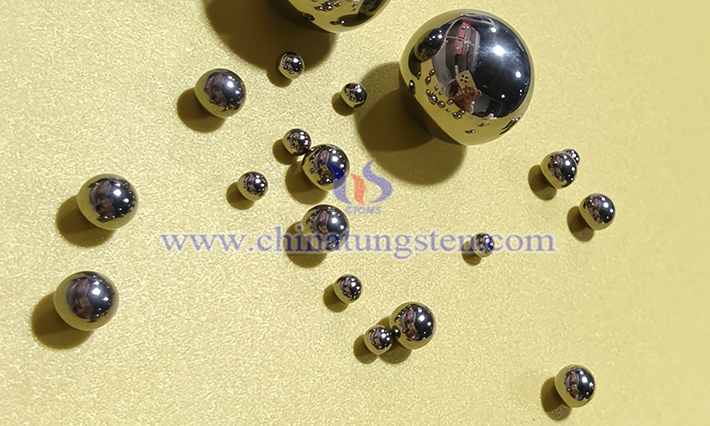
Polishing tungsten beads requires a combination of mechanical and chemical methods, using multi-stage precision operations to achieve a mirror finish. Process parameters must be flexibly adjusted according to the size, shape, and surface quality requirements of the tungsten beads.
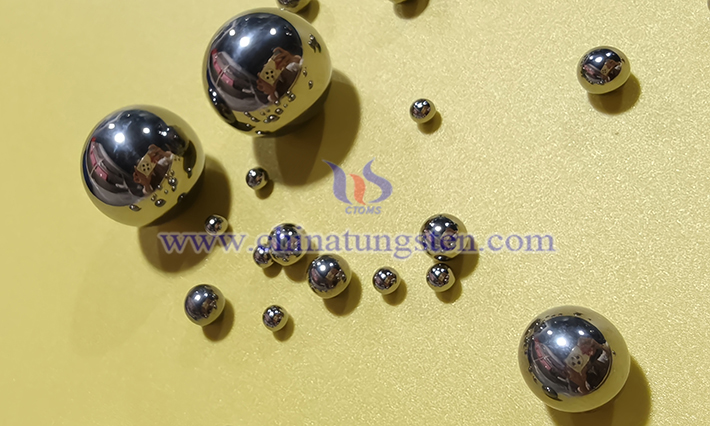
I. Mechanical Polishing Method
Rough Grinding Stage: Use metallographic sandpaper (e.g., 120 grit, 400 grit, 800 grit, 1200 grit) or diamond sandpaper, gradually increasing the grit size. Cool with water or polishing fluid during grinding to prevent overheating and deformation of the tungsten beads. Maintain uniform pressure to avoid excessive localized wear. After grinding, the surface should be free of obvious scratches, and the gloss should be improved.
Fine Polishing Stage: Use W5-7, W8-10, or W20 diamond polishing paste. The finer the particles, the smoother the polishing effect. Apply polishing compound evenly to the surface of the tungsten beads and polish at low speed using a soft wooden stick with the kerf filled with the compound or a polishing machine. Continuously observe the surface during polishing until no visible scratches remain. Ultrasonic polishing can be used with diamond micron powder to further remove minor imperfections.
Final Polishing Stage: Process the surface using a high-precision wire EDM machine (straight-body) or a mirror EDM machine (tapered) to minimize surface roughness. Suitable for tungsten beads requiring extremely high dimensional accuracy.
II. Chemical Mechanical Polishing (CMP)
Using a chemical mechanical polishing pad, a polishing composition is dynamically distributed at the interface between the pad and the tungsten beads. This composition may contain oxidants, arginine or its salts, dicarboxylic acids, iron ion sources, colloidal silica abrasives, and pH adjusters. Through the synergistic effect of chemical etching and mechanical abrasion, the depressions in the tungsten feature areas are reduced, improving surface smoothness. Polishing pressure and time must be controlled to avoid excessive etching that could increase surface roughness.
III. Electrochemical Polishing Method
First, clean the surface of the tungsten beads to remove impurities and contaminants. Then, connect the tungsten beads to the positive electrode and place them in an electrolytic tank for electrolytic polishing. Dissolve any protruding parts on the surface to achieve a mirror finish. Immediately afterward, clean the tungsten beads to prevent residual electrolyte from corroding the surface. Suitable for tungsten beads with complex geometries, it can uniformly improve the overall surface condition. It is less likely to introduce mechanical stress, avoiding surface cracks.
IV. Combined Process Optimization
Dynamic and static liquid combined electrochemical polishing: Coarse polishing uses a high-concentration electrolyte and high flow rate to quickly remove mechanical polishing scratches. Fine polishing switches to a low-concentration electrolyte to improve surface quality and reduce grain boundary corrosion. Polishing time is controlled based on the surface roughness change curve. While ensuring processing speed, a lower polishing pressure is selected to reduce the depth of micro-pits. An acidic polishing solution containing citric acid is used to inhibit the formation of micro-pit morphology.