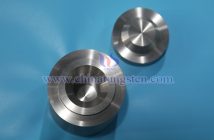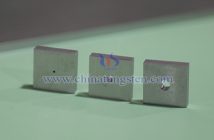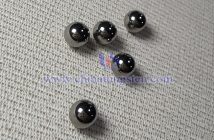
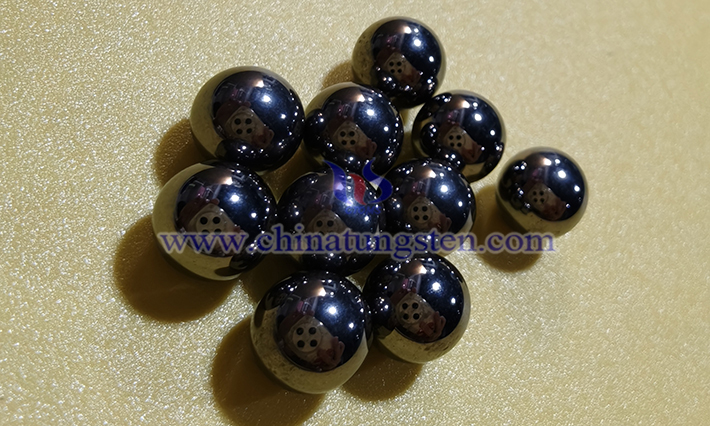
The thermal conductivity of tungsten beads essentially depends on the thermophysical properties of metallic tungsten.
Pure tungsten (W) typically has a thermal conductivity of 170–174 W/(m·K) at room temperature (approximately 20–25°C), which is above average among metals. This is significantly higher than that of steel (approximately 45–50 W/(m·K)) and titanium alloys (approximately 20 W/(m·K)), but considerably lower than that of copper (approximately 398–401 W/(m·K)), silver (approximately 429 W/(m·K)), and aluminum (approximately 235 W/(m·K)).
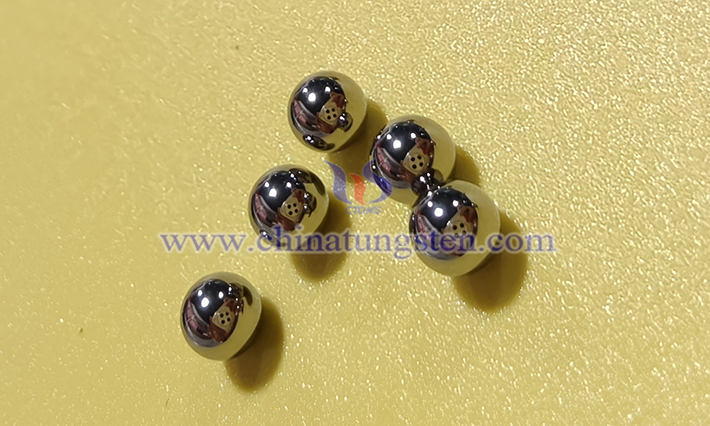
Tungsten's thermal conductivity primarily relies on free electron heat transfer (electronic thermal conductivity dominates, approximately 75–90%), supplemented by a small contribution from phonons (lattice vibrations). In perfect single-crystal tungsten, the room-temperature phonon thermal conductivity is approximately 10–46 W/(m·K). However, in actual polycrystalline tungsten products, phonon contributions are usually suppressed due to grain boundaries, impurities, and defects, with the total thermal conductivity primarily determined by electrons. Tungsten beads are mostly manufactured using powder metallurgy pressing and sintering, which may contain micropores or grain boundaries. This results in an actual thermal conductivity slightly lower than the theoretical value (typically decreasing by 5–15%), but still remaining within the 150–170 W/(m·K) range. Furthermore, the thermal conductivity of tungsten beads generally decreases gradually with increasing temperature.
The thermal conductivity of tungsten beads offers unique advantages in practical applications. For example, in military and shooting applications, tungsten beads (or tungsten alloy bullet cores) require rapid heat dissipation to withstand the high temperatures and pressures within the barrel; in fishing sinkers, the small size and high density (approximately 19.25 g/cm3) of tungsten beads facilitate rapid thermal conductivity, helping to reduce the impact of underwater temperature differences on the fishing line; in industry, tungsten beads are often used in high-temperature grinding or as counterweights, and their thermal conductivity prevents performance degradation caused by localized overheating. Compared to lead weights, tungsten beads offer better thermal conductivity and are more environmentally friendly, gradually becoming a substitute.
However, tungsten beads are not the optimal solution in terms of thermal conductivity. For extremely high thermal conductivity (such as in electronic heat dissipation), copper or silver-based materials are chosen; but if ultra-high melting point (3422℃), high-temperature stability, high density, and corrosion resistance are simultaneously required, tungsten beads are virtually irreplaceable. CTIA GROUP and its parent company, Chinatungsten Online, have been deeply involved in the tungsten and molybdenum products industry for nearly 30 years, specializing in flexible global customization services for tungsten and molybdenum products. They can customize and process tungsten and molybdenum products of various specifications, performance, sizes, and grades according to customer needs. For inquiries, please email [email protected].