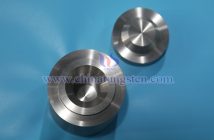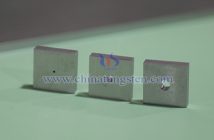
In Tokamak, spherical fusion reactors, laser inertial confinement (ICF), and other nuclear fusion devices, the most prominent and challenging engineering problem is the extreme thermal engineering environment, with heat flux density up to 10–30 MW/m2, accompanied by high-speed plasma particle bombardment, strong thermal shock cycles, and long-term high-temperature operation. Traditional tungsten materials, although possessing ultra-high melting points, are prone to brittle cracking under strong thermal shocks; ordinary tungsten-copper composites, due to larger interface scales and higher interface thermal resistance, struggle to quickly export massive heat. Nano tungsten-copper (Nano-WCu) materials, by compounding tungsten and copper at the nanoscale and strengthening the interface structure, significantly improve the above shortcomings, becoming one of the most promising candidate materials for high-heat-flux components in nuclear fusion.
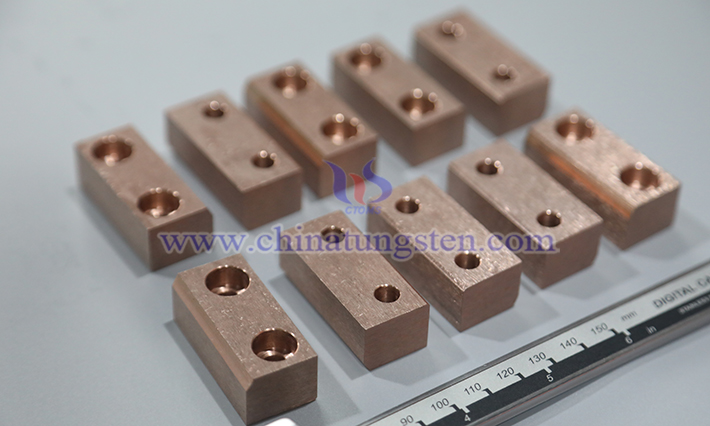
The applications of nano tungsten copper in the aerospace field include manufacturing rocket throat liners, heat dissipation bases for high-power electronic modules, etc.
1. Main Application Directions of Nano Tungsten-Copper in the Nuclear Fusion Field
(1) First wall (Plasma Facing Components, PFC) heat sink materials In Tokamak devices, the first wall is exposed long-term to plasma flows and high-energy particle impacts, requiring the back side to have ultra-high thermal conductivity to quickly remove heat. Nano tungsten-copper, with high thermal conductivity and good thermal shock resistance, can serve as heat sink material to rapidly transfer heat generated by the surface tungsten target to the cooling system, thereby reducing thermal fatigue damage.
(2) Divertor high-heat-flux backplate materials The divertor is the component with the highest heat flux density and most severe damage in fusion reactors, with local heat flux exceeding 20–30 MW/m2. Typical structure is tungsten target surface + high thermal conductivity backplate + cooling channels. Nano tungsten-copper as backplate material has the following advantages: nano interfaces enhance thermal diffusion speed, enabling rapid cooling in millisecond pulses; more resistant to thermal shock, less prone to cracking; capable of withstanding longer service cycles, reducing maintenance costs for future commercial fusion.
(3) High-energy particle beam windows, diagnostic system window heat sinks Fusion devices use a large number of high-energy neutron beams, proton beams, ECRH, and NBI for diagnosis and heating, requiring window materials to handle short-pulse high-energy deposition. Nano tungsten-copper has excellent transient thermal shock resistance, effectively improving window damage resistance and stability.
2. Role Mechanism of Nano Tungsten-Copper Materials in the Nuclear Fusion Field
Nano tungsten-copper excels in extreme nuclear fusion environments mainly relying on three mechanisms:
(1) Nano interfaces enhance thermal diffusion and reduce interface thermal resistance Traditional tungsten-copper interfaces are coarse with high thermal resistance. Nano composite structure multiplies the interface specific surface area, significantly enhancing phonon and electron heat transfer efficiency, giving the material thermal conductivity close to copper but far more stable than copper.
(2) Fine grain strengthening + defect pinning improve thermal shock resistance Nano-scale grain structure can suppress crack initiation and propagation. When subjected to strong thermal shocks, micro-cracks are less likely to expand into macro-cracks inside nano tungsten-copper, thus the material has higher thermal shock lifespan than traditional tungsten.
(3) Better high-temperature strength and stability Nano structure, through solid solution strengthening, dispersion strengthening, and other mechanisms, enables the material to maintain higher strength at high temperatures, less prone to softening or instability.
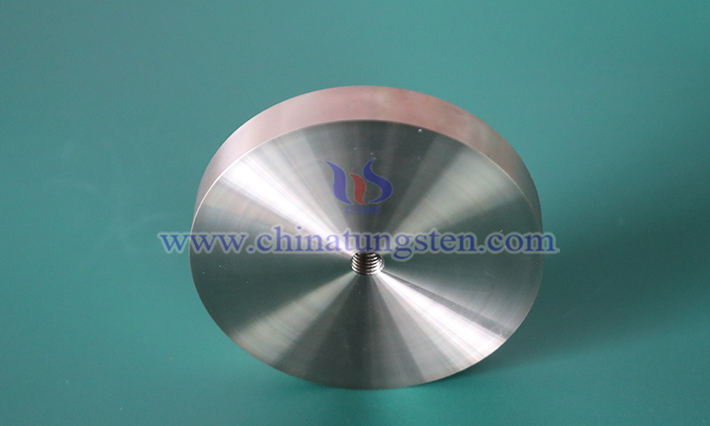
3. Industrial Significance and Application Prospects of Nano Tungsten-Copper in the Nuclear Fusion Field
The core pursuit of commercial nuclear fusion is: longer lifespan, lower maintenance costs, and higher reliability. Traditional materials have limited lifespan under high heat flux, with high maintenance frequency, making it difficult to meet the requirements of commercial reactors for long-cycle continuous operation. Nano tungsten-copper, with advantages of engineerable preparation, scalable production, and excellent thermal management performance, is considered: one of the more engineering-mature solutions among currently manufacturable high-heat-flux materials, a candidate material for DEMO reactors and even future commercial fusion reactors, and a key development direction in the intersection of materials science and nuclear fusion engineering.
With the rapid advancement of additive manufacturing, spark plasma sintering, and nano powder preparation technologies, the engineering application of nano tungsten-copper in extreme nuclear fusion components is accelerating.