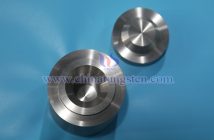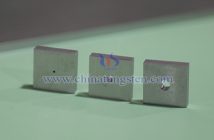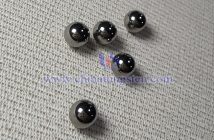
Vacuum sintering provides an oxygen-free, clean, and low-resistance high-temperature environment for cemented carbide rods, making it the most effective and reliable industrial production method to achieve highly densified microstructure, precise composition control, and optimal performance. It is the core process guarantee to ensure that cemented carbide can meet the demanding working conditions such as cutting, drilling, and wear resistance.
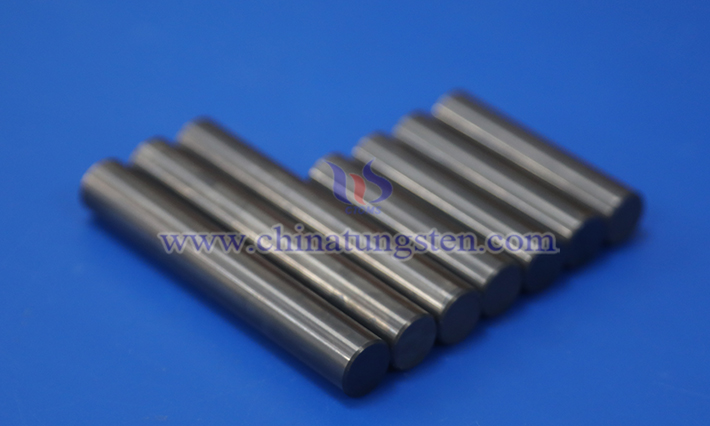
CTIA GROUP LTD Cemented Carbide Rods Pictures
1.Prevent oxidation and decarburization
Core components are sensitive: Cemented carbide is mainly composed of high-hardness tungsten carbide (WC) particles and metallic cobalt (Co) binder phase. Cobalt is highly prone to oxidation at high temperatures, while tungsten carbide undergoes decarburization reactions in oxygen-containing atmospheres (such as generating tungsten oxide or producing η-phase), which severely damages the strength and toughness of the alloy.
Vacuum effect: The vacuum environment (usually pressure below 10 Pa) completely removes oxygen and water vapor, providing a highly clean inert environment for the sintering process, thereby protecting the material composition.
2.Effectively remove impurities and adsorbed gases
Removal of forming agents: During the pressing into green compact rods, forming agents such as paraffin are added. Vacuum sintering can completely decompose and extract these organic substances in the low-temperature stage, preventing their residues from forming carbon impurities or pores.
Exclusion of adsorbed gases: Gases adsorbed on the surface of powder particles (such as nitrogen, hydrogen) can be effectively extracted under vacuum, avoiding the formation of bubbles or pores inside the product.
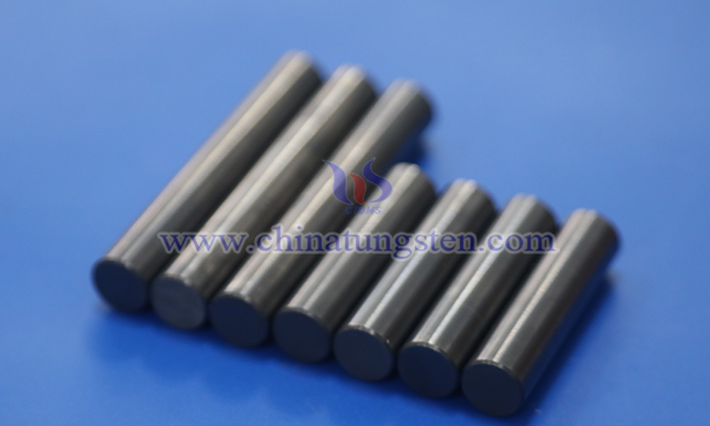
CTIA GROUP LTD Cemented Carbide Rods Pictures
3.Promote densification of the alloy and improve microstructure
Reduce sintering resistance: The vacuum environment reduces the hindrance of gases to material migration (diffusion, flow) between powder particles, which is beneficial to material transport and pore shrinkage.
Promote uniform distribution of liquid phase: When the melting point of cobalt is reached, liquid-phase sintering occurs. The vacuum environment facilitates better wetting and wrapping of tungsten carbide particles by liquid-phase cobalt, and filling of all voids, thereby obtaining a nearly theoretical density and uniformly dense microstructure.
Purify surfaces: Vacuum can "clean" the surface of powder particles, increase their surface energy, enhance sintering activity, and make particle bonding more firm.
4.Improve overall product performance
Through the above mechanisms, vacuum sintering ultimately enables cemented carbide rods to achieve (1) extremely high density and hardness: extremely low porosity and uniform microstructure; (2) excellent strength and toughness: good cobalt phase distribution and strong WC-Co bonding interface; (3) stable chemical composition and consistent quality: no oxidation or decarburization, high batch stability.
Comparison with other sintering methods for cemented carbide rods
Hydrogen sintering: Although hydrogen has reducing properties and can prevent oxidation, it cannot effectively exclude carbon from the green compact (which may cause carburization), and it is difficult to completely remove reduction products (water vapor) of certain impurities (such as oxides), and there is an explosion risk. For high-performance cemented carbide, its purity and uniformity are generally inferior to vacuum sintering.
Hot pressing sintering: Although high density can also be achieved, the equipment is complex, the cost is high, and the product shape is limited, making it unsuitable for large-scale production of long rods.