During the manufacturing of cemented carbide rods, due to multiple factors such as raw material characteristics, process control, and equipment precision, common defects can be summarized into the following categories:
I. Defects related to chemical composition
1.1 Composition segregation
Causes: Uneven mixing of raw material powders, insufficient element diffusion during sintering, or uneven distribution of additives (such as cobalt).
Manifestations: Significant differences in hardness and toughness in local areas, leading to easy fracture or uneven wear during use.
Impact: Reduces product consistency and shortens service life.
1.2 Excessive impurities
Causes: Insufficient purity of raw materials (such as high oxygen content in tungsten carbide), production environment contamination (such as lubricant residues).
Manifestations: Pores or cracks appear on the surface or inside the rod, or mechanical properties decline.
Impact: Weakens impact resistance and increases the risk of processing failure.
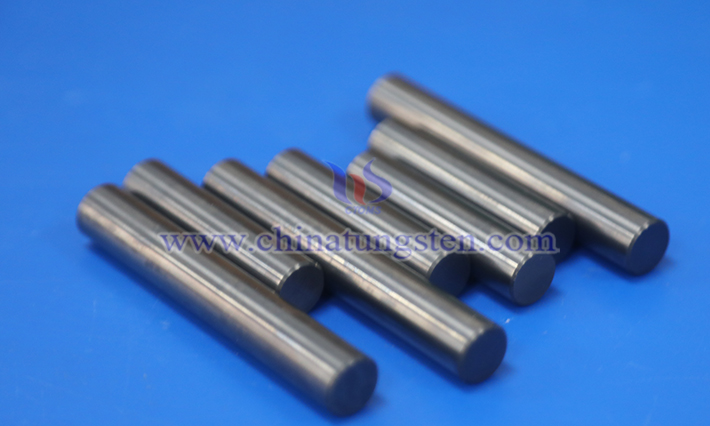
CTIA GROUP LTD Cemented Carbide Rods Pictures
II. Physical structure defects
2.1 Pores and porosity
Causes: Insufficient pressing pressure, low sintering temperature, or too short sintering time, resulting in poor bonding between powder particles.
Manifestations: Microscopic voids exist inside the rod, with loose microstructure.
Impact: Reduces density and hardness, prone to causing fatigue fracture.
2.2 Cracks (surface/internal)
Causes: Thermal stress (too fast cooling rate after sintering, or excessive temperature gradient), mechanical stress (uneven pressure distribution during pressing, or excessive friction during demolding).
Manifestations: Surface cracks or internal hidden cracks, with brittle fracture features visible under a microscope.
Impact: Significantly reduces bending strength, prone to sudden fracture during use.
2.3 Abnormal carbon content
Causes: Improper control of sintering atmosphere (such as decarburization caused by oxidizing atmosphere, or carburization caused by reducing atmosphere).
Manifestations: Decarburization leads to η-phase (brittle phases such as Co?W?C) on the surface and reduced hardness; carburization increases free carbon, forming graphite phase and reducing toughness.
Impact: Deteriorates overall mechanical properties and shortens tool life.
III. Dimensional and shape defects
3.1 Dimensional deviation
Causes: Mold wear, pressing pressure fluctuations, or miscalculation of sintering shrinkage rate.
Manifestations: Diameter, length, or roundness does not meet tolerance requirements.
Impact: Affects subsequent processing accuracy or assembly compatibility.
3.2 Bending and deformation
Causes: Improper support during sintering, thermal deformation caused by temperature gradient, or stress release after demolding.
Manifestations: Rod bending exceeds the standard, requiring additional straightening process.
Impact: Increases production costs and reduces the qualified rate of product straightness.
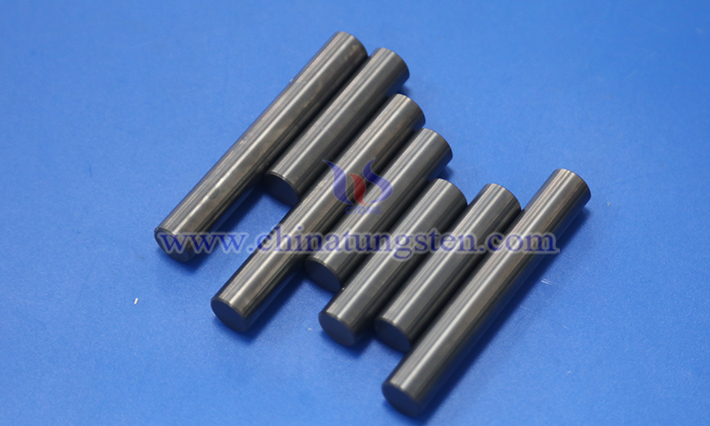
CTIA GROUP LTD Cemented Carbide Rods Pictures
IV. Surface quality defects
4.1 Excessive surface roughness
Causes: Insufficient mold surface finish, too low pressing pressure, or lack of surface treatment after sintering.
Manifestations: Uneven surface, affecting the efficiency of subsequent grinding processing.
Impact: Increases processing costs and reduces surface integrity.
4.2 Oxide layer/contamination layer
Causes: Improper control of sintering atmosphere (such as oxidizing atmosphere) or humid storage environment.
Manifestations: Surface appears dark gray or covered with oxides, requiring pickling or sandblasting treatment.
Impact: Weakens surface bonding strength and affects coating adhesion.
V. Process control defects
5.1 Sintering temperature deviation
Causes: Temperature sensor error, aging of heating elements, or poor furnace temperature uniformity.
Manifestations: Local over-sintering (coarse grains) or under-sintering (insufficient bonding).
Impact: Leads to performance fluctuations and reduces batch consistency.
5.2 Unstable pressing pressure
Causes: Hydraulic system leakage, pressure sensor failure, or mold wear.
Manifestations: Uneven green compact density, resulting in deformation or cracking after sintering.
Impact: Increases scrap rate and raises production costs.
VI. Microstructure defects
6.1 Abnormal grain growth
Causes: Excessive sintering temperature or too long holding time, leading to coarsening of tungsten carbide grains.
Manifestations: Large-sized grains visible under a microscope, with reduced hardness but possibly improved toughness (requires balance).
Impact: Deteriorates wear resistance and shortens tool life.
6.2 Cobalt pooling (Co Pooling)
Causes: Cobalt phase migrates and aggregates during sintering, forming local high-cobalt regions.
Manifestations: Uneven distribution of cobalt phase in the microstructure, forming "pool-like" structures.
Impact: Reduces impact resistance and easily triggers the propagation of micro-cracks.