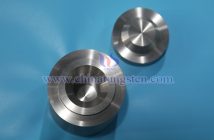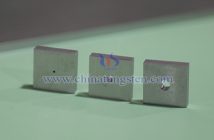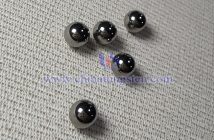
The most fundamental reason why cemented carbide rods have strong wear resistance is that they contain a large amount of extremely hard, extremely stable, and high-melting-point tungsten carbide hard phase, which is firmly bonded together by a binder phase (such as metallic cobalt), forming a wear-resistant and not easily fractured composite material system that performs excellently under various wear mechanisms (abrasive, adhesive, fatigue, oxidative). This is also why wire drawing dies, cold heading dies, mining drill bits, cutting tools, and other extreme wear-resistant working conditions almost all rely on cemented carbide.
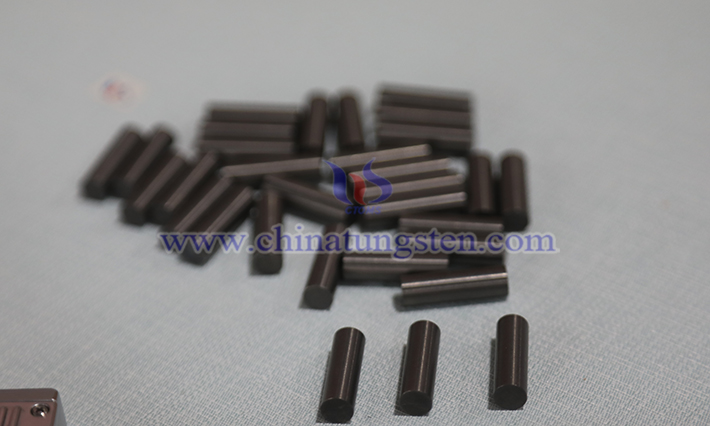
CTIA GROUP LTD Cemented Carbide Rods Pictures
The main reasons for the wear resistance of cemented carbide rods:
1.Extremely high hardness (inherently difficult to wear away)
The main component of cemented carbide is tungsten carbide (WC), with a Vickers hardness of 1500–2000 HV, or even higher (equivalent to HRC 85–93). In comparison, ordinary high-speed steel is only HRC 62–68, bearing steel GCr15 is about HRC 60, and ceramic tools are only 1800–2200 HV. High hardness means it is not easily cut, plowed, or worn during friction.
2.High elastic modulus and rigidity (strong resistance to deformation)
The elastic modulus of cemented carbide is about 2–3 times that of ordinary steel (≈550–700 GPa). When subjected to force, microscopic areas are not prone to plastic deformation, the contact surface will not easily collapse or produce furrows, thereby significantly reducing abrasive wear and fatigue wear.
3.Perfect combination of tungsten carbide hard phase + cobalt binder phase
Tungsten carbide (WC) particles themselves have extremely high hardness and high melting point (2870℃), making them truly wear-resistant materials. Cobalt (Co), as the binder phase, firmly bonds the WC particles together while providing a certain degree of toughness. When hard particles (such as quartz sand, alumina, etc.) rub against it, the softer cobalt will be worn away a little first, but more sharp WC particles are exposed, which instead continues to maintain wear resistance like self-sharpening (similar to the self-sharpening effect of a grinding wheel).
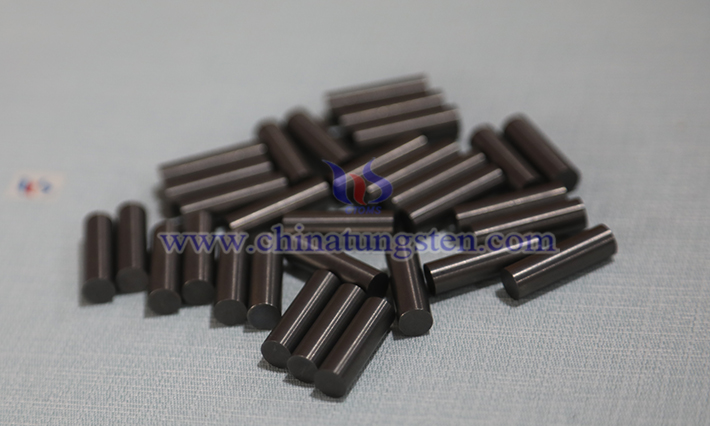
CTIA GROUP LTD Cemented Carbide Rods Pictures
4.Excellent retention of high-temperature hardness (strong red hardness)
Ordinary tool steel experiences a sharp drop in hardness around 600℃, while cemented carbide can still maintain very high hardness even at 800–1000℃. This is particularly important in high-speed cutting, dry friction, and high-temperature friction environments, where ordinary materials have already softened and worn away, but cemented carbide can still maintain wear resistance.
5.Excellent resistance to adhesive wear
Cemented carbide has low surface energy and a small tendency to adhere to most metals (especially iron-group metals), making it less prone to cold welding, bonding, and tearing, so adhesive wear is also very light.
6.The finer the grain size, the stronger the wear resistance often is
Nowadays, many ultra-fine grain (0.2–0.5μm) and nanoscale cemented carbides can achieve hardness above HV 1800–2200, while also having better toughness, with wear resistance improved to another level compared to traditional coarse-grain (1–5μm) ones.