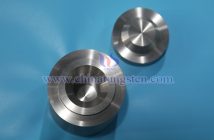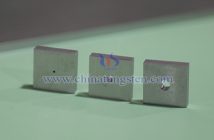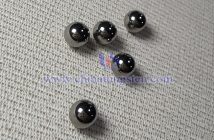
Cemented carbide rods, with their unique composition and structure, exhibit good applicability in a variety of corrosive environments, such as acidic environments (non-strongly oxidizing), oxidative high-temperature environments, salt spray environments, chemical and petroleum environments, and atmospheric and general humidity environments.
I. Principle of Corrosion Resistance of Cemented Carbide Rods
Cemented carbide rods are mainly composed of carbides (such as tungsten carbide WC, titanium carbide TiC) and metal binders (such as cobalt Co, nickel Ni). The carbide particles themselves have high chemical stability and can resist erosion by most acid and alkali solutions; the metal binder is responsible for bonding the carbide particles, imparting toughness and strength to the alloy. However, the activity of the metal binder (especially cobalt) may become a breakthrough point for corrosion, so its corrosion resistance is influenced by the composition, microstructure, surface condition, and environment.
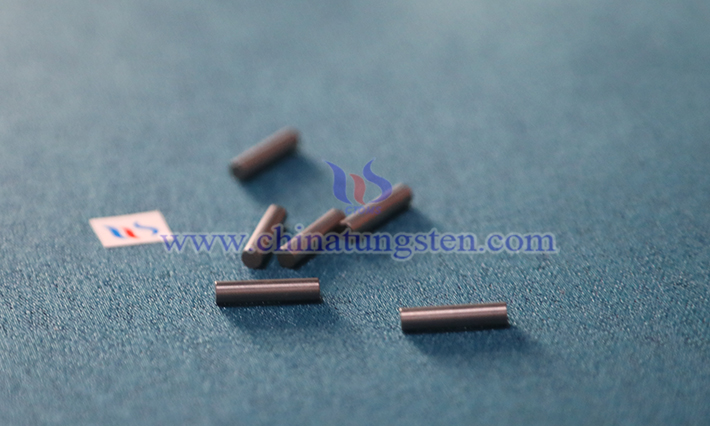
II. Applicable Environments and Specific Performance of Corrosion-Resistant Cemented Carbide Rods
2.1 Acidic Environments (Non-Strongly Oxidizing)
In weakly acidic or moderately acidic environments, the corrosion resistance of cemented carbide rods is superior to that of ordinary steel. For example, in dilute sulfuric acid, dilute hydrochloric acid, and other media, the stability of carbide particles can slow down the corrosion process. However, in strongly oxidizing acids (such as concentrated nitric acid and concentrated sulfuric acid), the oxidation and dissolution of the metal binder may be accelerated, leading to intensified corrosion. At this time, nickel-based binders or low-cobalt content alloys should be selected to improve corrosion resistance.
2.2 Oxidative High-Temperature Environments
In high-temperature oxidative atmospheres (such as air and steam), a dense oxide layer (such as cobalt oxide or nickel oxide) may form on the surface of cemented carbide rods, providing a protective effect. For example, in high-temperature cutting or hot processing below 1000℃, its corrosion resistance and red hardness (high-temperature hardness) perform excellently. However, if the oxide layer is loose or prone to spalling (such as in long-term dry-wet alternating environments), corrosion may accelerate, and surface modification (such as spraying ceramic coatings) is needed to enhance protection.
2.3 Salt Spray Environments
In marine or humid salt spray environments, the corrosion resistance of cemented carbide rods is superior to that of ordinary carbon steel. The formation rate of salt film on its surface is slower, and the stability of carbide particles can reduce the risk of pitting corrosion. Through nitriding treatment or electrochemical oxidation, a denser protective layer can be formed on the surface, further extending the service life.
2.4 Chemical and Petroleum Environments
In chemical equipment or petroleum extraction containing corrosive media (such as weak acids, weak bases, and organic solvents), the wear and corrosion resistance of cemented carbide rods make them ideal materials for manufacturing valves, pump bodies, and drilling tools. For example, in petroleum extraction, their resistance to hydrogen sulfide (H?S) corrosion is superior to that of ordinary alloy steel. For specific media (such as chlorine ion-containing environments), cemented carbide with nickel binder or added chromium (Cr) should be selected to form a passivation film to inhibit corrosion.
2.5 Atmospheric and General Humidity Environments
In conventional atmospheric or medium humidity environments, the corrosion resistance of cemented carbide rods is excellent, with almost no need for additional protection. Its low expansion coefficient and stable dimensions make it the preferred material for precision molds and measuring tools.