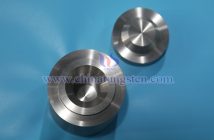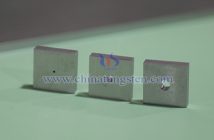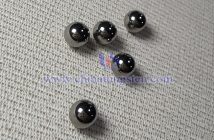
The high-temperature resistance of cemented carbide rods is excellent, especially the hardness retention at high temperatures far exceeds high-speed steel. However, its weakness is insufficient high-temperature oxidation resistance, which can be improved through coating or composition optimization.
1. High-temperature characteristics of cemented carbide rods
Strong high-temperature hardness retention: Cemented carbide can maintain relatively high hardness at high temperatures (usually 800°C~1000°C), while high-speed steel experiences significant hardness drop above 500°C. This makes it suitable for high-speed cutting, high-temperature processing, and other scenarios.
Extremely high melting point: The main component tungsten carbide (WC) has a melting point of approximately 2870°C, cobalt (Co) binder phase melting point approximately 1495°C, and the overall material structure remains stable below 1000°C.
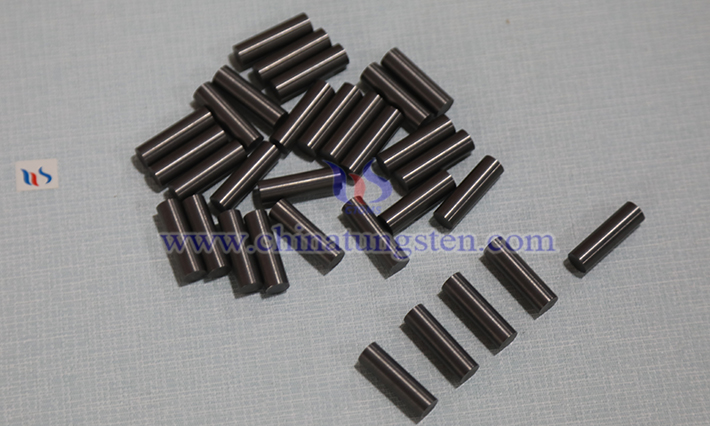
2. Performance changes of cemented carbide rods at high temperatures
Poor oxidation resistance: Cemented carbide is prone to oxidation above 500°C~800°C, forming loose oxide layers on the surface (such as WO?, CoO), which may lead to performance degradation. Oxidation resistance can be improved by coating (such as TiN, Al?O?) or adding TaC, Cr?C?, and other carbides.
High-temperature creep: Above 1000°C, the cobalt binder phase may soften or flow, leading to slow material deformation (creep), but it still performs better than most tool steels.
3. Common application temperature ranges for cemented carbide rods
Uncoated cemented carbide: Recommended long-term operating temperature not exceeding 800°C~900°C; short-term high temperature (such as 1000°C) may be tolerated, but accelerates oxidation or wear.
Coated cemented carbide: Surface coatings (such as physical vapor deposition or chemical vapor deposition of Al?O?, TiAlN coatings) can improve oxidation resistance, raising operating temperature to 1000°C~1200°C, suitable for higher-speed dry cutting.
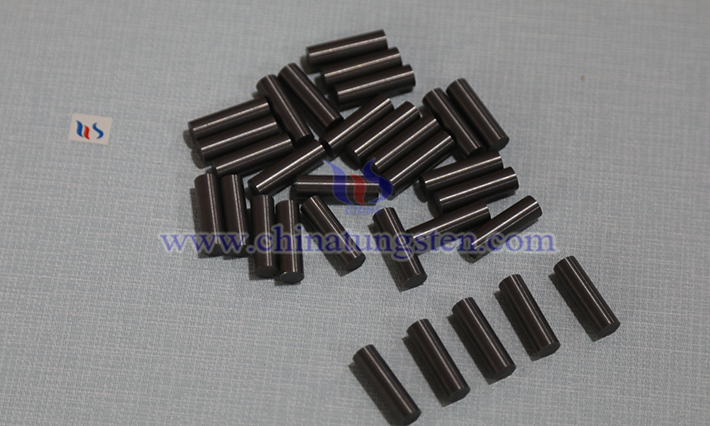
4. Factors affecting high-temperature resistance of cemented carbide rods
Composition and structure:
Cobalt content: Lower cobalt content generally results in higher high-temperature hardness, but toughness may decrease.
Grain size: Ultrafine grain cemented carbide has better strength retention at high temperatures.
Additives: Adding TiC, TaC, etc., can improve high-temperature strength and oxidation resistance.
Usage environment:
In vacuum or inert gas, cemented carbide can withstand higher temperatures (above 1200°C) because oxidation problems are avoided.
5. Main application scenarios for high-temperature resistant cemented carbide rods
Cutting processing: High-speed dry cutting, processing of difficult-to-machine materials (such as high-temperature alloys).
High-temperature molds: Such as copper alloy and aluminum alloy die-casting molds, requiring repeated heating of molten metal.
Wear-resistant parts: High-temperature furnace guide rails, rolls, etc., working in high-temperature wear environments.
Aerospace/energy fields: Rocket nozzles, high-temperature sealing rings, and other special components (usually requiring coating or special alloy formulations).