At room temperature, the thermal conductivity of cemented carbide rods generally ranges from 70-110 W/(m·K), significantly higher than steel but lower than pure aluminum or copper. The specific value needs to be determined based on cobalt content, grain size, and additives. Some high cobalt content or special grades may be below this range. Certain high-purity tungsten carbide or fine-grain grades may be slightly higher.
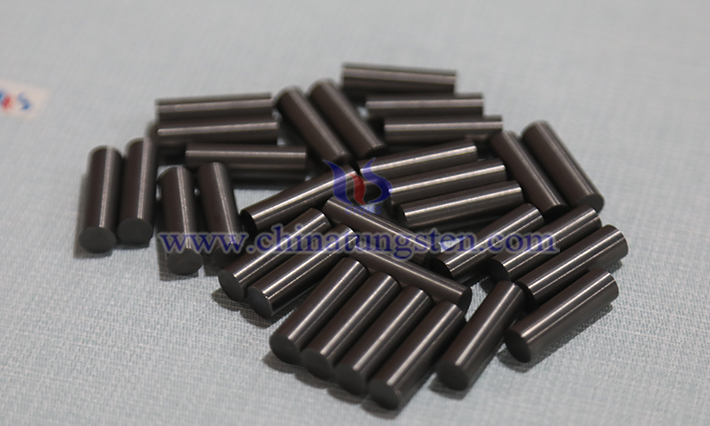
Main factors affecting the thermal conductivity of cemented carbide rods:
Cobalt (Co) binder phase content
Cobalt's thermal conductivity (approximately 100 W/(m·K)) is lower than tungsten carbide (approximately 110-120 W/(m·K)), but increasing cobalt content usually reduces overall thermal conductivity because cobalt disrupts the continuity of tungsten carbide grains. At low cobalt levels, tungsten carbide forms a continuous network with higher thermal conductivity; higher cobalt content (e.g., >10%) may reduce thermal conductivity.
Tungsten carbide (WC) grain size
Finer grains result in more grain boundaries, enhancing phonon scattering and usually lowering thermal conductivity. Coarse-grain cemented carbides generally have better thermal conductivity than fine-grain grades.
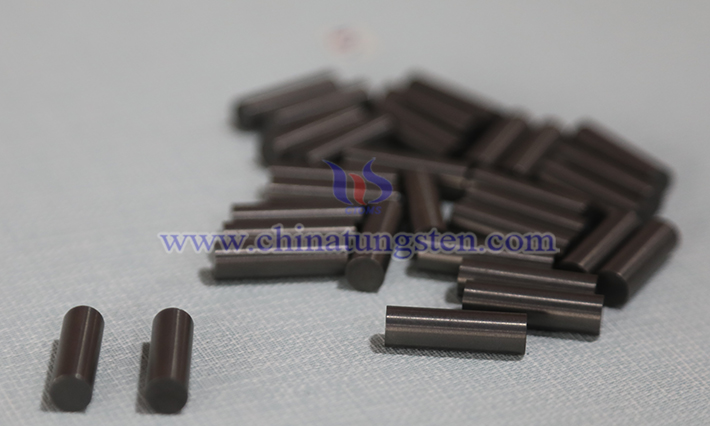
Composition and additives
Adding titanium carbide (TiC), tantalum carbide (TaC), etc., significantly reduces thermal conductivity (due to their much lower thermal conductivity than WC). High-purity WC-Co alloys have the best thermal conductivity.
Temperature
The thermal conductivity of cemented carbide decreases slowly with increasing temperature, but the change is relatively gentle (different from metals).