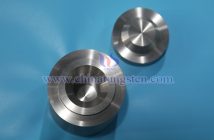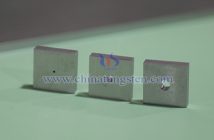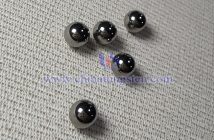
Cemented carbide balls for precision machine tool guide bearings are spherical components made by sintering high-hardness refractory metal carbides (such as tungsten carbide WC, titanium carbide TiC) as the main component and cobalt (Co), nickel (Ni), or molybdenum (Mo) as a binder through powder metallurgy. They possess high hardness, wear resistance, corrosion resistance, and bending resistance, and play a crucial role in load transmission and motion conversion in precision machine tool guide bearings, significantly improving bearing performance and lifespan.
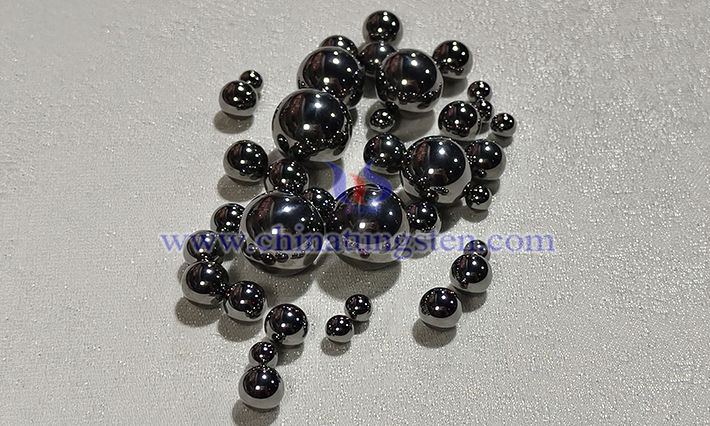
I. Material Properties of Cemented Carbide Balls for Precision Machine Tool Guide Bearings
High Hardness: Cemented carbide balls typically have a hardness of HRA90-92, approaching diamond levels, effectively resisting wear and maintaining dimensional stability even under heavy loads or high-speed operation.
Wear Resistance: Its wear resistance is tens to hundreds of times that of traditional steel balls, significantly reducing wear caused by friction and extending bearing life.
Corrosion Resistance: It exhibits excellent resistance to acids, alkalis, and high-temperature oxidizing environments, making it suitable for use in harsh conditions such as marine engineering and corrosive environments in chemical equipment.
Bending Resistance: Through a reasonable formula (such as the addition of cobalt) and sintering process, cemented carbide balls possess sufficient impact resistance and can withstand large radial and axial loads.
II. Application Advantages of Cemented Carbide Balls for Precision Machine Tool Guide Bearings
Improved Bearing Performance: The high hardness and wear resistance of cemented carbide balls significantly reduce the bearing friction coefficient, improve transmission efficiency, and reduce energy loss.
Extended Service Life: Under high-speed, heavy-load, or harsh conditions, cemented carbide balls maintain a longer service life, reducing replacement frequency and maintenance costs.
Adaptability to Extreme Conditions: Its high-temperature resistance and corrosion resistance enable bearings to operate stably under extreme conditions such as high-temperature furnaces, aero-engines, and marine engineering.
Improving Machining Accuracy: High-precision ball bearings can reduce vibration and noise during bearing operation, and improve the machining accuracy and surface quality of machine tools.
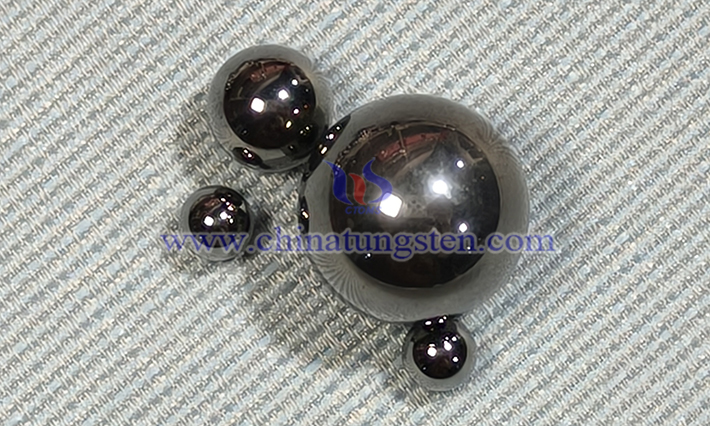
III. Manufacturing Process of Cemented Carbide Ball Bearings for Precision Machine Tool Guideways
Powder Preparation and Mixing: Micron-sized powders such as tungsten carbide and titanium carbide are mixed with binders such as cobalt and nickel in a certain proportion to ensure uniform composition.
Forming and Pressing: The mixed powder is pressed into ball blanks using cold or hot-pressing processes to initially form a spherical structure.
Sintering: High-temperature sintering is carried out in a vacuum furnace or hydrogen reduction furnace to form a metallurgical bond between powder particles, improving the density and strength of the ball bearings.
Fine Grinding and Polishing: Multiple fine grinding processes are used to control the diameter tolerance of the ball bearings within a very small range, and polishing is performed to a high surface finish to reduce the coefficient of friction and vibration noise.