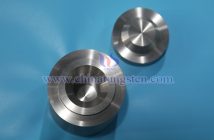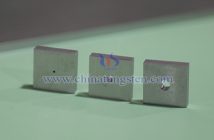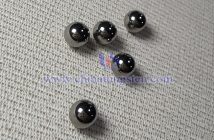
Cemented carbide grinding media balls are a key consumable in grinding and dispersing processes. They are dense composite materials mainly made of tungsten carbide powder and cobalt binders, sintered under high temperature and pressure using powder metallurgy. Tungsten carbide provides unparalleled hardness, while cobalt imparts the necessary toughness, preventing breakage during use. This combination makes their performance far superior to steel balls, ceramic balls, or zirconia balls, making them ideal tools for high-efficiency pulverization and fine grinding of materials.
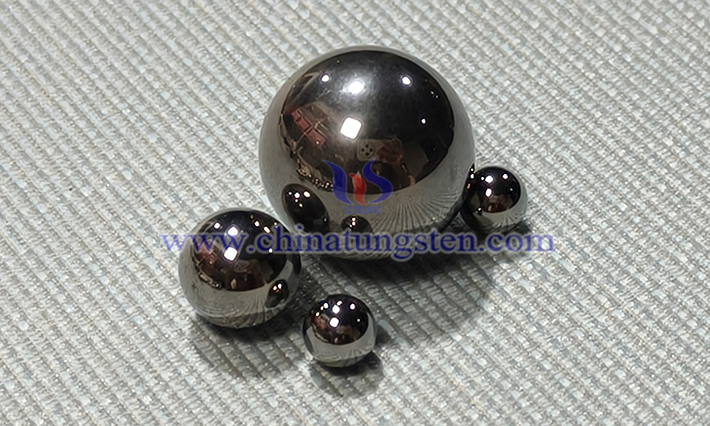
I. Characteristics of Cemented Carbide Grinding Media Balls
High Hardness and Wear Resistance: Cemented carbide has a hardness second only to diamond. During long-term, high-intensity grinding, it experiences minimal wear and maintains stable dimensions and shape, thus ensuring grinding efficiency and consistent product particle size.
High Density: Cemented carbide balls have a very high density (typically approximately 14-15 g/cm3). High density results in significant impact energy, allowing for more effective particle crushing during rolling or collision in grinding equipment (such as ball mills and sand mills), greatly improving grinding efficiency and fineness.
Excellent corrosion resistance: It can withstand various chemical solvents and weak acid/alkali environments, making it suitable for wet grinding applications such as electronic materials, ceramic glazes, and paints, without affecting product purity due to contaminant materials.
Extremely long service life: Due to its exceptional wear resistance, cemented carbide grinding balls have a very long replacement cycle, far exceeding that of grinding balls made of other materials. Although the initial purchase cost is higher, the overall cost over the long term is often more economical.
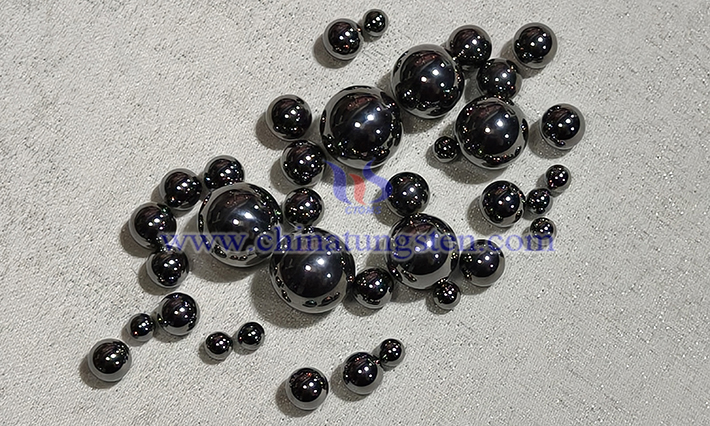
II. Applications of Cemented Carbide Grinding Media Balls
High-tech materials: Grinding lithium battery positive and negative electrode materials (such as lithium cobalt oxide and lithium iron phosphate), rare earth materials, ceramic powders, phosphors, magnetic materials, etc., to obtain submicron or even nanoscale ultrafine powders.
Mining and metallurgy: Used for fine grinding and analysis of high-value ores (such as gold ore) in laboratories or for small-batch processing.
Chemical and Pharmaceutical Industries: Grinding high-purity pigments, dyes, pharmaceutical intermediates, and high-end coatings to ensure products are pollution-free and have uniform particle size distribution.
Research and Laboratories: Serving as a standard medium in various scientific research experiments requiring precise, controlled, and pollution-free grinding.