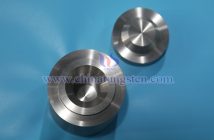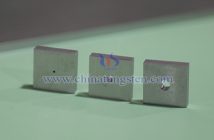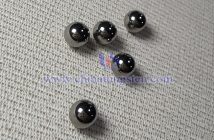
As a key tool for precision measurement and calibration, cemented carbide calibration balls must strictly adhere to the following precautions to ensure measurement accuracy and equipment stability.
I. Environmental Condition Control for Cemented Carbide Calibration Ball Use
Temperature and Humidity: Cemented carbide calibration balls are sensitive to temperature and humidity and must be used in a constant temperature and humidity environment to avoid dimensional changes due to thermal expansion and contraction or moisture absorption. Keep them away from vibration sources (such as machine tools and stamping equipment) and electromagnetic interference sources (such as large motors and transformers) to prevent errors during measurement.
Cleanliness: Before use, clean the surface of the cemented carbide calibration ball with acid-free gasoline or alcohol to remove oil, fingerprints, and other impurities to prevent contamination of measuring equipment or affecting contact accuracy. Store in a dry, dust-free dedicated container, avoiding contact with corrosive gases (such as chlorine and hydrogen sulfide).
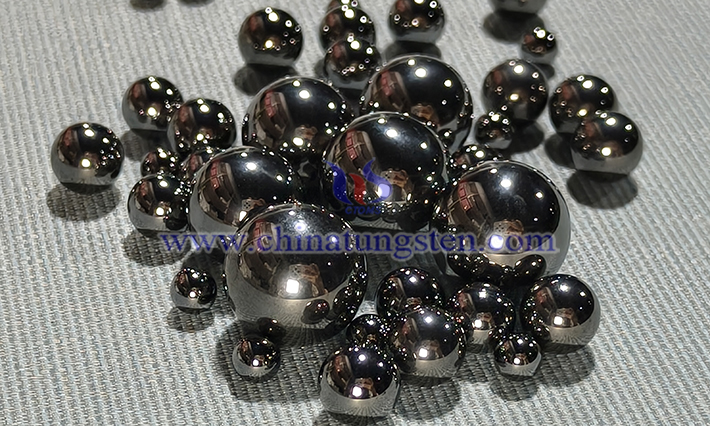
II. Installation and Operation Specifications for Cemented Carbide Calibration Balls
Indenter Installation: Before installation, check the fit between the ball groove of the fixing rod and the ball. Apply a small amount of acid-free petroleum jelly to reduce friction, ensuring the ball is firmly fixed and not loose. Replace the indenter regularly, ensuring the indentation diameter outline is clear, the ball protruding from the ball sleeve by no less than 1/3 of its diameter, and the surface is free of pitting, scratches, cracks, or rust.
Measurement Process: Strictly apply the test force according to the standard (e.g., for Brinell hardness testers, apply evenly to the specified value, hold for 10-15 seconds, then remove), avoiding impact or vibration that could deform the indentation. Distribute the measuring points evenly on the standard block, ensuring the distance between the centers of two adjacent indentations is no less than 4 times the indentation diameter, and the distance from the indentation center to the edge is no less than 2.5 times the diameter, to prevent edge effects from affecting the results. For contact measurement systems (e.g., coordinate measuring machines), use cemented carbide balls to calibrate the probe diameter and position error to ensure long-term accuracy.
III. Frequency of Use and Maintenance of Cemented Carbide Calibration Balls
Regular Calibration: Adjust the calibration cycle according to the frequency of use. Record the calibration results and retain them for at least two years for traceability and review.
Ball Inspection: Check the size and hardness of the balls before each use. Balls that have undergone hardness testing should be discarded to avoid reuse and decreased accuracy.
Storage and Transportation: Keep the balls dry during long-term storage. Avoid collisions or pressure with hard objects to prevent surface damage. Use a dedicated packaging box during transportation to secure the balls and prevent rolling or vibration.
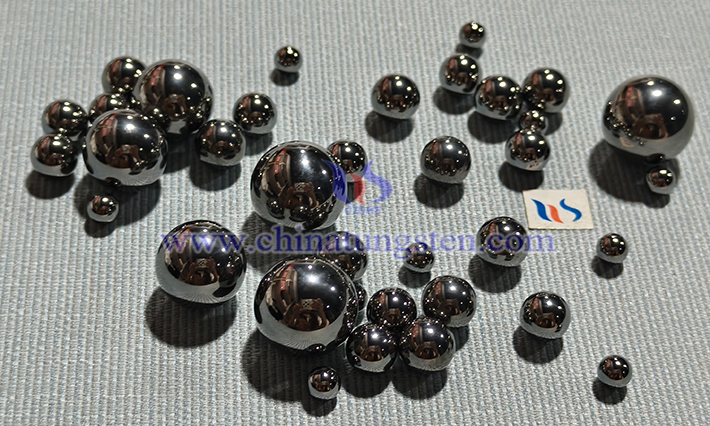
IV. Safety and Prohibitions for Cemented Carbide Calibration Ball Use
Operational Safety: Avoid frequent power-on and power-off operations. After powering off, wait 3-5 seconds before restarting to prevent circuit damage. Maintain the sample temperature at room temperature during experiments to avoid high temperatures causing ball expansion or changes in material properties.
Prohibited Actions: Do not directly strike or impact other objects with the cemented carbide balls to prevent surface damage or cracking. Do not apply non-special lubricants (such as ordinary machine oil) to the ball surface, as this may corrode the material or affect measurement accuracy.
V. Application Scenarios of Cemented Carbide Calibration Balls
Equipment Matching: Select a calibration ball of appropriate diameter based on the measuring equipment (e.g., coordinate measuring machine, roundness meter) to ensure multi-directional contact between the probe and the ball's surface. For optical instrument calibration (e.g., laser interferometers), high-reflectivity balls are required to minimize optical path deviation.
Industry Standards: The aerospace industry requires higher-precision balls to ensure the tolerance requirements of components such as turbine blades. In the automotive industry, cemented carbide balls are used to verify the roundness and dimensional accuracy of bore measuring instruments during cylinder bore calibration.