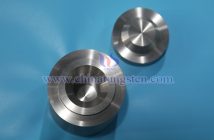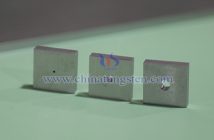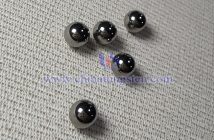
Cemented carbide calibration balls are high-precision spheres sintered with tungsten carbide (WC) as the main component and cobalt or other binders. Their high hardness, excellent wear resistance, corrosion resistance, and strong dimensional stability make them particularly suitable as reference standards in metrology and calibration. The main applications of cemented carbide calibration balls are in the calibration and verification of precision measuring equipment in manufacturing, aerospace, automotive, and laboratory metrology.
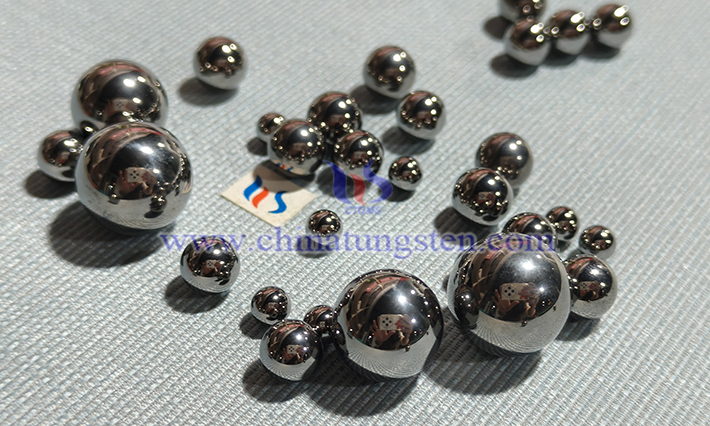
In coordinate measuring machines (CMMs), it is a core calibration tool. CMMs use probes or scanning probes to collect point data on the workpiece surface to calculate geometric dimensions and form and position tolerances. However, the ruby ball or probe on the probe will wear down over long-term use, leading to the accumulation of radius compensation errors. The cemented carbide calibration ball, as a standard sphere with a known diameter and high roundness, is fixed on the measuring stage. The probe repeatedly touches its surface, and the software calculates the effective length, diameter, and probe position offset of the probe to achieve probe calibration. This calibration ensures that the spatial coordinate accuracy, repeatability, and indication error of the measuring machine meet standards (such as ISO 10360), avoiding Hertzian elastic deformation errors caused by probe deformation or contact force. Compared to ceramic or steel balls, cemented carbide balls have higher stiffness and less deformation under high contact force, making them particularly suitable for calibrating small-diameter probes (such as 4mm, 6mm, 10mm) and preventing rapid wear of the standard ball.
In metrology and gauge inspection, cemented carbide calibration balls are used to verify the accuracy of gauge blocks, calipers, micrometers, or other precision instruments. They offer an unlimited number of measurement points and diameter options, serving as an economical and reliable benchmark and helping to calibrate the long-term stability of instruments in harsh environments such as high temperatures and corrosion. In quality control and metrology laboratories, they are often used in sets (different diameters matched) with UKAS or NIST traceability certificates to ensure traceability of measurement results.
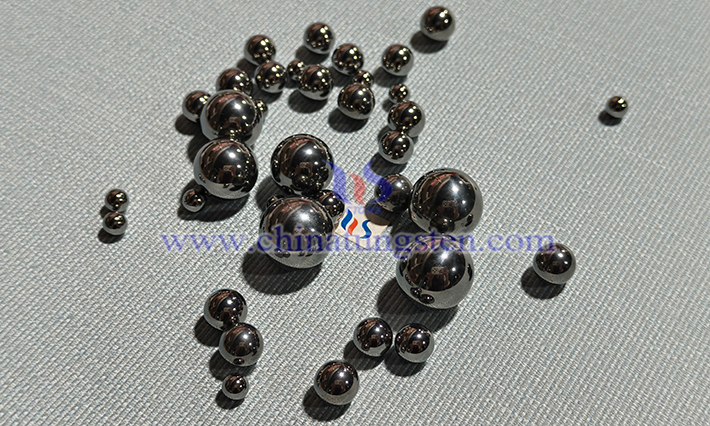
Furthermore, when calibrating probe systems on machine tools or for robot positioning, cemented carbide calibration balls can serve as fixed markers, defining the origin of the X, Y, and Z axes and the machine's repeatability. Some protective calibration spheres are equipped with shielding to prevent contamination by coolant or debris, making them suitable for permanent installation on machine tools for periodic verification.
In the field of acoustics, cemented carbide calibration spheres are occasionally used as reference targets for echo detectors or sonar equipment. Their high density and elastic wave velocities (approximately 6850 m/s for longitudinal waves and approximately 4170 m/s for transverse waves) provide stable target intensity for calibrating echo sounders at frequencies such as 38 kHz.