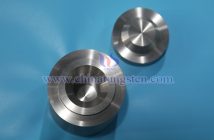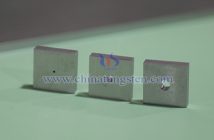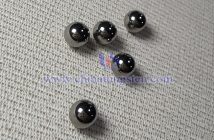
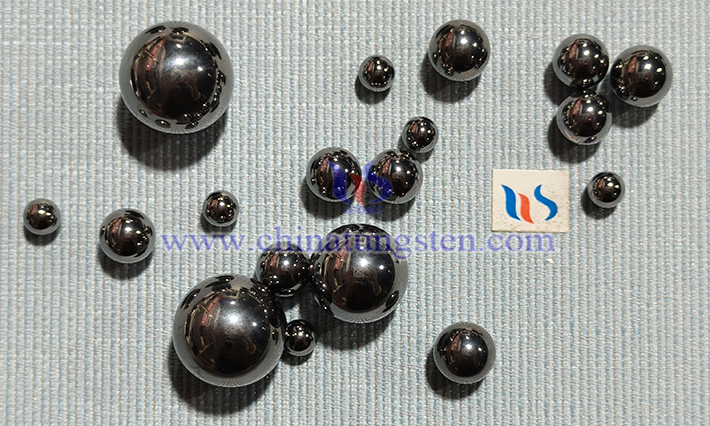
With high hardness, high wear resistance, high compressive strength, good dimensional stability, and corrosion resistance as their core characteristics, cemented carbide calibration balls are ideal reference tools for precision measurement and calibration.
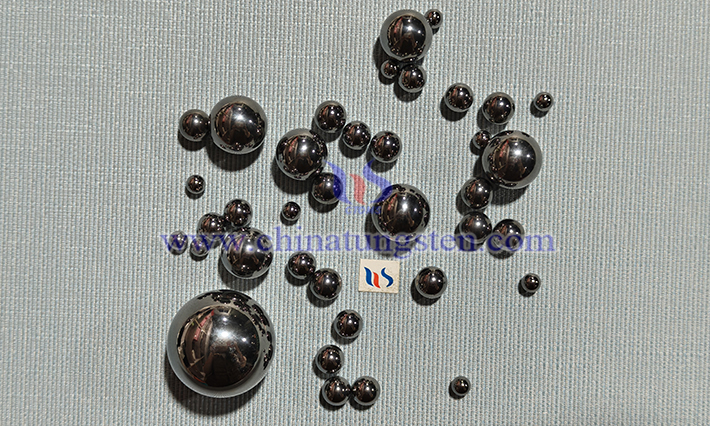
Characteristics of Cemented Carbide Calibration Balls
1. High Hardness: The hardness of cemented carbide calibration balls is typically between HRA 85 and 93, with some high-performance products reaching HRA ≥ 90.5, far exceeding that of ordinary steel balls. This hardness allows them to withstand high-load friction for extended periods without failure.
2. High Compressive Strength: The compressive strength of cemented carbide calibration balls can reach 3500-5600 MPa, with hot isostatically pressed products even exceeding 6000 MPa, more than 200 times that of quenched alloy tool steel (24-26 MPa). This property allows it to withstand extreme pressure without breaking, making it suitable for applications such as high-pressure stamping, deep-hole drilling, or heavy-duty rolling bearings.
3. Moderate Bending Strength and Low Impact Toughness: Common tungsten-cobalt (YG) cemented carbide calibrators have a bending strength of 1200-2500 N/mm2, while tungsten-titanium-cobalt (YT) calibrators have a strength of 1150-1430 N/mm2. Although the impact toughness is approximately 1/9 that of annealed steel (at room temperature), chipping resistance can be significantly improved by optimizing the cobalt content (e.g., YG20) or adding toughening phases (e.g., TaC, NbC).
4. Corrosion Resistance: Cemented carbide calibrators exhibit excellent corrosion resistance to acids, alkalis, and other chemicals. Nickel-containing cemented carbides perform even better in corrosive environments.
5. Thermal Stability: The hardness remains essentially unchanged below 500℃, and maintains HRA73-76 (equivalent to HB430-477) at 1000-1100℃, far superior to high-speed steel (whose hardness may drop below HRC50 at 600℃).
6. Low Coefficient of Thermal Expansion: With a coefficient of thermal expansion of 4-7 × 10??/℃, the low coefficient of thermal expansion ensures good dimensional stability under temperature changes, making it suitable for precision machining. It is used in aerospace applications to measure the dimensions and parameters of high-precision components such as aircraft engines and rocket engines, ensuring flight safety and performance.
7. High Precision and Surface Finish: Cemented carbide calibration balls can be machined to extremely high precision, with low surface roughness and a low coefficient of friction, suitable for precision fits. When used in coordinate measuring machines (CMMs) as measurement reference points or calibration tools, it ensures manufacturing quality.
8. Dimensional Stability: After precision machining, cemented carbide calibration balls maintain long-term dimensional accuracy, reducing measurement errors caused by wear or deformation. This characteristic makes it widely used in fields such as machinery manufacturing and the automotive industry, for example, to detect the dimensions and parameters of key components such as pistons, valves, and crankshafts in automobile engines.