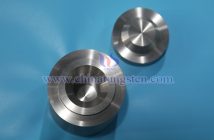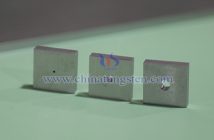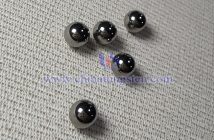
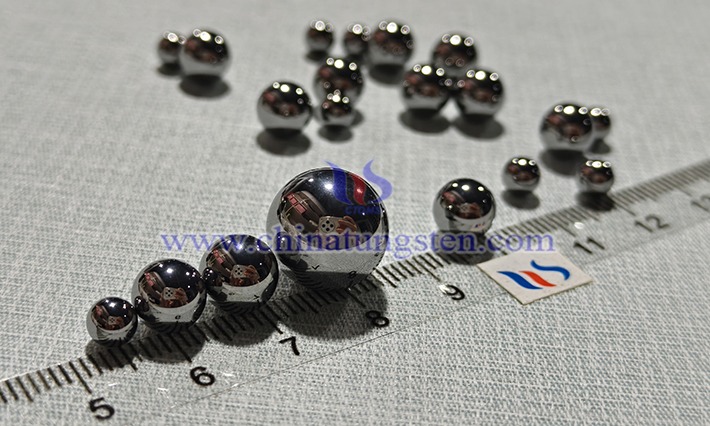
Cemented carbide balls are ultra-hard spherical materials with tungsten carbide (WC) as the main component and cobalt (Co) or nickel (Ni) as binders. They possess extremely high hardness, wear resistance, corrosion resistance, and compressive strength. Tungsten carbide molds (carbide molds) are mainly used in precision forming fields such as wire drawing, stamping, cold heading, and extrusion. The applications of cemented carbide balls in tungsten carbide molds are mainly reflected in the following aspects:

1. As core components or inserts of molds
In some precision tungsten carbide molds, such as powder metallurgy molds, cold heading molds, or drawing molds, cemented carbide balls can be embedded in the mold as wear-resistant components (such as mandrels, spline mandrels, or locating balls) to withstand high pressure and friction, thereby improving mold life.
2. Grinding and Polishing Applications in Mold Processing
Cemented carbide balls are commonly used for ultra-precision grinding and polishing of tungsten carbide mold cavities. Due to their high hardness and spherical structure, they can be used as grinding media or tools to remove micro-protrusions on mold surfaces and improve surface finish in vibratory grinding, magnetorheological polishing, or cluster polishing. This is particularly common in optical molds, injection molds, or high-precision wire drawing molds, effectively eliminating the processing-induced degradation layer and improving the mold's mirror finish and service life.
3. Other Indirect Applications
In cold heading molds, cemented carbide balls can be used for steel ball forming (the mold itself produces the cemented carbide balls). They also provide wear-resistant support in mold-related equipment as valve balls, bearing balls, or metering balls.
4. Advantages of Cemented Carbide Balls in Tungsten Carbide Molds
Wear-resistant and durable: 5-80 times longer lifespan than ordinary steel balls, suitable for high-load mold environments.
Precision: Small spherical error ensures uniform and smooth mold cavities.
High temperature resistance: Tungsten has a melting point as high as 3422℃, while the melting point of cemented carbide varies depending on the material composition, generally between 1200-3000℃.