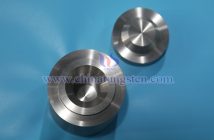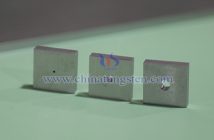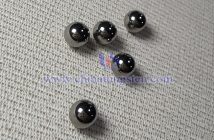
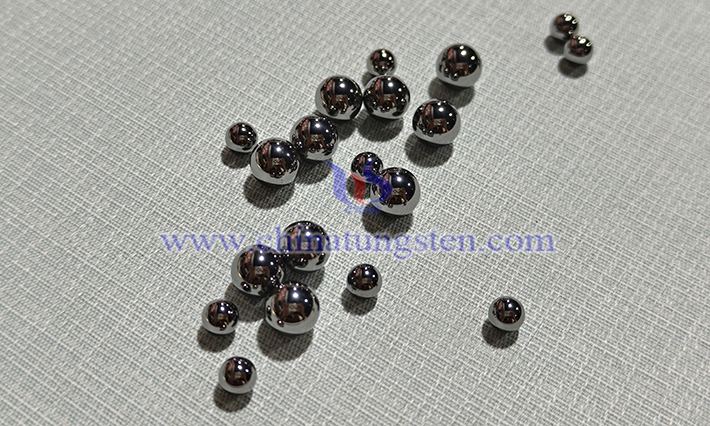
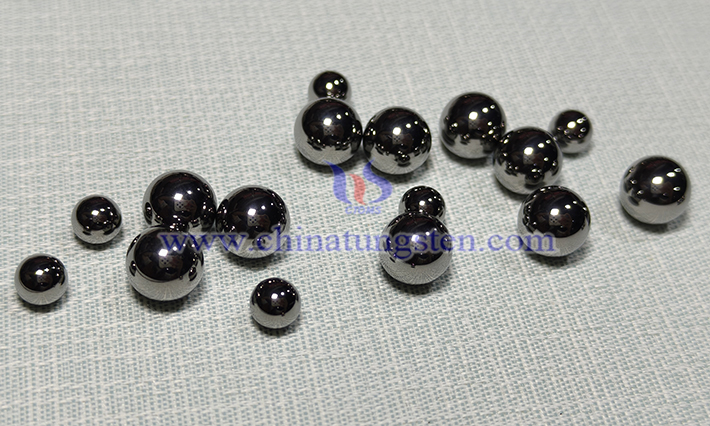
Cemented carbide balls for impact holes are spherical tools made by sintering high-hardness carbides (such as WC, TiC) as the matrix and cobalt (Co) or nickel (Ni) as the binder using powder metallurgy. They possess high hardness, high wear resistance, high-temperature resistance, and corrosion resistance, and are widely used in precision punching, drawing, mechanical parts, oilfield equipment, and other fields.
1. Material Characteristics of Cemented Carbide Balls for Impact Holes
High Hardness and Wear Resistance: Hardness can reach HRA90-92, and wear resistance is tens to hundreds of times that of ordinary steel balls, making them suitable for high-load, high-frequency punching operations. Typical grades include YG6 and YG8, with YG8 having a higher cobalt content and superior toughness, making it suitable for applications with high impact forces.
High Temperature Resistance: Maintains high hardness even at 1000℃, suitable for high-temperature punching or continuous operation environments.
Corrosion Resistance: Excellent resistance to corrosive media such as acids and alkalis, extending service life.
High Dimensional Accuracy: Can produce spheres with diameters from 0.3mm to 60mm. CTIA GROUP LTD supports non-standard customization to meet precision machining needs.
2. Application Scenarios of Cemented Carbide Balls for Impact Holes
Precision Punching and Drawing: Used for punching, extruding, and drawing metal sheets and pipes to ensure hole diameter accuracy and surface finish. Examples include punching for automotive parts, electronic components, and aerospace precision parts.
Mechanical Parts and Molds: Used as positioning beads or guide balls in molds to reduce friction and extend mold life. Applied in the manufacture of high-precision parts such as bearings, valves, and brake pumps.
Oilfield and Energy Sector: Used in cemented carbide ball valves in drilling equipment to withstand high pressure and corrosive media.
Laboratory and measuring instruments: as an indenter for hardness measuring instruments, or a calibration ball for precision instruments.