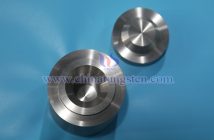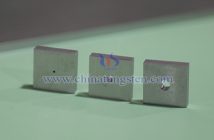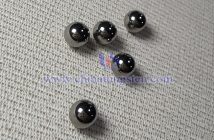
Plunger pumps are important positive displacement hydraulic pumps. They achieve fluid intake and discharge through the reciprocating motion of the plunger within the cylinder. Their core components include the plunger, cylinder, distribution plate, and inlet/outlet valves. The valve system often employs a ball valve structure, where the valve ball and seat cooperate to form a one-way valve, facilitating the pump's suction and discharge processes. Under high pressure and high wear conditions, ordinary steel valve balls are prone to wear and corrosion, leading to decreased pump efficiency and shortened lifespan. Therefore, cemented carbide valve balls are the preferred material for plunger pump valves.
The main component of cemented carbide valve balls is a composite material of tungsten carbide (WC) and cobalt (Co) binders, possessing extremely high hardness (HRA 88-92), wear resistance, corrosion resistance, and impact resistance. Compared to stainless steel or ceramic valve balls, cemented carbide valve balls excel when handling sandy, viscous, or corrosive media. Their high surface finish, which can be polished to a mirror level, reduces friction and leakage.
In the working principle of plunger pumps, when the plunger is pulled outward, the pump chamber pressure decreases, and the suction valve ball rises under the pressure difference, allowing liquid to enter. When the plunger is pushed inward, the suction valve closes, the discharge valve ball rises, and the liquid is output at high pressure. The valve ball must withstand thousands of impacts and abrasions per minute.
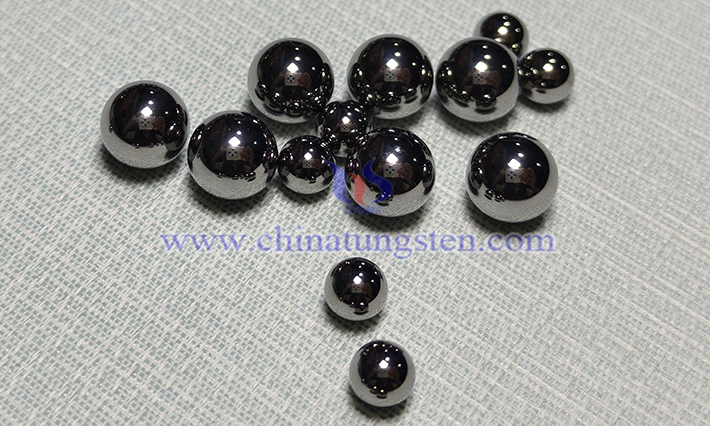
Advantages of Cemented Carbide Valve Balls:
Extreme wear resistance: Hardness far exceeds that of ordinary metals, resisting the erosion of abrasives such as mud and sand, resulting in a service life 5-10 times longer than ordinary valve balls.
Excellent corrosion resistance: Suitable for corrosive media such as acids, alkalis, and brine, widely used in petrochemical and marine environments.
High sealing performance: The ball and valve seat (often equipped with a carbide seat) are precisely matched, resulting in a low leakage rate and ensuring efficient pump operation.
High Temperature and High Pressure Resistance: Operates stably under high temperatures (>250°C) and high pressures (>5000psi).
Self-Rotation Characteristic: The ball valve design allows the valve ball to rotate freely, avoiding localized wear and further extending service life.
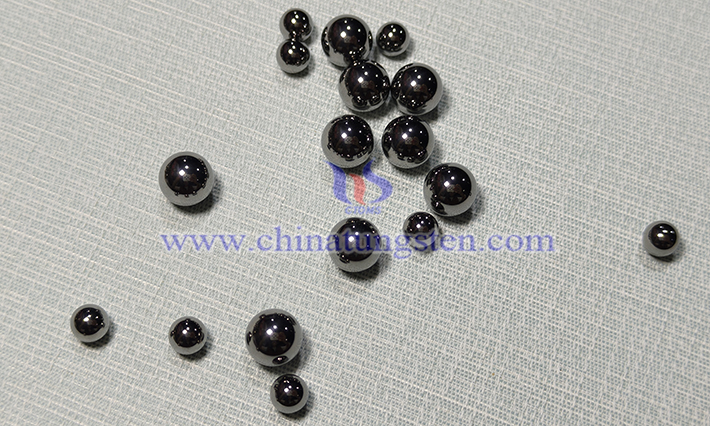
Applications of Cemented Carbide Valve Balls:
Oil and Gas Industry: Used in oil pumps and mud pumps for downhole pumping of sand-bearing crude oil and natural gas. API standards (such as the V11 series) often specify tungsten carbide valve balls and seats.
High-Pressure Cleaning and Water Jet: Used in high-pressure plunger pumps for handling hard water or abrasive fluids.
Mining and Metallurgy: Critical for wear resistance in mud transport and slurry pumps.
Chemical and Wastewater Treatment: Transport of corrosive media, such as acid and alkali slurries.
High-Pressure Homogenizers and Drilling Pumps: Used in the food, pharmaceutical, and drilling industries.