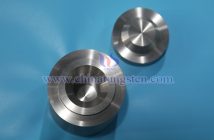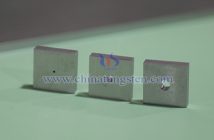
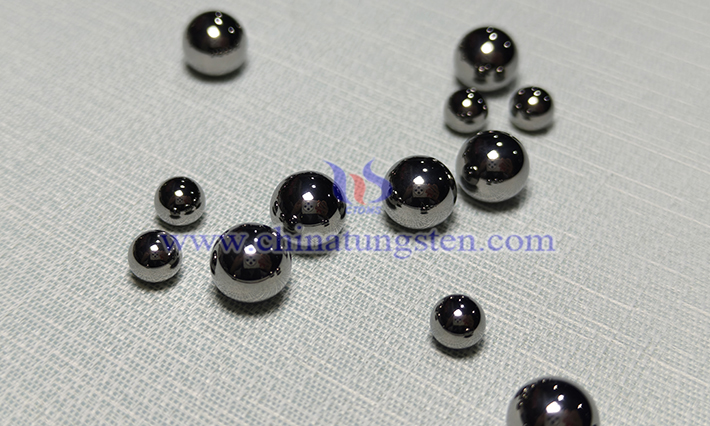
Magnetic testing of cemented carbide valve balls mainly focuses on two core indicators: coercivity (Hcj) and magnetic saturation (Ms). Magnetic testing methods must combine material characteristics with industry standards, employing specialized equipment and standardized procedures.
I. Coercivity (Hcj) Testing Method
1.1 Principle
Coercivity is the strength of the reverse magnetic field required to demagnetize a ferromagnetic material, reflecting the material's resistance to magnetization. The coercivity of cemented carbide valve balls is closely related to cobalt content, grain size, and microstructure: higher cobalt content results in lower coercivity; finer grains result in higher coercivity.
1.2 Testing Procedure:
Magneticization Treatment: Place the cemented carbide valve ball sample in a DC magnetic field, aligning its long axis with the magnetic field direction, and magnetize it to technical saturation (magnetic field strength is typically 200-400 kA/m).
Demagnetization Test: Place the magnetized sample in a coercivity measuring device. Apply a reverse magnetic field through a demagnetizing coil, gradually increasing the current intensity, and observe the repulsion phenomenon of the sample. When the sample is no longer repelled, record the reverse magnetic field strength at this point; this is the coercivity value (unit: kA/m).
Data Correction: The influence of sample shape and size on the magnetic field distribution must be considered. Average values from multiple measurements are taken to improve accuracy.
1.3 Equipment Requirements:
Solenoid or Electromagnet: Provides a stable and adjustable DC magnetic field.
Demagnetizing Coil: Generates a reverse magnetic field; accuracy must meet ±1%.
Magnetic Moment Measurement System: Such as a Helmholtz coil, used to quantify changes in magnetization intensity.
1.4 Standard Basis:
Domestic Standard: GB/T 3848-2017 "Method for Determination of Coercivity of Cemented Carbide".
International Standard: IEC 60404-7 "Method for Measurement of Coercivity of Magnetic Materials".
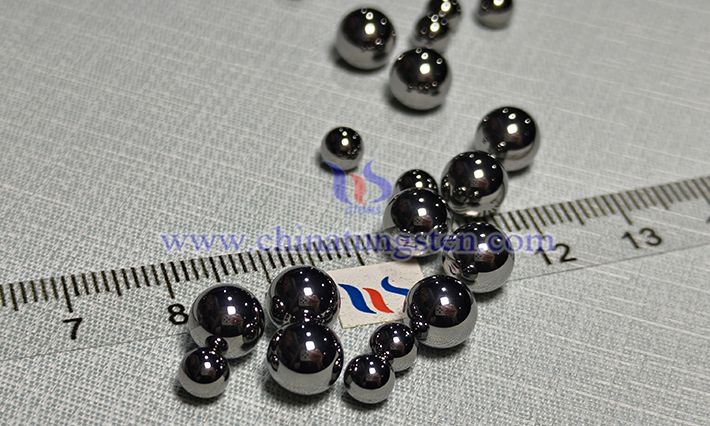
II. Magnetic Saturation (Ms) Detection Method
2.1 Principle: Magnetic saturation is the maximum magnetization intensity reached by a ferromagnetic material under a strong magnetic field, reflecting the relative content of the binder phase (such as cobalt) in the material. The magnetic saturation value of a cemented carbide valve ball is directly related to the cobalt content, carbon content, and the proportion of impurity elements (such as iron and nickel).
2.2 Detection Steps:
Sample Preparation: Ensure the sample surface is clean and free of oxide layers or coatings.
Magnetic Field Application: Place the sample in a stable magnetic field (the magnetic field strength must be sufficiently large, such as 1.05T), magnetizing it to saturation.
Induction Measurement: Measure the induced current generated by the sample using an induction coil or magnetic moment meter, and calculate the magnetic saturation value (unit: T·m3/kg). Data Analysis: Relative comparisons are made using standard reference materials (e.g., pure nickel), correcting for shape factor effects, and repeated measurements are performed to obtain the average value.
2.3 Equipment Requirements:
Electromagnet or permanent magnet: Provides a uniform and high-intensity magnetic field.
Magnetic saturation induction meter: Such as the German Forster KOERZIMAT 1.097 MS, capable of directly reading magnetic saturation values.
High-precision balance: Weighs the sample mass (accuracy ±0.001g).
2.4 Standards:
Domestic Standard: GB/T 23369-2009 "Determination of Magnetic Saturation Value of Cemented Carbide".
International Standard: IEC 60404-14 "Method for Measurement of Magnetic Saturation of Magnetic Materials".