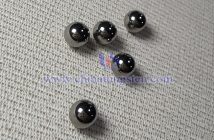
The surface finish of cemented carbide valve balls is one of the key factors affecting their sealing performance. Surface finish directly affects the contact state between the valve ball and the valve seat. Higher finish usually means fewer microscopic leakage channels, a more uniform contact stress distribution, and more stable friction and wear characteristics, but cost-effectiveness and adaptability to operating conditions must be considered in practical applications.
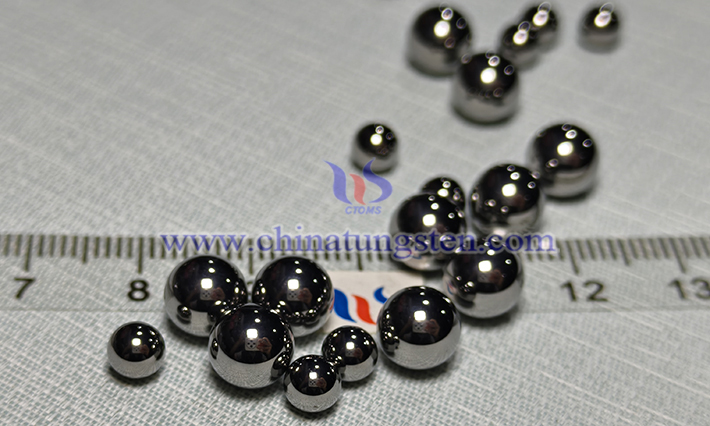
From a microscopic perspective, sealing between two contact surfaces essentially involves blocking fluid leakage along the tiny channels formed by the peaks and valleys of the surface micro-unevenness. When the surface finish is low, i.e., the roughness value is high, these microscopic "grooves" provide leakage paths for the medium. Even with a large sealing specific pressure, it is difficult to completely deform and fill these rough protrusions, thus leading to leakage.
Studies have found that improving surface finish can significantly reduce leakage. Analysis indicates that when the surface finish of the sealing surface is increased to ▽12 (approximately roughness Ra 0.2μm), sealing performance is significantly improved. However, this does not mean that the higher the finish, the better. Beyond a reasonable threshold, its improvement in sealing performance becomes limited, and it significantly increases manufacturing costs. Therefore, pursuing a suitable, rather than extreme, surface finish is key to optimizing cost-effectiveness.
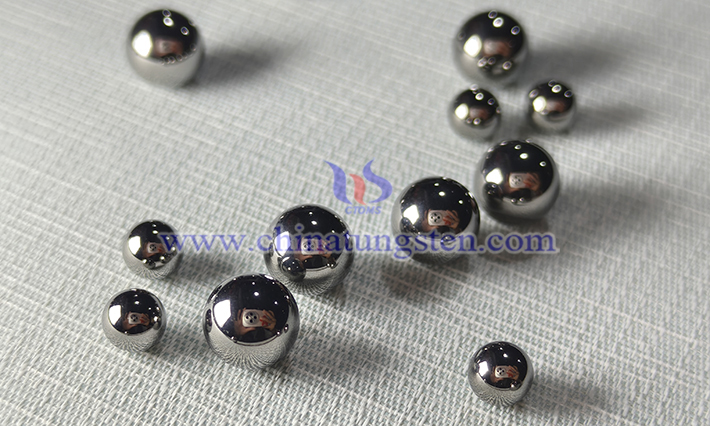
The Influence Mechanism of Cemented Carbide Valve Balls Surface Finish on Sealing Performance
1. Microscopic Sealing Mechanism: Low surface finish results in high surface roughness and the presence of microscopic peaks and valleys, forming leakage channels. Media (especially gases or low-viscosity liquids) easily seep through these grooves. High surface finish results in low surface roughness and a smooth surface profile, allowing for a tighter fit with the valve seat and effectively reducing leakage paths.
2. Contact Stress Distribution: Rough surfaces concentrate contact stress at microscopic protrusions, easily causing plastic deformation or wear, damaging the sealing surface. High-gloss surfaces provide uniform contact stress distribution, reducing the risk of localized wear and maintaining long-term sealing stability.
3. Friction and Wear: Appropriate surface finish forms a stable lubricating film, reducing adhesive wear. Excessive smoothness (e.g., Ra < 0.025 μm) may lead to abnormal friction coefficients due to poor lubrication, but this is less common in cemented carbide. 4. Media Characteristics Compatibility: Gas seals require extremely high surface finish (typically Ra ≤ 0.1 μm) because gas molecules are small and easily pass through microscopic gaps. Liquid seals allow for slightly lower surface finish (Ra 0.2-0.4 μm), as the surface tension of the liquid can partially compensate for microscopic unevenness.