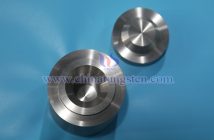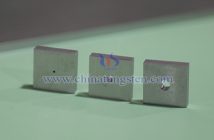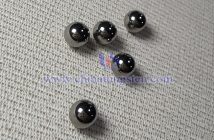
The compatibility of cemented carbide valve balls and ceramic valve seats requires comprehensive evaluation based on specific operating conditions. While they offer complementary advantages in hardness, wear resistance, and corrosion resistance, compatibility challenges exist in high-temperature environments, impact resistance, and machining precision. Reliable fit requires process optimization.
I. Advantages of Compatibility between Cemented Carbide Valve Balls and Ceramic Valve Seats
1.1 Complementary Hardness and Wear Resistance
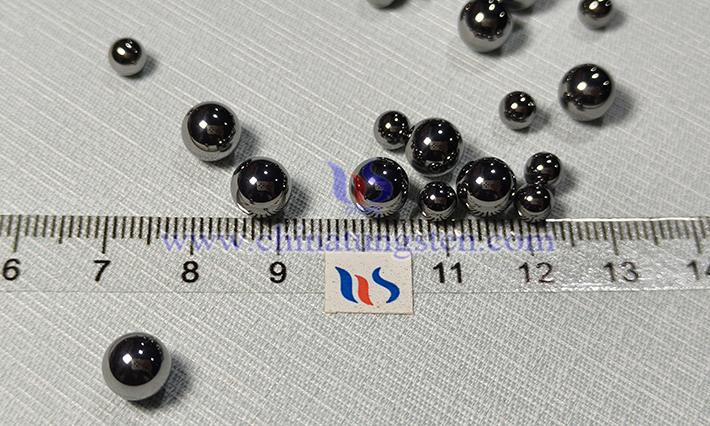
Cemented carbide valve balls can achieve a hardness of 65-75 HRC, with extremely high surface finish and very low wear under long-term friction. Ceramic valve seats (such as zirconia ceramics) have a hardness of 87 HRA, a bending strength ≥1150 MPa, and a fracture toughness up to 35 MPa·m2. The combination of these two materials creates a high-hardness, low-wear sealing surface, suitable for media environments containing solid particles (such as sand and dust), significantly extending valve service life.
1.2 Synergistic Corrosion Resistance
Cemented carbide exhibits excellent resistance to acids, alkalis, salt spray, and various corrosive media. Ceramic valve seats demonstrate far superior oxidation resistance at high temperatures compared to metallic materials, exhibiting strong resistance to acidic corrosive media such as hydrochloric acid, sulfuric acid, and nitric acid. The combination is suitable for highly corrosive environments such as deep-sea oil production and acidic gas wells, reducing the risk of seal failure due to corrosion.
1.3 Matching Thermal Stability
Cemented carbide exhibits dimensional stability over a wide temperature range, while the coefficient of linear expansion of ceramic valve seats is similar to that of metals (approximately 10 × 10??/℃), allowing for synchronized thermal expansion with the valve body and preventing cracking or leakage of the sealing surface due to differences in thermal expansion and contraction. This characteristic makes it suitable for ultra-low temperature (such as liquid nitrogen environments) or high temperature (such as above 450℃) operating conditions.
II. Compatibility Challenges of Cemented Carbide Valve Balls and Ceramic Valve Seats
2.1 Performance Limitations at High Temperatures
Ceramic valve seats may experience decreased impact resistance due to increased brittleness at high temperatures. While cemented carbide valve balls maintain stable hardness at high temperatures, brittle fracture of the valve seat can lead to sealing failure. For example, when carbide is directly welded onto a ferritic stainless-steel substrate, high temperatures can damage the microstructure of the duplex stainless steel, resulting in deterioration of the valve seat performance.
2.2 Differences in Impact Resistance
Although ceramic valve seats have high hardness, they are also relatively brittle. Under conditions involving impact loads (such as frequent valve opening and closing, and sudden changes in media flow rate), microcracks may propagate, affecting the seal life. While cemented carbide valve balls have better toughness than ceramics, a significant difference in hardness between them (e.g., >15 HRC) may exacerbate valve seat wear.
2.3 Machining Accuracy and Cost
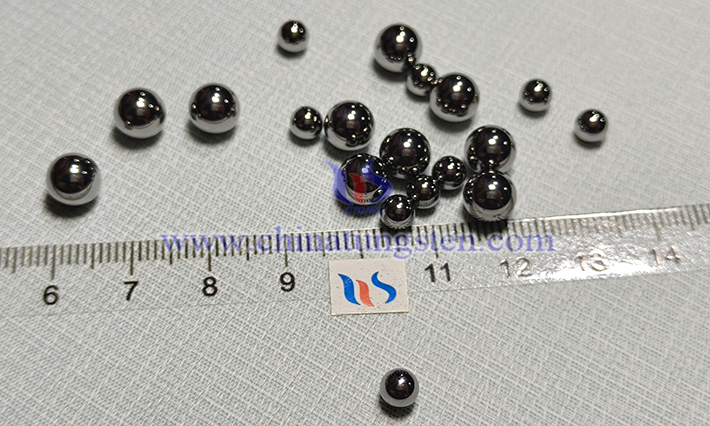
Ceramic valve seats require isostatic pressing and hot-pressing sintering processes, which are difficult and costly to manufacture. Cemented carbide valve balls require precision grinding to improve spherical accuracy and reduce surface roughness, ensuring a tight fit with the ceramic valve seat. Furthermore, the fit requires high-precision surface treatment technologies such as supersonic spraying and PVD coating, further increasing manufacturing costs.
III. Recommendations for the Compatibility of Cemented Carbide Valve Balls and Ceramic Valve Seats
3.1 Operating Condition Compatibility
For high-wear and highly corrosive operating conditions, the combination of cemented carbide valve balls (supersonic sprayed tungsten carbide) and ceramic valve seats (zirconia-based) is preferred, suitable for fields such as coal chemical industry and deep-sea drilling. For cryogenic or high-temperature operating conditions, modified cemented carbide valve balls (resistant to liquid nitrogen impact) and ceramic valve seats with matching coefficients of linear expansion (such as yttrium oxide-stabilized zirconia) should be selected to ensure thermal stability. For impact load conditions, the impact effect can be reduced through surface hardening treatment (such as plasma nitriding of the valve seat) or optimized design (such as a floating ball structure).
3.2 Process Optimization A high-speed ultrasonic spraying process is used to achieve low-temperature bonding between the cemented carbide and ceramic valve seat, avoiding damage to the metallographic structure of the substrate. Precision grinding and ultrasonic cleaning ensure the dimensional accuracy and surface cleanliness of the valve ball and seat, reducing the risk of leakage. The ceramic valve seat is toughened (e.g., by adding silicon carbide fibers) to improve impact resistance.
3.3 Cost Trade-offs In scenarios with high cost-effectiveness requirements (such as general corrosive media), a combination of cemented carbide valve ball and metal valve seat can be used to reduce manufacturing costs. In high-end fields (such as aerospace and nuclear power), the combination of cemented carbide valve ball and ceramic valve seat is preferred, with performance as the primary consideration.