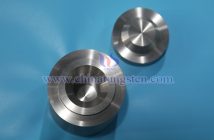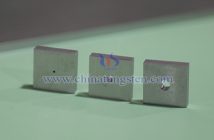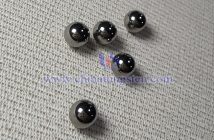
Through its superior material properties, cemented carbide valve balls have become a core component in modern industrial wear-resistant control valves, significantly improving the reliability and service life of valves under extreme conditions.
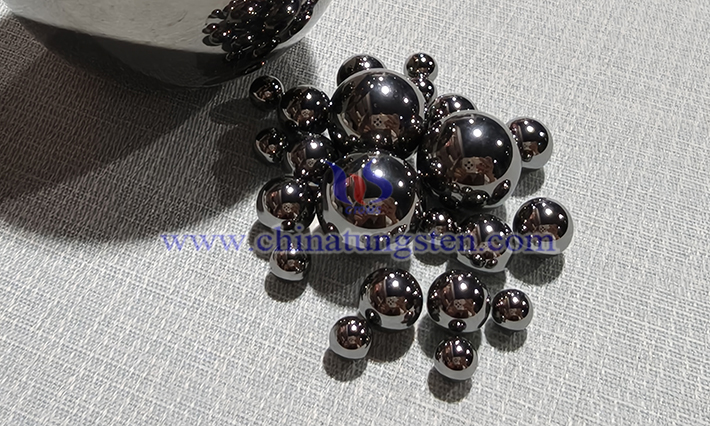
1. Material Performance Advantages of Cemented Carbide Valve Balls
Cemented carbide valve balls are typically made with tungsten carbide (WC) or titanium carbide (TiC) as the matrix, achieving a hardness of HRA 90.5 or higher. Their wear resistance is dozens of times that of traditional steel balls. This material also possesses excellent corrosion resistance and high-temperature, high-pressure stability, enabling it to withstand the extreme environments of deep-sea drilling and high-temperature pipeline systems.
2. The Role of Cemented Carbide Valve Balls in Wear-Resistant Control Valves
In wear-resistant control valves, cemented carbide valve balls play two key roles. First, precise flow regulation. The specially designed V-shaped opening structure of the valve ball, when fitted with the valve seat, enables precise flow control, meeting the stringent requirements of process industries for regulation accuracy. Secondly, it offers long-lasting and reliable sealing. The sealing pair formed by the valve ball and the hard alloy-faced metal valve seat not only achieves a zero-leakage rating, but its V-shaped structure also provides strong shearing force to the valve seat, effectively cutting off fibers or solid particles in the medium and preventing blockage. This makes it particularly suitable for regulating materials containing particulate matter.
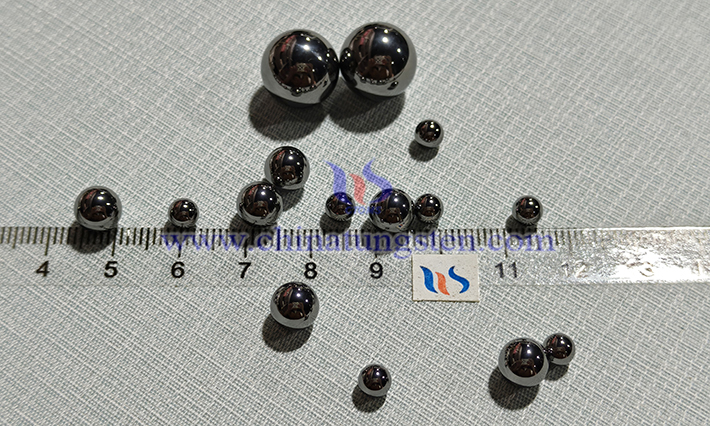
3. Industrial Applications of Cemented Carbide Valve Balls
This type of valve ball is especially valuable in the harsh operating conditions of process industries. In the coal chemical and petrochemical fields, the media often contain many hard solid particles, causing severe erosion of valves. For example, in coal chemical ash water, black water, and coal slurry pipelines, wear-resistant regulating valves using cemented carbide sealing pairs can achieve a service life of more than 5 years, successfully replacing imported products. Specific innovative applications, such as the V-type regulating valve, which solves the industry problem of easy crystallization and blockage of the medium by embedding V-type cemented carbide inserts in the ball core flow channel and combining them with a special sealing structure, have been applied in major national projects such as large-scale coal indirect liquefaction.