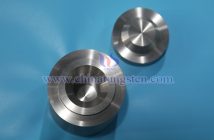
Cemented carbide valve balls, primarily made of tungsten carbide (WC) as the matrix with the addition of binders such as cobalt or nickel, are increasingly widely used in corrosion-resistant valves, especially suitable for harsh environments such as petrochemical, coal chemical, marine engineering, power, and mining industries. Their core advantage lies in combining extremely high hardness with excellent corrosion resistance, effectively coping with strong acids, strong alkalis, salt solutions, H?S-containing media, and corrosive fluids containing solid particles.
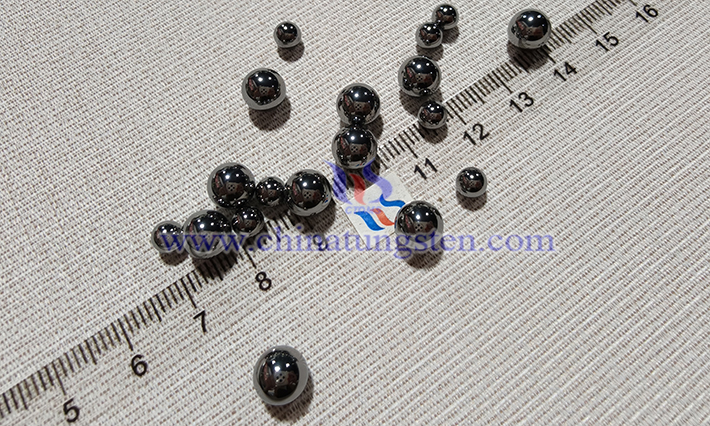
Firstly, cemented carbide valve balls have extremely high hardness, typically reaching HRA 85 or higher, or HRC 70-75, or even higher. This gives them excellent wear and erosion resistance. In corrosion-resistant valves, the medium often contains particles, silt, or highly viscous substances. Ordinary metal valve balls are easily worn down, leading to sealing failure. However, cemented carbide valve balls can withstand high-speed fluid erosion and solid particle impact, with a surface roughness controllable to below Ra 0.02μm, ensuring a long-term, precise spherical fit and achieving zero-leakage sealing. Simultaneously, they possess strong impact resistance and thermal shock resistance, resisting deformation or cracking under high temperatures (up to 450℃-1200℃) or drastic temperature changes, significantly extending valve service life.
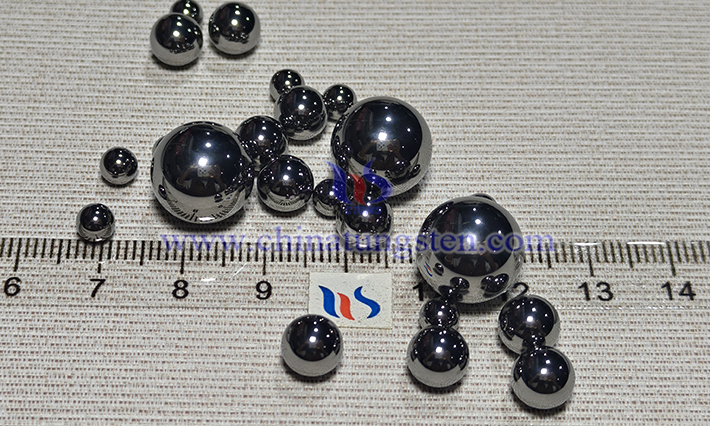
Secondly, cemented carbide valve balls excel in corrosion resistance. They exhibit excellent resistance to acids (hydrochloric acid, sulfuric acid), alkalis, salt corrosion, and hydrosulfides. Especially WC-CoCr coated or solid cemented carbide balls can form a dense protective layer, blocking the penetration of corrosive media. Even in environments containing moist chlorine, nitric acid, or mixed corrosive substances, they maintain stable performance. This is more reliable than stainless steel or ordinary alloy valve balls, which are prone to pitting or uniform corrosion. Cemented carbides exhibit high chemical stability and are not easily reactive with most liquids, making them suitable for highly corrosive fluids such as coal chemical slurries, H?S-containing media on offshore platforms, or chemical acid and alkali solutions.
Furthermore, the application of cemented carbide valve balls in corrosion-resistant valves demonstrates low-torque operation and reliable sealing. After precision machining of the ball and valve seat, the fit accuracy can reach ±0.001mm, with a low coefficient of friction, achieving light-torque opening and closing and reducing drive energy consumption. Simultaneously, under high-pressure environments (70-140MPa), the bonding strength reaches over 10000PSI, ensuring that the sealing surface does not detach or peel off. Compared to ceramic valve balls (which, although more corrosion-resistant, are more brittle), cemented carbides combine toughness and hardness, making them more suitable for heavy-duty, high-cycle operation.