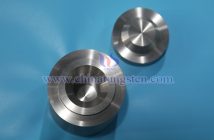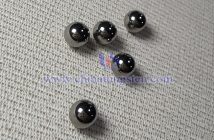
Cemented carbide valve balls are increasingly widely used in high-pressure valves, especially suitable for harsh operating conditions in petrochemical, coal chemical, power, and mining industries. Their performance requirements stem primarily from the extreme challenges of high-pressure environments, including high pressure (up to 70-140 MPa or even higher), high temperature (450-1200℃), highly corrosive media, and abrasive fluids containing particles and slurries.
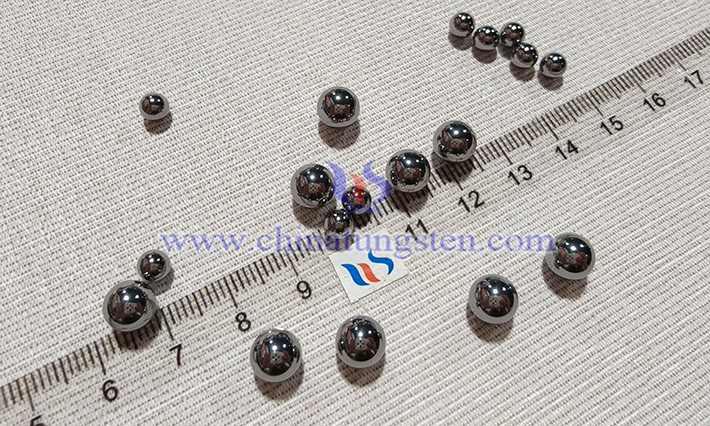
First, cemented carbide valve balls must possess extremely high hardness, typically with a surface hardness exceeding HRC70, or even HV1200 (approximately HRC70-75), achieved through high-velocity vacuum spraying (HVOF) or integral sintering processes. This ensures the valve ball's resistance to wear and erosion, preventing surface damage in high-speed flowing media containing slurry, dust, or solid particles, thus avoiding rapid failure. Compared to traditional metal ball valves, cemented carbide valve balls offer several times longer service life, even achieving zero leakage after 50 hours of flow and 500 cycles in slurry tests.
Secondly, sealing performance is a core requirement for cemented carbide valve balls. In high-pressure valves, the valve ball and seat must achieve a tight metal-to-metal seal, with a leakage rate reaching zero or zero gas leakage standards (e.g., API 6AV1 Class II). Precision machining of carbide combined with a spring-loaded floating seat design maintains tight contact under high pressure, and a self-cleaning function prevents foreign object blockage. Simultaneously, its low coefficient of thermal expansion (approximately 1/3 to 1/2 that of steel) ensures stable sealing during high-temperature cycling, preventing jamming or leakage caused by thermal expansion and contraction.
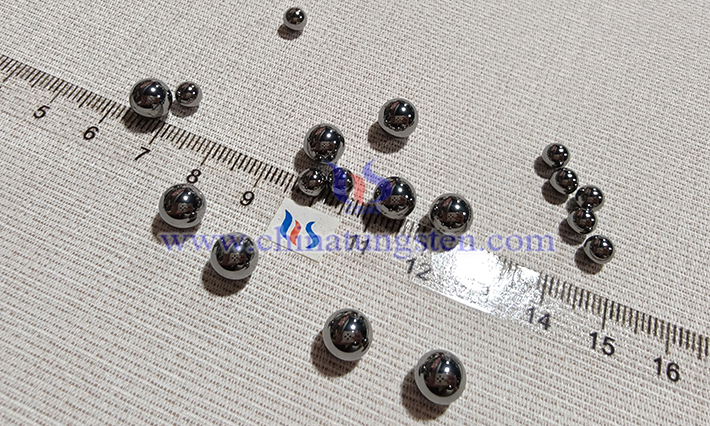
Corrosion resistance is equally crucial. Cemented carbide valve balls exhibit excellent performance against corrosive media such as acids, alkalis, salts, and H2S, are insoluble in aqua regia, and are suitable for coal-to-oil conversion projects, methanol projects, or sulfur-containing oil wells. The use of nickel-based or cobalt-based binders further enhances resistance to hydrosulfide stress cracking, meeting NACEMR0175 standards.
Furthermore, the high pressure and high temperature resistance requirements necessitate that the cemented carbide valve ball withstand extreme pressures (e.g., above 42 MPa) and temperature shocks (-196°C to 760°C), as well as thermal shock and compressive deformation. The integrally sintered cemented carbide valve ball is superior to a sprayed coating, which has a limited thickness (0.3-0.4 mm) and is prone to peeling at ultra-high temperatures, while the former can operate stably for extended periods.
In terms of operating characteristics, the low-torque design (through self-lubrication and precision grinding) ensures flexible switching, making it suitable for large-diameter, high-pressure valves, reducing operating force and extending actuator life.