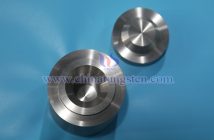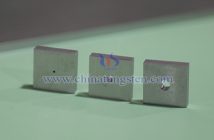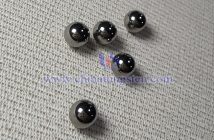
The application of cemented carbide ball valves in check valves is mainly for the ball valve disc design in ball check valves or lift check valves. This valve ball, as the core opening and closing element, plays a crucial role in sealing and unidirectional flow guidance, and is particularly suitable for harsh operating conditions with high pressure, high wear, and strong corrosion, such as oil and gas extraction, chemical pipelines, and mud pump systems.
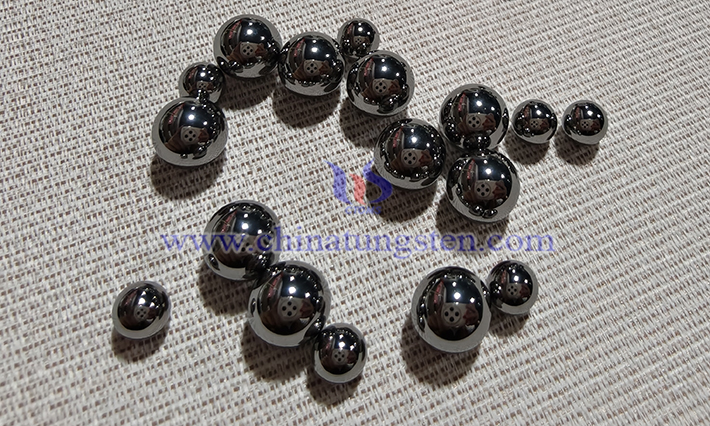
The basic function of a check valve is to prevent backflow of the medium, ensuring that fluid can only pass in one direction. When the medium flows in the forward direction, the valve automatically opens; when it flows in the reverse direction, it automatically closes. Cemented carbide ball valves, based on this, improve the durability and reliability of the valve.
The working principle of cemented carbide ball valves in check valves: The valve body has a conical or spherical valve seat, and the cemented carbide ball is placed in the valve cavity, allowing free movement (without shaft fixation, or only subject to guiding restriction). In forward flow, the medium pressure pushes the valve ball away from the valve seat, causing the ball to lift or roll off the sealing surface, allowing the medium to pass smoothly through the valve cavity with minimal flow resistance. In reverse flow or when the pressure decreases, the back pressure of the medium, combined with the weight of the valve ball (sometimes supplemented by a spring), quickly pushes the valve ball back to the valve seat, achieving a tight seal and preventing backflow. The spherical design of the cemented carbide valve ball ensures automatic alignment and uniform contact of the sealing surface. Even in dirty media, it can self-clean through rolling, preventing jamming.
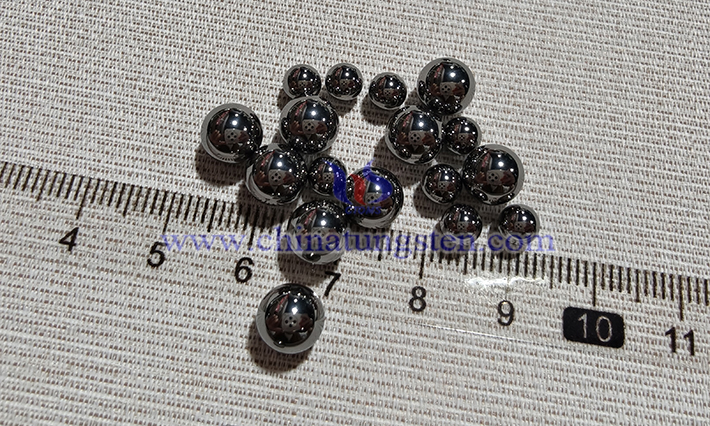
The advantage of cemented carbide valve balls lies in their material properties. Tungsten carbide has extremely high hardness (up to HRC70 or higher, approaching diamond), excellent wear resistance, and can resist erosion and wear from media containing sand, particles, or slurries; it also has excellent corrosion resistance, making it suitable for acid, alkali, salt, and high-temperature, high-pressure environments; its low coefficient of thermal expansion provides strong thermal shock resistance, preventing deformation or cracking due to drastic temperature changes. In applications where ordinary metal valve balls are prone to wear, leakage, or failure, cemented carbide valve balls can significantly extend valve life and reduce maintenance frequency. For example, in oil well pumps or high-pressure pipeline check valves, the valve ball must withstand thousands of openings and closing cycles and abrasion. CEMENTED carbide ensures a zero-leakage seal, preventing pump reversal or media contamination.
In practical applications, this type of valve ball is commonly used in small high-pressure check valves (such as API standard oilfield valves) or special ball check valve variations. Compared to rubber-coated balls (used in low-pressure wastewater systems), cemented carbide valve balls are better suited for extreme industrial conditions, offering higher pressure ratings (up to tens of thousands of psi) and longer service life.