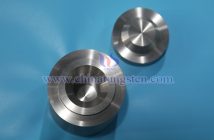
The core of coating selection for cemented carbide valve balls is achieving a balance between properties such as hardness, wear resistance, corrosion resistance, and bond strength, based on specific operating conditions. Below are the characteristics and typical application suggestions for several mainstream technologies.
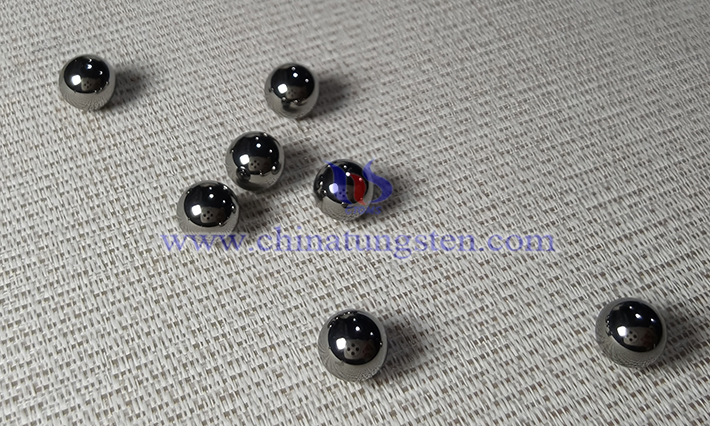
1. Physical Vapor Deposition (PVD) Coatings
Suitable for high-precision, highly corrosive, but low-impact applications. It forms coatings such as TiN, TiCN, or diamond-like carbon at low temperatures in a vacuum. Although the thickness is only 1-5 micrometers, the hardness is extremely high (up to 2000 HV or higher) and the coefficient of friction is low, significantly improving wear and corrosion resistance. Its low processing temperature prevents deformation of the cemented carbide valve ball, making it suitable for precision applications requiring a mirror-like surface finish.
2. Chemical Vapor Deposition (CVD) Coating: Capable of withstanding harsher high-temperature and high-pressure environments. It deposits coatings such as Al?O? or TiCN at high temperatures, achieving thicknesses of 10-20 micrometers, exhibiting excellent chemical stability and heat resistance. However, due to the high process temperature (approximately 800-1000°C), it is necessary to consider whether this will cause changes in the microstructure of the cemented carbide valve ball substrate.
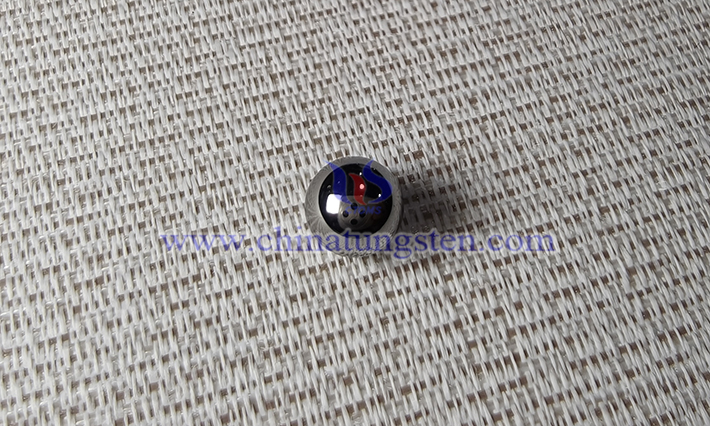
3. Supersonic Flame Spraying: For cemented carbide valve balls operating in harsh environments with high wear and strong erosion (such as coal chemical and mining industries), supersonic flame spraying is the primary choice. It can spray powders such as WC-Co or Cr3C2-NiCr to form a dense coating exceeding 300 micrometers in thickness, with extremely high hardness (70-75 HRC), good bonding strength, and effective resistance to erosion from solid particulate media.
4. Composite Processes: For scenarios requiring high pressure, high wear, and long service life with a pursuit of ultimate comprehensive performance, composite processes can be considered. For example, a thick, impact-resistant underlayer can be formed first using spray welding (such as Ni60), and then a PVD coating can be applied on top to provide an ultra-high hardness and low-friction surface. Studies have shown that this combination can achieve a surface hardness twice that of a single spray welding process and performs excellently in high-pressure life tests.