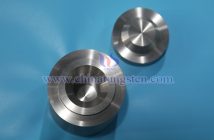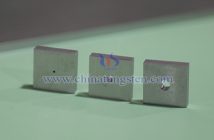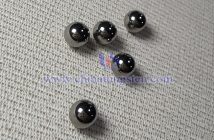
As the core opening and closing element of control valves, cemented carbide balls achieve precise control of media flow through rotation. Its applications cover complex conditions involving high pressure, high temperature, strong corrosion, and media containing particles.
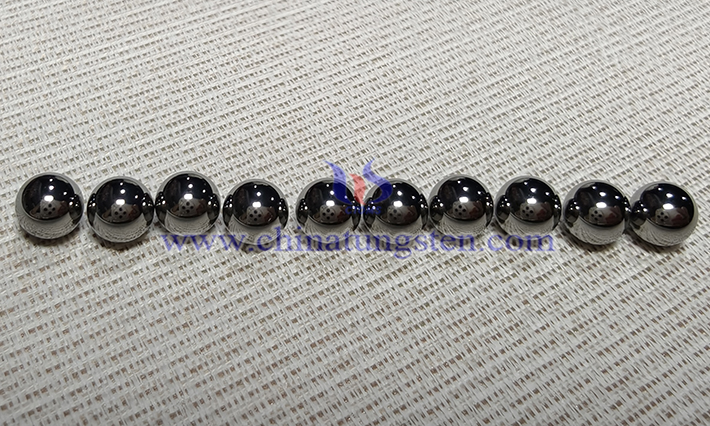
From a material properties perspective, carbide uses tungsten carbide (WC) as the matrix and cobalt (Co) as the binder phase. After hot isostatic pressing, its relative density can reach 99.999%, and its hardness exceeds HRA85. This high-density structure gives the ball extremely high compressive strength, capable of withstanding extreme pressures exceeding 280 MPa. Simultaneously, its wear resistance is 15-20 times higher than high-speed steel, and it maintains long-term stability in three-phase media containing sand, wax, and gum asphalt. In terms of chemical stability, carbide is resistant to high-temperature oxidation and can resist the erosion of corrosive media such as H?S and acid/alkali solutions, ensuring that the sealing surface does not chemically degrade in harsh environments.
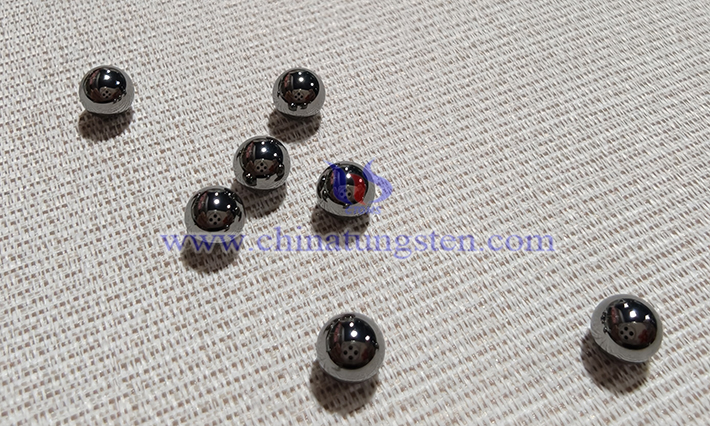
In terms of control valve functionality, the cemented carbide balls, through mirror polishing, controls its ellipticity to within 1μm, forming a metal-to-metal seal with the equally precision-machined valve seat. This sealing structure not only achieves bidirectional zero leakage but also automatically compensates for wear during pressure differential changes, maintaining long-term sealing performance. Its spherical design reduces opening and closing friction, with operating torque only 60% of similar valves. Combined with worm gears or electric actuators, it enables rapid response, meeting the needs of automated control.
Regarding technical adaptability, the cemented carbide balls can further expand its application boundaries through material modification. For example, spraying a tungsten carbide coating can increase the surface hardness to over HRC70, adapting to the scouring of slurries containing particles; using a cobalt-based alloy sealing surface can withstand high-temperature steam up to 650℃, meeting the regulation requirements of supercritical boiler feedwater systems. This synergistic optimization of materials and processes makes the cemented carbide valve ball an ideal choice for control valves in petrochemical, deep-sea drilling, and power energy fields.