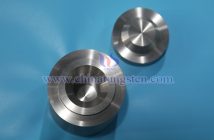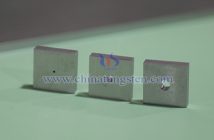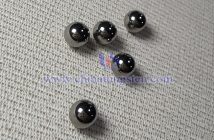
Cemented carbide valve balls are rotary fluid control components that maintain sealing performance. Their application principle is based on the synergistic effect of their material properties and structural design. They are widely used in petroleum, chemical, and power industries, and are particularly suitable for fluid control under extreme conditions.
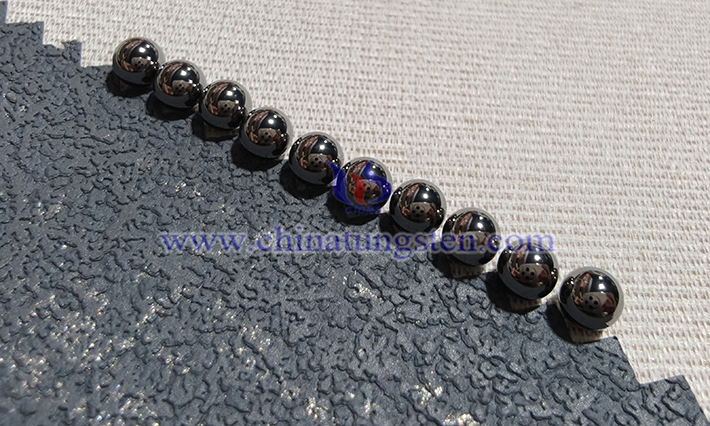
From a material properties perspective, cemented carbide valve balls are formed by sintering tungsten carbide (WC) with binders such as cobalt (Co) using powder metallurgy. With an extremely high WC content, their hardness approaches that of diamond, allowing them to withstand direct impacts from high-pressure fluids and particles. For example, in deep-sea drilling or sand-bearing wells, their compressive strength and wear resistance far exceed those of ordinary steel, significantly extending valve service life. Simultaneously, the cobalt-based binder imparts excellent corrosion resistance, enabling them to withstand corrosive media such as acids, alkalis, salts, and hydrogen sulfide (H?S), allowing for long-term stable operation in chemical acid and alkali transport pipelines.
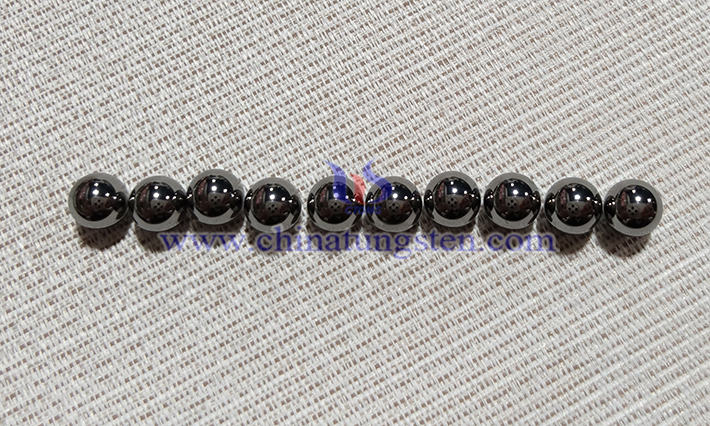
In terms of structural design, the cemented carbide valve ball adopts a spherical closing element and a bidirectional sealing structure. It achieves rapid opening and closing by rotating around the valve stem, with low operating torque and minimal impact. For example, in high-temperature steam systems, its V-shaped opening structure can adjust the flow area for precise flow control; in cryogenic devices, the mirror-polished ball, in conjunction with the valve seat, maintains zero leakage over an extremely wide pressure range. Furthermore, the floating ball design allows the valve ball to automatically position itself under media pressure, and, in conjunction with the spring-loaded valve seat, compensates for sealing surface wear, ensuring long-term sealing performance.
In practical applications, the cemented carbide valve ball, through dual optimization of materials and structure, solves the sealing failure problem of traditional valves in high-pressure, high-temperature, and corrosive media. For example, in supercritical boiler feedwater systems or coal chemical gasifiers, it can withstand extreme temperatures and pressures, cutting off high-temperature and high-pressure media and ensuring the safe and stable operation of the system, becoming a key component in the field of industrial fluid control.