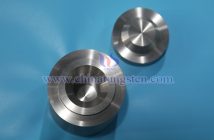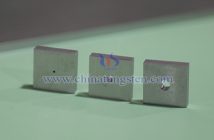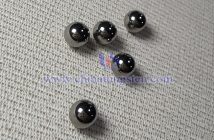
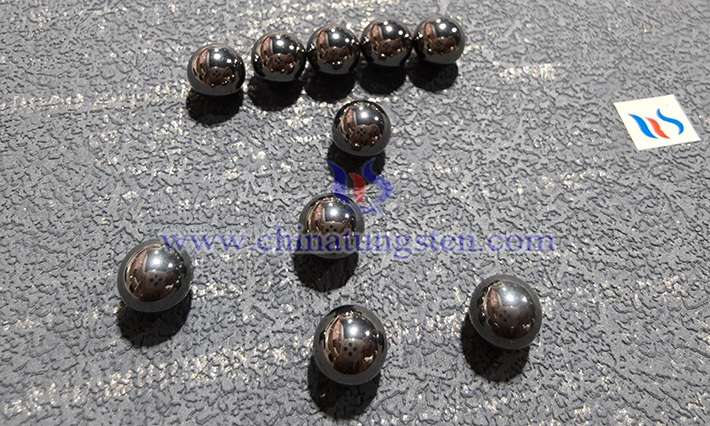
Cemented carbide valve balls are widely used in valves operating under high pressure, high temperature, corrosive media, and high wear resistance conditions due to their extremely high hardness, wear resistance, corrosion resistance, and good dimensional stability. The production steps of cemented carbide valve balls are complex and precise, mainly including: raw material preparation - mixing - grinding - drying - granulation - molding - pre-sintering/degreasing - high temperature sintering - blank inspection - coarse grinding - fine grinding - polishing - testing - cleaning - packaging.
1. Raw Material Preparation
(1) Tungsten carbide powder: High-purity, ultrafine particles, the main source of hardness and wear resistance.
(2) Cobalt powder: As a binder metal, it firmly bonds tungsten carbide particles together, providing toughness.
(3) Other additives: Small amounts of chromium, vanadium, and other carbides may be added to inhibit grain growth or enhance specific properties. (4) Forming agents: such as paraffin wax, polyvinyl alcohol, etc., are added during the mixing stage to provide plasticity for subsequent compression molding.
2. Mixing and Grinding
The above powders are placed in a ball mill or stirred mill according to a precise ratio, and wet-milled with liquid media such as alcohol or acetone to ensure thorough and uniform mixing of WC, Co, etc., and to further refine and homogenize the powder particles, forming a uniform slurry.
3. Drying and Granulation
The ground slurry is dried in a spray drying tower to obtain a granular mixture with good flowability and uniform composition, facilitating subsequent automatic compression molding.
4. Molding
(1) Compression Molding: The granulated material is placed in a precision mold and pressed into a spherical preform (green preform) using a hydraulic press.
(2) Injection Molding: For more complex shapes or mass production, the mixture is mixed with a large amount of plastic binder and injected into a mold for molding.
5. Pre-sintering/Debinding
The former green body is slowly heated at a low temperature (typically 300-600°C) to allow the forming agent added in step 1 to completely volatilize, decompose, and be expelled. This process must be extremely slow to avoid cracking, blistering, or deformation.
6. High-Temperature Sintering
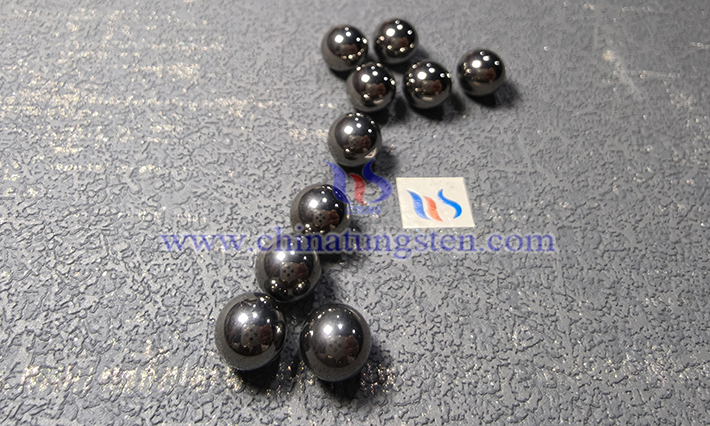
The depended green body is then sintered in a vacuum sintering furnace or a low-pressure hot isostatic pressing furnace at a high temperature of 1350°C-1550°C. This melts the cobalt phase, which, through liquid-phase diffusion and flow, fills the voids between WC particles, bringing the product to or near its theoretical density (typically >99.5%). The green body undergoes significant shrinkage (linear shrinkage rate approximately 15-20%), resulting in a high-hardness, high-strength cemented carbide sintered green body, but with a rough surface and dimensional tolerances.
7. Green Body Inspection
The sintered green bodies undergo preliminary inspection, and products with macroscopic defects (cracks, severe deformation) are rejected.
8. Rough Grinding
Using a dedicated ball mill or V-groove grinder with diamond wheels, grind to remove excess material and initially obtain the spherical shape and basic dimensions.
9. Fine Grinding
Use finer-grit diamond wheels for precision grinding to further improve dimensional accuracy and sphericity.
10. Ultra-Precision Polishing
Place the ground valve ball along with abrasive (such as diamond micron powder) into a polishing machine (such as a centrifugal drum polisher or vibratory polisher) for long-term polishing. Remove grinding marks, reduce surface roughness, and obtain the final required surface finish. This is also a key step in improving fatigue strength and corrosion resistance.
11. Final Inspection
(1) Dimensional and Geometric Accuracy: Use a micrometer, optical projector, roundness meter, etc., to inspect the diameter, sphericity, and roundness.
(2) Surface Quality: Use a microscope and profilometer to check the surface for defects, cracks, and pores.
(3) Mechanical Properties: Sample and test hardness and compressive strength.
(4) Material Analysis: This may involve metallographic examination to check cobalt content distribution, WC grain size, etc.
12. Cleaning and Packaging
Thoroughly remove polishing residue through ultrasonic cleaning. Apply rust-preventive oil or use rust-preventive packaging. Vacuum or inert gas packaging in a dust-free environment prevents oxidation and damage.