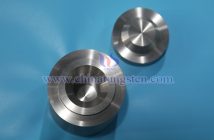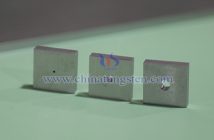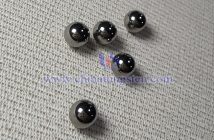
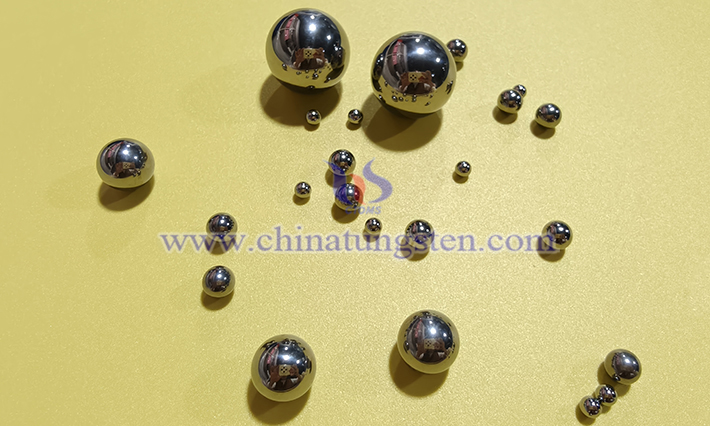
WC-Co cemented carbide valve balls (tungsten-cobalt based cemented carbide valve balls) are a mature valve ball material for medium and high-pressure valves containing particulate media, especially widely used in harsh conditions such as oil and gas, mining mud, and high-pressure cleaning.
Features of WC-Co cemented carbide valve balls:
1. Extremely high hardness and wear resistance: Typical grades (such as YG6, YG8, YG11C) of cemented carbide valve balls can achieve a Vickers hardness of 1300–1700 HV30 and a Rockwell hardness of 89–93 HRA. Their wear resistance is tens to hundreds of times that of ordinary steel balls, resulting in an extremely long service life in mud and mortar media containing solid particles.
2. Excellent compressive strength: WC-Co cemented carbide valve balls typically have a compressive strength of over 2500–3500 MPa, capable of withstanding extremely high valve seat closing impact forces (common in reciprocating pumps and mud pumps), and are not easily crushed or deformed.
3. Good toughness (compared to pure ceramics): Although not as good as steel balls, the YG series cemented carbide valve balls with a cobalt content of 6%–12% possess sufficient toughness to resist repeated impacts without brittle fracture, making them more resistant to accidental impacts than zirconium oxide or silicon nitride ceramic valve balls.
4. High Elastic Modulus and Rigidity: WC-Co cemented carbide valve balls have an elastic modulus of approximately 550–650 GPa, exhibiting minimal deformation under contact stress. This allows them to maintain a very high sealing pressure with the valve seat, resulting in excellent sealing performance and extremely low leakage.
5. Good Thermal Stability: WC-Co cemented carbide valve balls can be used long-term within a temperature range of -100℃ to approximately 450℃. They have a low coefficient of thermal expansion (approximately 5 × 10??/K) and good dimensional stability at high temperatures.
6. Excellent Fatigue Resistance: WC-Co cemented carbide valve balls are resistant to fatigue cracking even under millions or tens of millions of high-frequency impacts, making them the preferred material for valve balls in high-pressure plunger pumps, oilfield fracturing trucks, and other equipment.
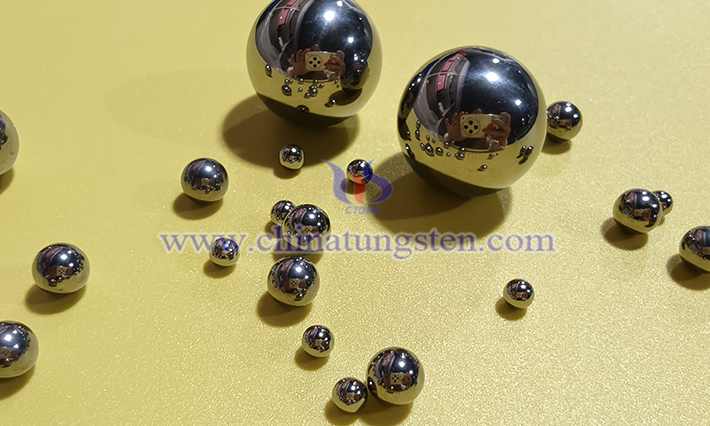
7. High surface finish and good self-lubricating properties: After diamond grinding and polishing, the WC-Co cemented carbide valve ball can easily achieve an Ra of 0.025–0.05μm or even a mirror finish. When paired with the valve seat, it has a low coefficient of friction and minimal wear.
8. Resistance to Weak Corrosion: WC-Co cemented carbide valve balls exhibit significantly higher corrosion resistance than ordinary steel balls in neutral or weakly acidic/alkaline media (such as oilfield produced water and slurry). However, they are susceptible to cobalt dissolution corrosion in strong acids (concentrated HCl, HNO?), strong alkalis, or media containing fluoride ions (in which case, YN series with Ni binder or binder-free cemented carbide must be used).
9. High Density (14.5–15.0 g/cm3): For the same volume, WC-Co cemented carbide valve balls are approximately twice as heavy as steel balls. They exhibit greater inertia and faster closing response in high-speed fluids, but this also means higher requirements for valve seat materials (usually cemented carbide or surface-hardened valve seats are used).
10. Non-magnetic or Extremely Weakly Magnetic: When the cobalt content is low, cemented carbide valve balls are essentially non-magnetic, making them suitable for applications requiring a non-magnetic environment.