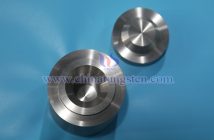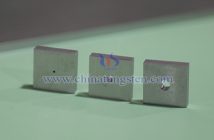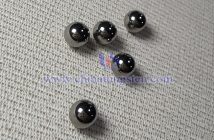
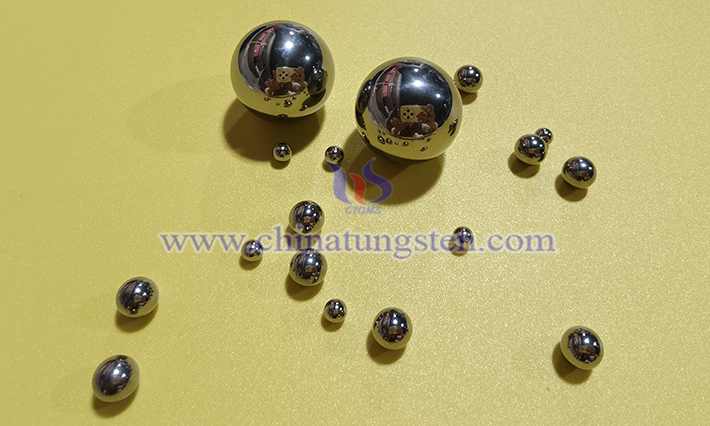
The main raw materials of cemented carbide valve balls include hard phases such as tungsten carbide, binder phases such as metallic cobalt, and may include carbides such as titanium and tantalum to optimize performance. This combination makes it a precision ball material used in demanding industrial valves.
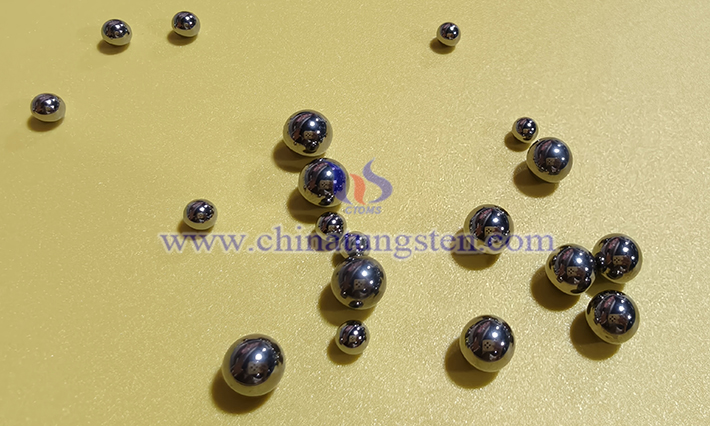
1. Hard Phase (Provides Hardness and Wear Resistance)
Tungsten Carbide: This is the most important raw material in carbide, typically accounting for 70%-97% of the total weight. It is formed by combining tungsten powder with carbon black at high temperatures, possessing extremely high hardness (second only to diamond), wear resistance, and a certain degree of strength. The fineness of the tungsten carbide particles (micron or submicron) directly affects the performance of the final product; the finer the particles, the better the hardness and wear resistance.
2. Binder Phase (Provides Toughness and Strength)
Cobalt: This is the most used binder metal in carbide. Cobalt exhibits excellent wettability to tungsten carbide, forming a strong binder phase at relatively low temperatures. The cobalt content is typically between 3% and 30%. Higher cobalt content results in better toughness and impact resistance, but correspondingly lower hardness and wear resistance. Cemented carbide valve balls are usually selected with a medium cobalt content, depending on the operating conditions, to balance wear resistance and impact resistance.
3. Other Carbide Additives (Improving Specific Properties)
To further enhance certain properties, small amounts of other carbides are added to the formulation. Examples include:
Titanium carbide/Tantalum carbide (Niobium): These additives significantly improve the alloy's oxidation resistance, corrosion resistance, and high-temperature red hardness (the ability to maintain hardness at high temperatures), and can inhibit tungsten carbide grain growth during sintering, refining the grain size. This is crucial for cemented carbide valve balls operating in corrosive media or at high temperatures.
Chromium carbide: Primarily used to improve the alloy's corrosion resistance.
4. Forming Agents (present only in the manufacturing process) During the process of pressing the mixture into spherical shapes, a small amount of forming agents (such as paraffin wax, polyvinyl alcohol, etc.) are added to increase the flowability and molding strength of the powder. These forming agents will completely volatilize and be expelled during the subsequent sintering process and are not present in the final product.