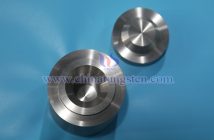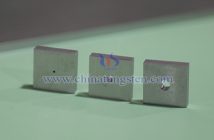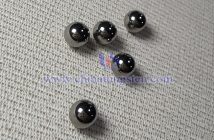
Cemented carbide valve balls are currently the most used precision sealing balls in high-end pumps and valves, possessing advantages such as wear resistance, corrosion resistance, impact resistance, resistance to ultra-high-pressure differentials, and long service life.
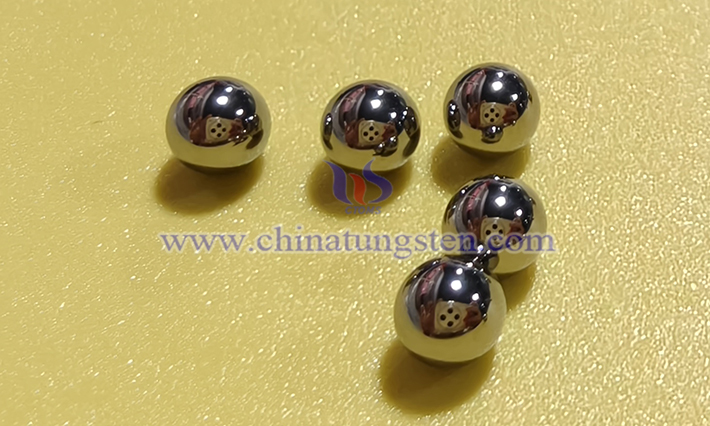
Main characteristics of cemented carbide valve balls:
1. High Hardness and Wear Resistance: Cemented carbide valve balls typically achieve a hardness of HRA89–93 (equivalent to Rockwell HRC75 or higher), making them virtually impervious to wear from solid particles such as sand, catalysts, and slag. In harsh media such as sand-containing crude oil and coal slurry, their service life is 50–100 times longer than stainless steel balls.
2. High Corrosion Resistance: Especially the YWN series cemented carbide valve balls with a nickel-bonded phase, which are resistant to almost all acids, alkalis, seawater, H?S, CO?, and other corrosive media, far exceeding materials such as 316L, Hastelloy, and titanium alloys.
3. High Density and High Impact Sealing Force: With a density of approximately 14.5–15.0 g/cm3,cemented carbide is more than twice as heavy as stainless steel, resulting in a greater impact force upon closure and a more reliable seal, making it particularly suitable for high pressure differentials and large-diameter valves.
4. High Compressive Strength: Cemented carbide valve balls can withstand contact stresses exceeding 2500–3000 MPa and will not deform or break under pressure differentials exceeding 100 MPa.
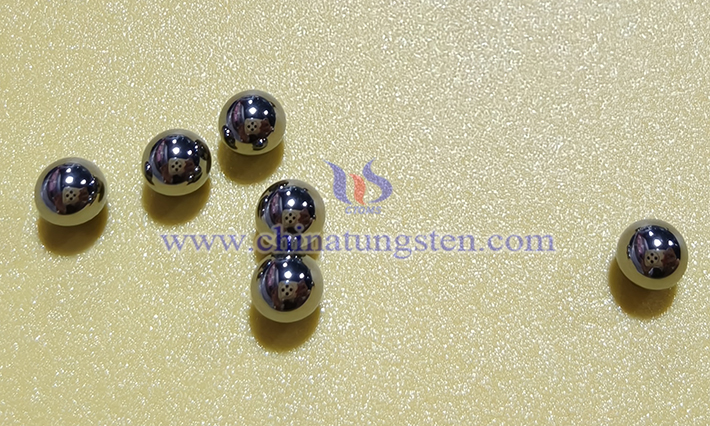
5. Good Surface Finish and Sealing Performance: Cemented carbide valve balls can typically be polished to Ra0.02–0.012 μm (mirror finish). Combined with carbide valve seats, true zero leakage can be achieved, with leakage rates as low as below 10?? Pa·m3/s. They are widely used in precision metering pumps, instrument valves, and high-pressure ball valves.
6. Excellent High-Temperature Performance: Cemented carbide valve balls can be used continuously at 400–500℃, and even withstand short-term temperatures up to 800℃, maintaining high hardness and strength at high temperatures.
7. Low Coefficient of Thermal Expansion: The coefficient of thermal expansion of cemented carbide is approximately 5–6 × 10??/℃, close to that of steel, resulting in minimal change in the clearance during thermal cycling.
8. Controllable Magnetic Properties: Cobalt-bonded phase (YG series) cemented carbide valve balls are slightly or weakly magnetic, while nickel-bonded phase (YWN series) cemented carbide valve balls are completely non-magnetic, meeting the requirements for non-magnetic environments.