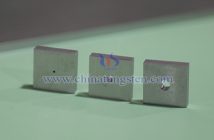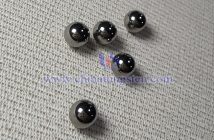
The fundamental reason why tungsten-copper alloy can simultaneously achieve high hardness and conductivity lies in its two-phase composite structure: tungsten provides strength and hardness, while copper provides electrical conductivity. At the microscopic scale, the two phases perform their respective functions without interfering with each other. Below is an explanation in a more natural, easily understandable, yet still professional manner.
I. Tungsten provides the foundation for hardness and strength
Tungsten itself is a typical high-melting-point refractory metal. Its atomic bonds are exceptionally strong, which results in: high hardness and wear resistance, meaning it is not easily scratched or deformed under pressure; retention of strength at high temperatures; and a stable electronic structure that resists plastic slip. In tungsten-copper alloys, tungsten often forms a continuous skeletal structure (especially in copper infiltration methods), which can be likened to a rigid metallic sponge skeleton. This skeletal framework determines the overall mechanical properties of the material, making tungsten-copper alloys significantly harder than typical copper alloys and even harder than some steels.
II. Copper provides channels for high conductivity
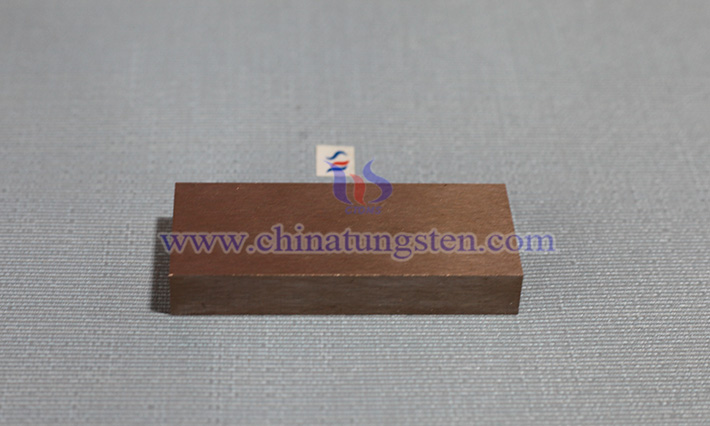
Copper is one of the most conductive metals in common use, second only to silver. Its high conductivity is due to: high free electron density; a crystal structure conducive to electron movement; and low lattice scattering, resulting in high electron mobility. When copper infiltrates the porous tungsten skeleton, it forms a continuous copper phase network that permeates the entire material. This network acts like a series of highways, allowing electrons to pass through quickly. Even though another part of the material is the high-hardness tungsten, it does not significantly impede the flow of electricity.
III. Key reasons for the complementary roles of tungsten and copper in the alloy
According to conventional scientific principles, tungsten and copper are almost insoluble in each other in metallic form. This leads to two important outcomes: (1) tungsten retains its hardness without softening as it would if dissolved in copper, and (2) copper retains its conductivity without a decrease in electrical conductivity due to the dissolution of impurities. In other words, the two metals maintain their respective characteristics within the same material rather than weakening each other.
IV. The microstructure of tungsten-copper alloy enables property synergy rather than compromise
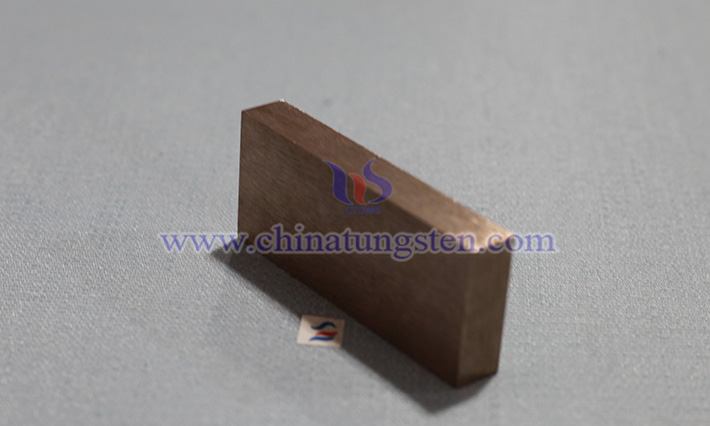
Tungsten-copper alloy is not a solid solution but a metal matrix composite. In this composite, tungsten bears mechanical loads, determining strength, deformation resistance, and ablation resistance, while copper primarily handles electrical and thermal conductivity, determining resistivity and thermal diffusion capability. Therefore, tungsten-copper alloy can achieve excellent conductivity alongside high hardness—a combination of properties that is difficult to attain with other single metals.
V. Why is this structure of tungsten-copper alloy particularly suitable for high-end electrical contacts and high-temperature components?
This structure of tungsten-copper alloy is particularly suitable for high-end electrical contacts and high-temperature components because: (1) copper can rapidly dissipate arc heat, preventing the contacts from melting; (2) tungsten can resist arc erosion and mechanical impact, avoiding softening or welding; and (3) the two-phase structure ensures material stability even in extreme electrical environments.