The adaptation requirements for tungsten alloy shielding containers in nuclear industry scenarios stem from the particular nature of their service objects: high-activity mixed radiation fields, long-half-life nuclides, complex chemical form waste liquids, and prolonged unattended operation. These requirements encompass shielding effectiveness, containment safety, environmental durability, and full-lifecycle compliance across multiple dimensions.
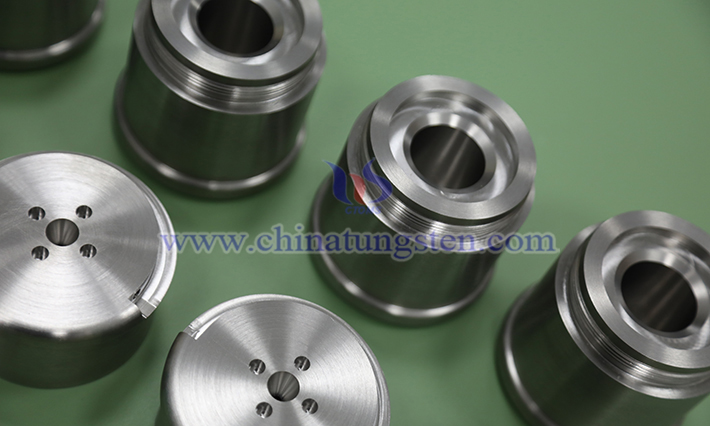
First is broad-spectrum shielding and low-activation design. Hot cells, waste repositories, and transport containers in the nuclear industry frequently handle both high-energy γ-rays and neutron fluxes simultaneously, requiring containers based on W-Ni-Fe high-strength systems to incorporate thermal neutron absorber inserts for combined γ-neutron attenuation, while low-activation material ensures manageable background levels after years of service, facilitating subsequent monitoring and disposal.
Second is durability under extreme environments. High-level waste liquid containers must withstand prolonged exposure to strong acids, alkalis, and high-temperature molten media; high-temperature target chamber containers need to resist localized heating and intense irradiation; spent fuel interim storage containers must maintain geometrical permanence and sealing integrity in either dry or wet conditions. Surface functional coatings and liner systems need to resist repeated strong oxidizing decontamination without spalling or powdering.
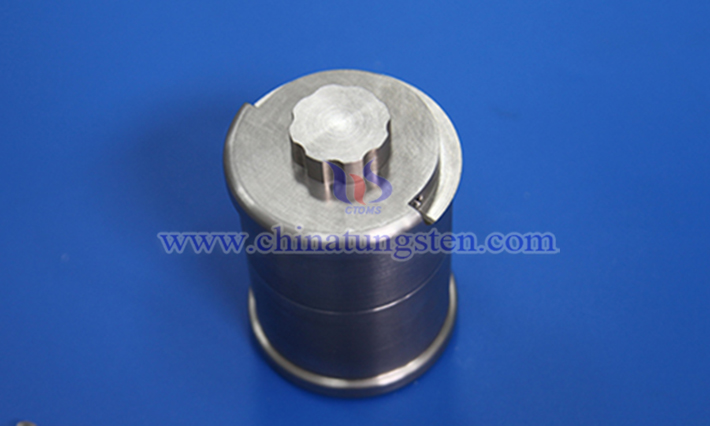
Third is high integration of structure and function. Nuclear industry containers generally adopt near-net-shape integral forming processes, incorporating replaceable sacrificial liners, automated source transfer mechanisms, multi-point status monitoring interfaces, and permanent welding or multi-lid redundancy designs to achieve full-process containment and traceability from routine operation to accident conditions.
Fourth is regulatory compliance and closed-loop recycling. Container materials and structures must meet international specifications for radioactive material transport and national waste management regulations, allowing direct smelting recovery upon decommissioning without entering special hazardous waste disposal pathways, achieving a green closed loop throughout the material lifecycle.
These adaptation requirements collectively position tungsten alloy shielding containers as the primary container form capable of balancing shielding efficiency, containment safety, and operational economics in nuclear industry applications, supporting facilities toward higher activity, longer lifespan, and greener development.