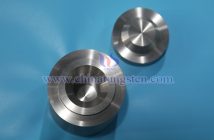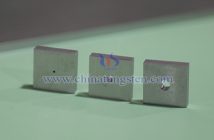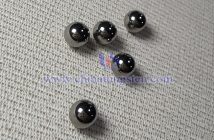
The ductility requirements of tungsten alloy shielding containers serves as the fundamental mechanical assurance that they do not undergo brittle fracture under transport, lifting, accidental drop, seismic, or long-term self-weight loading, thereby maintaining containment integrity. Ductility must provide sufficient plastic deformation capacity under conditions of high hardness and high density to absorb impact energy and prevent catastrophic cracking.
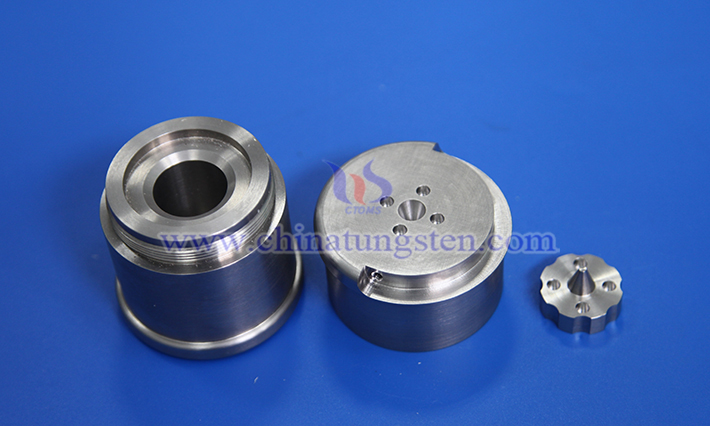
Ductility requirements focus primarily on elongation after fracture, bending deformation capability, and impact energy absorption across room temperature and service temperature ranges. Production achieves this by controlling binder phase type and content, optimizing secondary plastic deformation, and tailoring heat treatment to form elongated fiber-like tungsten particle orientation with binder phase creating continuous tough bridging networks between fibers. The W-Ni-Fe system typically strikes a favorable balance between strength and ductility, while the W-Ni-Cu system further improves low-temperature toughness due to copper’s good ductility.
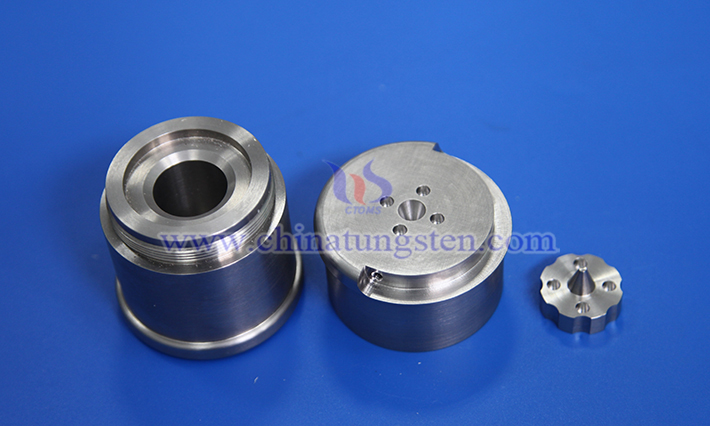
Ductility uniformity requires comparable plastic reserve throughout all container regions (including lifting lugs, wall thickness transitions, and sealing flanges), with weld and heat-affected zones free from embrittling phases. Post-irradiation ductility retention also receives attention to ensure no significant toughness loss under prolonged high-fluence irradiation. Practical testing combines tensile, bending, and Charpy impact tests, supplemented by type approval verification of no through-cracks or loss of containment after specified drop heights.
Appropriate fulfillment of ductility requirements enables tungsten alloy shielding containers to safely withstand various accidental mechanical loads in nuclear medicine hot cells, isotope production, industrial irradiation, and waste storage applications while maintaining long-term structural and shielding reliability.