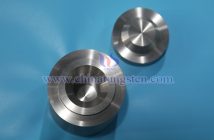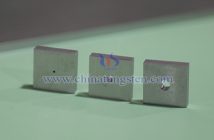
The performance characteristics of tungsten copper electrodes benefit from their pseudo-alloy composite structure, with tungsten particles forming a durable skeleton and copper phase responsible for thermal and electrical transmission. The good physical and chemical characteristics brought by this structure make them commonly used in fields such as resistance welding, EDM, and high-voltage switches.
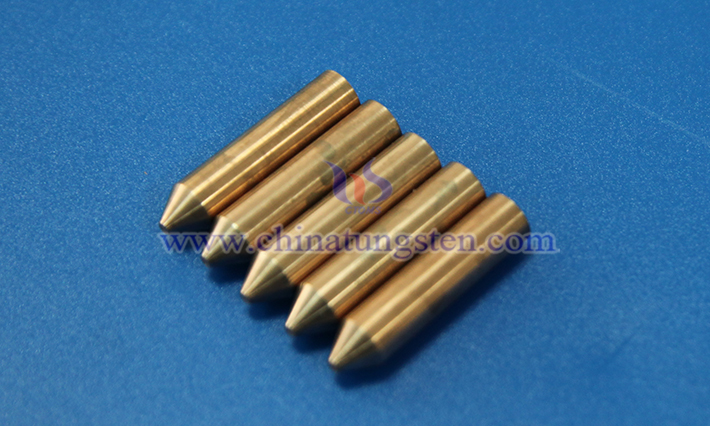
Tungsten copper electrodes exhibit good arc ablation resistance. the high-melting-point support of the tungsten skeleton effectively constrains copper phase melting under arc high temperature, resulting in fine and uniform ablation morphology on the surface, reducing material transfer and welding tendency. This characteristic enables the electrode to maintain stable shape in repeated interruption or high-current conditions, with lighter contact surface damage, suitable for medium-high voltage environments. The rapid heat conduction of the copper phase further assists heat dissipation, avoiding local overheating accumulation and extending overall electrode life.
Tungsten copper electrodes possess moderate electrical and thermal conductivity performance. The continuous channels formed by the copper phase provide smooth transmission of current and heat, although not as outstanding as pure copper, sufficient to meet most electrical demands. At the same time, the addition of tungsten phase improves overall hardness and mechanical strength, making the electrode more resistant to deformation and wear, performing more stably under mechanical stress or friction conditions. The low thermal expansion coefficient helps reduce cracking caused by thermal stress, suitable for occasions with large temperature changes.
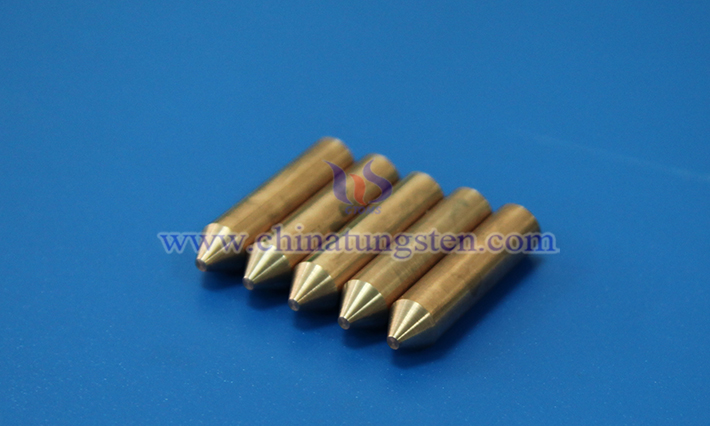
Tungsten copper electrodes have strong processing adaptability. they can be formed into complex structures through cold rolling, stamping, or machining, with surface finish easy to control, meeting mass production requirements. Good chemical stability, strong anti-oxidation and corrosion resistance in atmosphere or cooling media, simple maintenance.
Tungsten copper electrodes have outstanding environmental adaptability. They maintain stable performance in wide temperature ranges or different atmospheres, with less damage in radiation or vibration environments. The composite ratio is adjustable: higher tungsten content for stronger ablation resistance, higher copper content for better electrical and thermal conductivity, flexibly matching working condition demands.