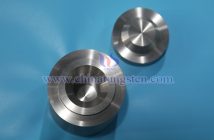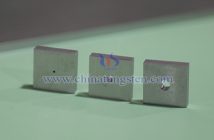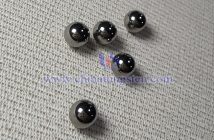
Tungsten carbide bearing balls are high-performance rolling elements with a series of outstanding features compared to traditional chromium steel (such as GCr15) or ceramic bearing balls.
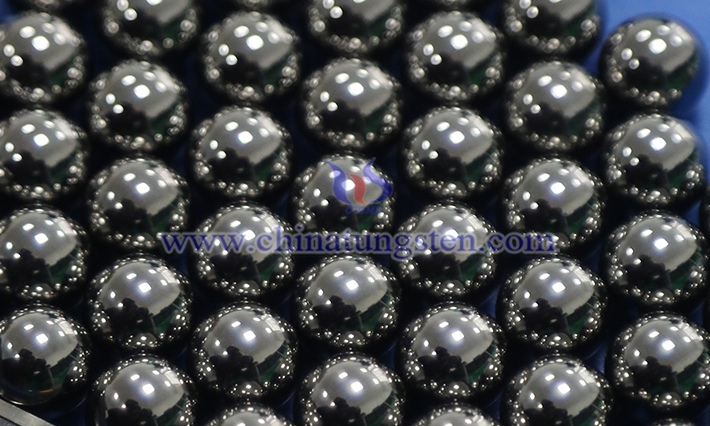
I. Advantages of Tungsten Carbide Bearing Balls
1. Extremely High Hardness and Wear Resistance
Performance: Tungsten carbide balls can achieve a hardness of HRA 90 or higher, far exceeding that of high-grade bearing steels (approximately HRC 60-65). This allows them to withstand extreme pressure and friction with virtually no plastic deformation.
Advantages: Under harsh conditions of heavy loads, high stress, and the presence of abrasive particles, their wear is minimal, maintaining precise dimensions and geometry, thus significantly extending the bearing's service life.
2. Extremely High Compressive Strength
Performance: Tungsten carbide is composed of hard tungsten carbide particles and a tough cobalt metal binder phase, enabling it to withstand extremely high static and dynamic pressures without crushing.
Advantages: Particularly suitable for applications involving ultra-high preload bearings, heavy machinery, rolling mills, oil drilling equipment, and other applications subjected to enormous impact loads.
3. Excellent Corrosion Resistance
Performance: Tungsten carbide (especially those using a corrosion-resistant binder phase) exhibits excellent resistance to a variety of chemicals, including acids, alkalis, salt solutions, and seawater.
Advantages: Ideal for use in corrosive environments such as chemical plants, marine engineering, shipbuilding, and medical devices (in contact with bodily fluids), avoiding the rusting problems associated with ordinary steel balls.
4. Good High-Temperature Performance
Performance: Tungsten carbide maintains high hardness and strength at high temperatures. Its red hardness is far superior to bearing steel, and its operating temperature can reach 650°C or even higher (bearing steel is generally limited to 120-150°C).
Advantages: Suitable for bearings in high-temperature environments, such as aero-engines, high-temperature furnaces, and welding equipment.
5. Low coefficient of friction and self-lubricating properties (under certain conditions)
Performance: Tungsten carbide has a very smooth surface and a low coefficient of friction. In some applications, its microstructure can even store a small amount of lubricant, providing a degree of self-lubrication.
Advantages: Helps reduce operating temperature and energy loss, and performs more reliably under poor lubrication or boundary lubrication conditions.
6. Non-magnetic
Performance: Standard tungsten carbide is non-magnetic.
Advantages: This is a key advantage in fields requiring the avoidance of magnetic field interference, such as precision instruments, electronic equipment, and magnetic resonance imaging (MRI) equipment.

II. Disadvantages of Tungsten Carbide Bearing Balls
1. Extremely High Cost
Reasons: The raw materials (tungsten, cobalt) are expensive, the manufacturing process is complex (requiring powder metallurgy, high-temperature sintering, and precision grinding), and processing is difficult.
Impact: The price of tungsten carbide bearing balls is typically tens or even hundreds of times higher than that of high-grade bearing steel balls, limiting their application to fields with extreme performance requirements or where cost is not a concern.
2. Poor Toughness (Brittleness)
Manifestation: Although its compressive strength is extremely high, its impact toughness is far lower than that of high-quality bearing steel. Under severe, non-uniform impact loads, there is a risk of brittle fracture or spalling.
Impact: Not suitable for applications with very severe impact vibration; extra care must be taken during installation to avoid impacts.
3. High Processing Difficulty
Manifestation: Due to its extremely high hardness, subsequent shaping, grinding, and polishing are very difficult and time-consuming, requiring the use of special tools such as diamond grinding wheels.
Impact: This further increases manufacturing costs and makes it difficult to manufacture ball bearings with very complex shapes or extra-large dimensions.
4. High Density (Heavy Weight)
Performance: The density of tungsten carbide (approximately 14-15 g/cm3) is nearly twice that of steel (approximately 7.8 g/cm3).
Impact: In high-speed applications, the enormous centrifugal force can exert greater stress on the bearing cage and outer ring, potentially limiting its maximum speed.