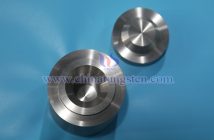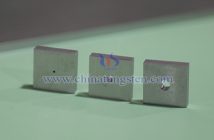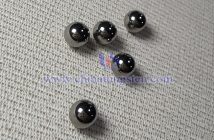
Cemented carbide balls for fuel valves are crucial components in industrial applications, ensuring the safety and efficiency of fuel delivery. Their material properties and adaptability to different application scenarios determine their irreplaceable nature. The following explains their material properties and application scenarios:
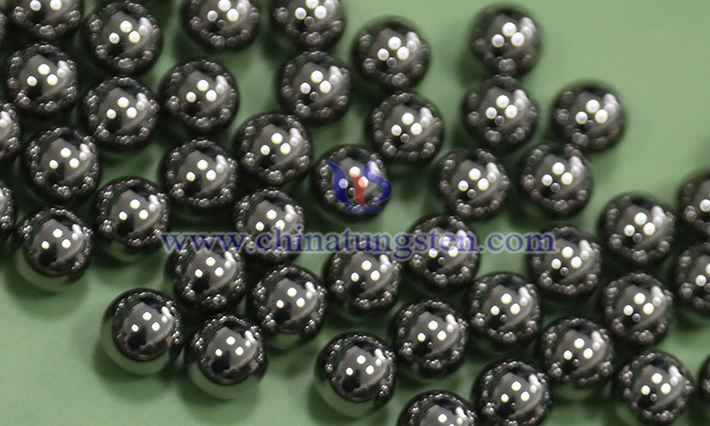
1. Material Properties of Cemented Carbide Balls for Fuel Valves
Cemented carbide balls are made with tungsten carbide (WC) as the core component, sintered using powder metallurgy with cobalt (Co) and other metal binders. This structure endows them with high hardness (up to 90 HRA or higher) and high density (approximately 14.9 g/cm3), exhibiting wear resistance far exceeding that of traditional steel balls. They are particularly suitable for high-frequency opening and closing or applications involving particulate media. Their corrosion resistance is also outstanding, withstanding acidic, alkaline, and sulfur-containing media erosion, maintaining sealing stability even in extreme environments such as deep-sea drilling and chemical pipelines. Furthermore, the cemented carbide ball achieves a smooth surface (Ra≤0.2μm) through precision machining, reducing the risk of media retention. Simultaneously, its bidirectional sealing design automatically compensates for wear, extending valve life.

2. Application Scenarios of Cemented Carbide Balls for Fuel Valves
Cemented carbide balls are widely used in core control components of fuel transportation systems. In the oil and gas sector, they are commonly used in high-pressure wellhead valves and long-distance pipeline ball valves, requiring them to withstand high pressures (e.g., above 42MPa) and temperature fluctuations (cryogenic to -196℃ or high to 450℃) to ensure leak-free sealing. For example, in deep-sea drilling platforms, valve balls must withstand complex media containing sand, wax, and corrosive gases; their wear resistance can support continuous operation for several years.
In the coal chemical industry, pulverized coal injection valves, through cemented carbide overlay welding or chromium carbide coating spraying, can resist high-speed erosion by pulverized coal, reducing valve seat wear.
In urban gas pipelines, full-bore welded ball valves, due to the corrosion resistance of the cemented carbide ball, can be buried underground for long-term operation, adapting to soil pressure and vibration environments.
In addition, the modularly designed smart ball valve integrates sensors to monitor the ball status in real time, enabling fault early warning and improving operation and maintenance efficiency.