
Tungsten alloy collimators play a core role in the medical field by regulating the geometric shape and propagation path of radiation beams, thereby achieving selective irradiation of target areas and maximally protecting surrounding normal tissues.
Their applications are mainly concentrated in the two major systems of radiotherapy and medical imaging, spanning the entire chain from diagnosis to treatment.
In the radiotherapy field, tungsten alloy collimators are mainly integrated into medical linear accelerator systems, undertaking the tasks of dynamic beam conformity and intensity modulation.
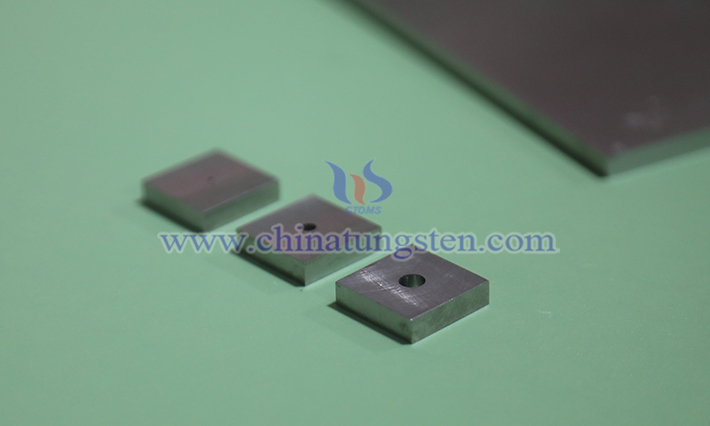
Multi-leaf collimators are a typical representative, composed of multiple independently driven tungsten alloy leaves, with leaf thickness and edge geometry precisely machined to suppress penumbra effects.
Through computer control, the leaf arrays can reconstruct the radiation field contour in real time, making the high-dose area highly consistent with the three-dimensional shape of the tumor.
In medical imaging equipment, tungsten alloy collimators undertake dual responsibilities of pre-beam shaping and post-scatter suppression.
Taking computed tomography (CT) as an example, the pre-collimator is located at the X-ray tube exit, trimming the cone beam into a fan-shaped thin-layer beam, limiting the irradiation field to only cover the current scanning layer; the post-collimator is arranged in front of the detector array, shielding non-perpendicular incident scattered rays through a slit structure, ensuring that the detector only receives primary signals.
This dual-collimation configuration effectively reduces unnecessary patient exposure and improves image signal-to-noise ratio, providing high-quality projection data for subsequent reconstruction.
Nuclear medicine imaging has stricter requirements for the directional selectivity of collimators.
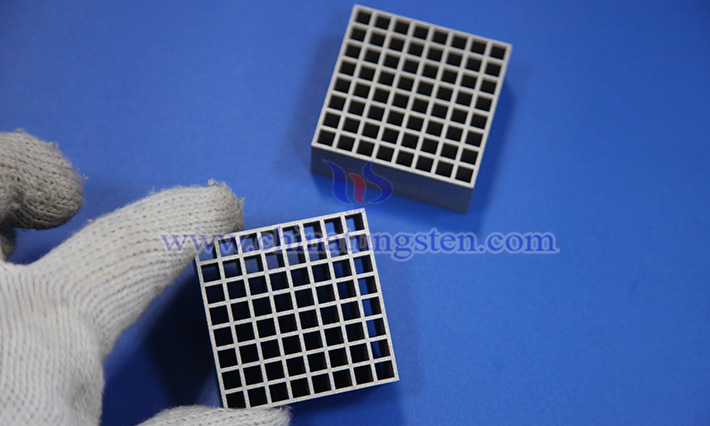
Tungsten alloy parallel-hole or pinhole collimators only allow γ photons parallel to the hole axis to pass, while photons deviating from the direction are absorbed and blocked by tungsten alloy.
This mechanism converts isotropic radiation emitted by radioactive tracers in the body into directional projections for scintillator detectors to collect and reconstruct functional images via iterative algorithms, thereby achieving visualization of organ metabolism and lesion localization.
The reason tungsten alloy is the preferred material for collimators lies in its high atomic number and density characteristics, making its linear attenuation coefficient for X/γ rays far higher than traditional lead, with significantly reduced thickness under the same shielding efficiency, facilitating compact equipment design.
At the same time, tungsten alloy is non-toxic, high-temperature resistant, and resistant to mechanical fatigue, meeting the biocompatibility and long-term stability requirements of medical devices.