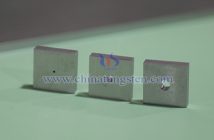
In the aerospace field, high-density tungsten alloy counterweights, with a density of 17-18.5 g/cm3, serve as key components for achieving equipment balance, space optimization, and performance enhancement. Compared to traditional materials like steel or lead, tungsten alloys significantly reduce volume under the same weight, not only optimizing structural layout but also reducing air resistance, thereby improving the fuel efficiency and overall performance of aircraft.
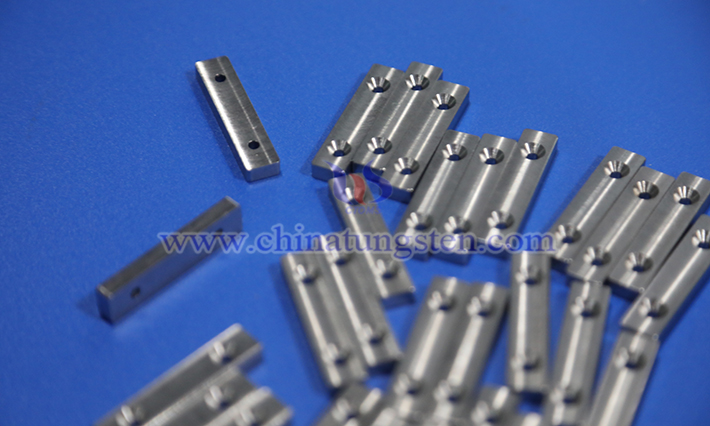
In aircraft design, Applications of tungsten alloy counterweights are widespread in control surfaces, including wings, tailplanes, flaps, and ailerons. The balance of these components affects the stability and maneuverability of the aircraft, especially during high-speed flight or complex maneuvers. Tungsten alloy counterweights ensure the aircraft remains stable in various attitudes by adjusting the center of gravity. For instance, installing tungsten alloy counterweights at the wing tips can compensate for weight shifts caused by fuel consumption or load changes, reducing vibration and stress concentration. Helicopter rotor systems similarly rely on tungsten alloy counterweights to fine-tune rotor balance, optimize lift distribution, and prevent mechanical fatigue or noise issues due to imbalance.
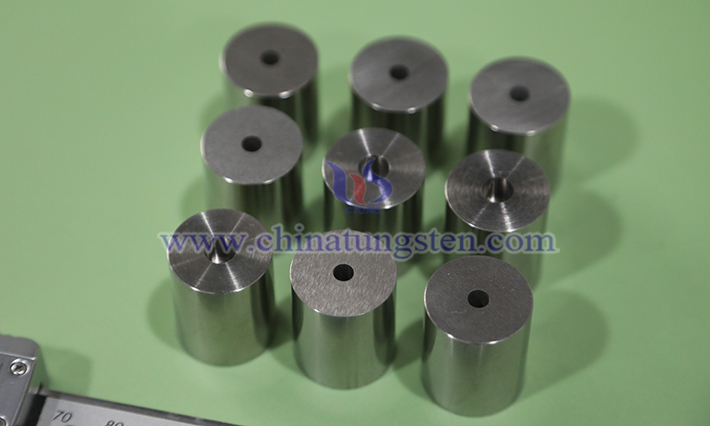
In the space sector, tungsten alloy counterweights play a crucial role in the attitude control systems of satellites and spacecraft. Satellite orbit positioning and instrument stability depend on center of gravity adjustments, with tungsten alloy counterweights providing substantial weight in limited space to regulate the spacecraft's center of gravity and moment of inertia. Additionally, tungsten alloys exhibit low thermal expansion characteristics, maintaining excellent dimensional stability in extreme space temperature variations, effectively avoiding structural deformation and performance degradation caused by thermal stress.
Aerospace equipment often faces high-temperature, high-pressure, and vacuum environments, making the superior high-temperature resistance of tungsten alloys an ideal choice. In spacecraft attitude control systems, tungsten alloy counterweights are widely applied in gyroscope rotor assemblies and core components of inertial navigation systems, balancing operational centers of gravity through design to enhance attitude control precision and navigation stability. Notably, the non-magnetic properties of tungsten-nickel-copper alloys in tungsten-based alloys are suitable for electromagnetically sensitive equipment, such as magnetometers or gyroscopes, preventing magnetic field interference from affecting measurement accuracy.