
Tungsten alloy collimator is a radiation control device designed using high-density tungsten alloy materials, with its core function being to limit the direction and range of radiation propagation through physical structures. It is widely used in medical, industrial, and scientific fields.
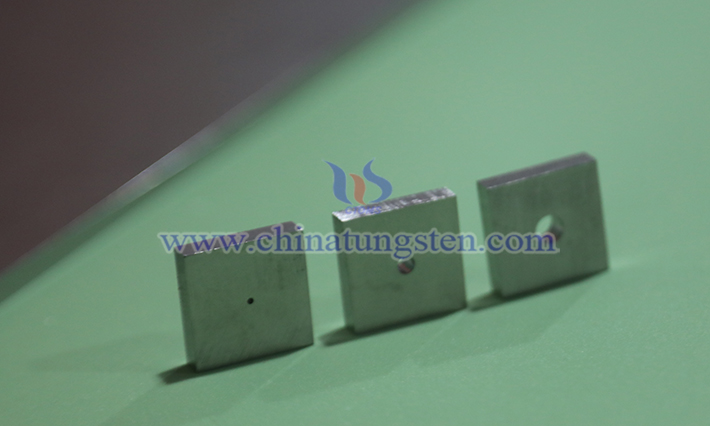
Tungsten alloy is a material based on tungsten (W) with the addition of metals such as nickel (Ni) and iron (Fe), achieving a density of 16.5-18.75 g/cm3. This high-density characteristic makes it an ideal material for radiation shielding:
Radiation Attenuation Efficiency: Tungsten has a high atomic number and significant brittleness, but alloying with optimized component ratios reduces brittleness while maintaining high density. Studies show that, at the same thickness, tungsten alloy collimator provides better shielding than lead.
Radiation Damage Resistance: Tungsten alloy resists structural degradation in strong radiation environments, whereas lead may produce secondary bremsstrahlung (X-rays) under prolonged radiation, increasing background noise.
Environmental Advantage: Tungsten alloy offers notable ecological compatibility, with its non-toxic and stable chemical properties meeting the environmental safety requirements of medical and industrial applications, demonstrating a more sustainable advantage compared to traditional shielding materials.
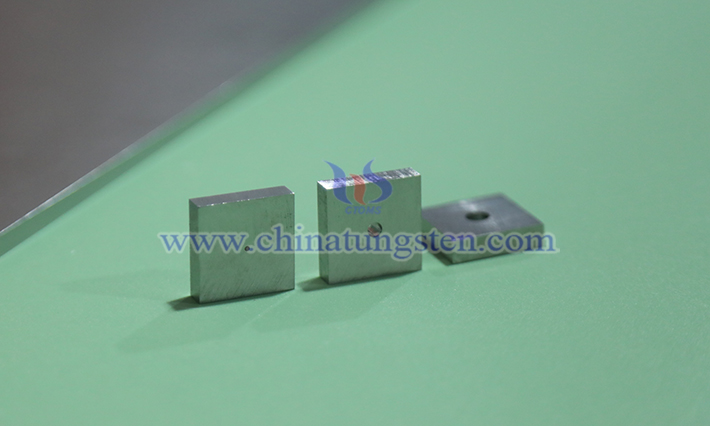
Tungsten alloy collimators are formed through precision machining into specific geometric channels or blade arrays, with their design adhering to the following principles:
Radiation Collimation:
Medical Accelerators: In linear accelerators, the primary collimator is located at the front of the radiation head, with tungsten blades in the multi-leaf collimator dynamically adjusting the beam shape to match tumor contours. Secondary collimators further refine the beam, reducing scatter.
CT Equipment: The pre-collimator, positioned in front of the X-ray tube, compresses the conical beam into a fan-shaped beam to control scan layer thickness. The post-collimator, located before the detector, uses a tungsten blade array to filter scattered rays, improving image signal-to-noise ratio. EPO-TEK?MED series adhesives are used to bond tungsten blades, ensuring biocompatibility and structural stability.
Pinhole Imaging:
Pinhole collimators utilize the pinhole imaging principle, achieving directional projection of radiation through a single-hole structure. Sensitivity is inversely proportional to aperture size, making them commonly used for small animal imaging or organ-specific scans.