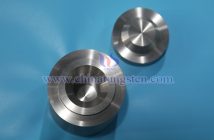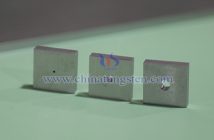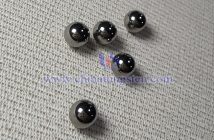
Tungsten alloy fasteners, with their diverse structural designs, cater to complex connection requirements ranging from high-temperature furnaces to spacecraft. Screws offer flexible installation options, bolts and nuts meet high-strength fixation needs, and rivets provide robust assurance for non-detachable scenarios. Together, these types form the application ecosystem of tungsten alloy fasteners, supporting the reliability and efficiency of high-end manufacturing.
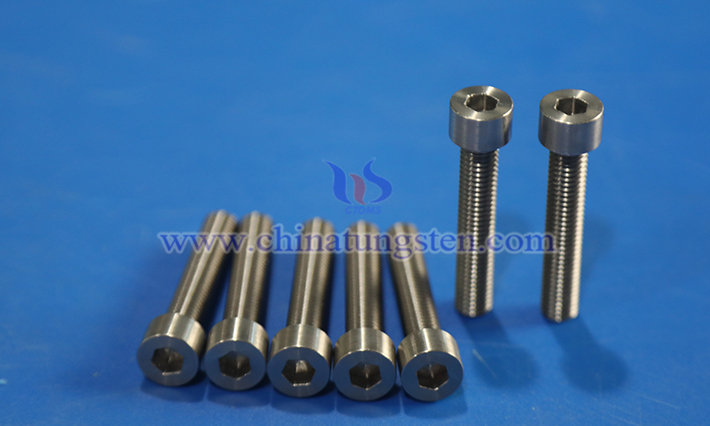
I. Tungsten Alloy Screws
Tungsten alloy screws are among the most widely used fastener types, categorized into various forms based on thread design and functional differences:
Coarse Thread Screws: Featuring larger thread spacing, these screws offer high efficiency in installation and removal, suitable for medium-strength connection scenarios. For instance, in the fixation of internal components of industrial high-temperature furnaces, ordinary screws can resist thermal stress, maintaining connection stability and preventing failure due to softening of conventional materials at high temperatures.
Fine Thread Screws: With denser and shallower thread profiles, these screws enhance vibration resistance, making them ideal for high-frequency vibration environments, such as the fixation of blades to rotors in aviation engines. Their precision thread design, optimized for engagement depth, helps reduce stress concentration, providing support for reliability under long-term dynamic loads.
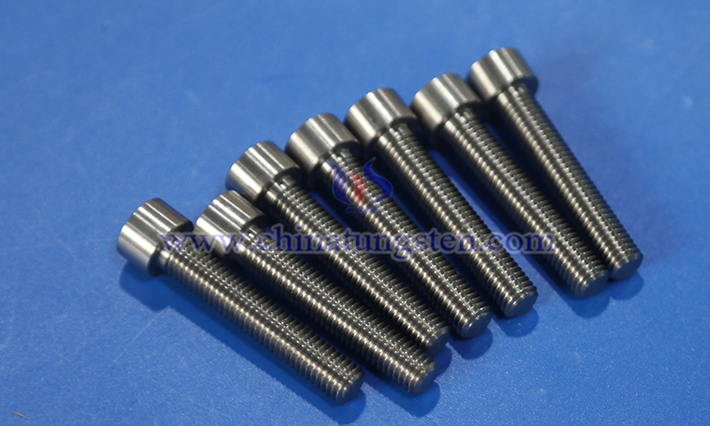
II. Tungsten Alloy Bolts and Nuts
Bolts and nuts are typically used in pairs, with structural designs optimized for high strength and complex environments, including common types such as:
Hex Head Bolts: Featuring a hexagonal head for easy tool operation and efficient torque transmission, these are widely used in flange connections of nuclear reactor pressure vessels. The bolt shank is reinforced through heat treatment, while the nut's inner wall often receives a high-temperature-resistant coating, reducing friction and wear to enhance connection reliability in high-pressure, high-temperature environments.
Countersunk Bolts: With a tapered head that embeds into the surface of the connected part, these maintain a flush profile, suitable for fixing internal components of precision instruments, such as stage connections in semiconductor manufacturing equipment. The smooth transition between the head and shank effectively reduces stress concentration, extending fatigue life.
Locking Nuts: Equipped with an anti-loosening structure, these maintain fastening integrity in vibrating environments, ideal for securing counterweights in heavy machinery. Their overall forging process ensures structural uniformity, providing support for high-load demands of counterweights and reducing the risk of loosening or failure.
III. Tungsten Alloy Rivets
Rivets are suited for permanent connection scenarios, and tungsten alloy rivets, with their high strength and sealing properties, meet the demands of such harsh conditions. The classification of these rivets into solid rivets and blind rivets is a common way to categorize them.
Solid Rivets: Deformed by external force to create a high-strength connection, these are suitable for scenarios with high sealing requirements, such as the splicing of vacuum chambers.
Blind Rivets: Expanded and secured by pulling the mandrel, these offer simple installation without complex equipment, ideal for connecting narrow spaces within spacecraft cabins. The mandrel material must match the properties of tungsten alloys, with high-strength alloy materials selected to lower the probability of breakage during pulling, thereby supporting connection reliability.