Tungsten alloy screws and molybdenum alloy screws, as two refractory metal-based materials, are widely used in high-temperature, high-strength, or specialized environment connection scenarios due to their unique physical and chemical properties. The following text primarily discusses the performance comparison between tungsten alloy screws and molybdenum alloy screws.
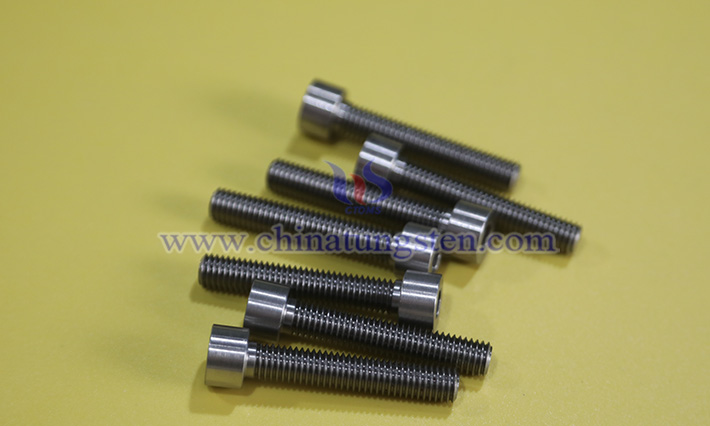
Tungsten alloy screws are renowned for their exceptional high-temperature resistance and hardness, making them outstanding in high-temperature operation scenarios such as aerospace engines, industrial high-temperature furnaces, or nuclear reactor fixations. In terms of mechanical performance, tungsten alloy screws exhibit high tensile strength and wear resistance, capable of withstanding high torque and continuous vibration, reducing the risk of thread wear or loosening. Their high density further enhances vibration resistance in precision assemblies, making them suitable for mechanical connections requiring high stability. However, the high density of tungsten alloys also presents a weight disadvantage, potentially increasing overall load in lightweight designs and limiting their use in some mobile equipment applications. Additionally, the high hardness of tungsten alloys complicates the processing, requiring specialized tools and high-temperature treatment processes, which increases manufacturing costs and time.
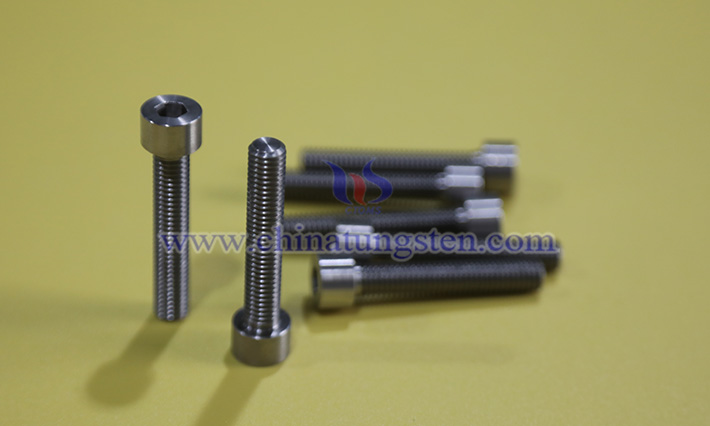
In contrast, molybdenum alloy screws also demonstrate excellent high-temperature resistance and mechanical performance but are lighter in weight, making them a preferred choice in weight-sensitive scenarios. Molybdenum alloy screws maintain good strength and toughness in high-temperature environments, suitable for fixing connections in high-temperature furnaces, heat treatment equipment, or vacuum settings. Compared to tungsten alloys, molybdenum alloys have slightly lower hardness but still provide sufficient fatigue resistance under dynamic loads, reducing the risk of fracture. Their high thermal conductivity helps dissipate heat quickly during high-temperature operations, preventing performance degradation due to localized overheating. However, molybdenum alloy screws may experience surface wear in high-strength or high-friction environments, with durability slightly inferior to tungsten alloys. Moreover, molybdenum alloys are relatively easier to process, compatible with modern cutting and forming techniques, which can somewhat reduce production costs, though processing still requires a controlled environment to prevent material oxidation.