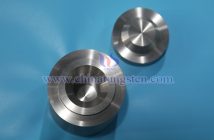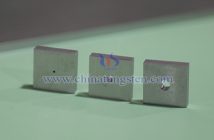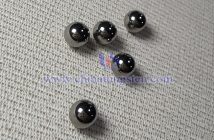
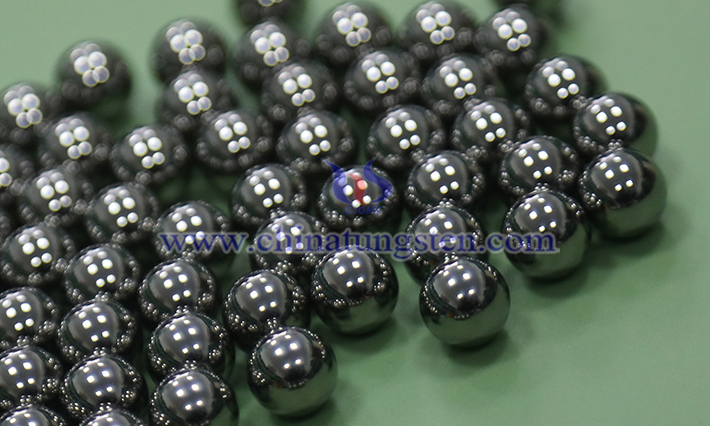
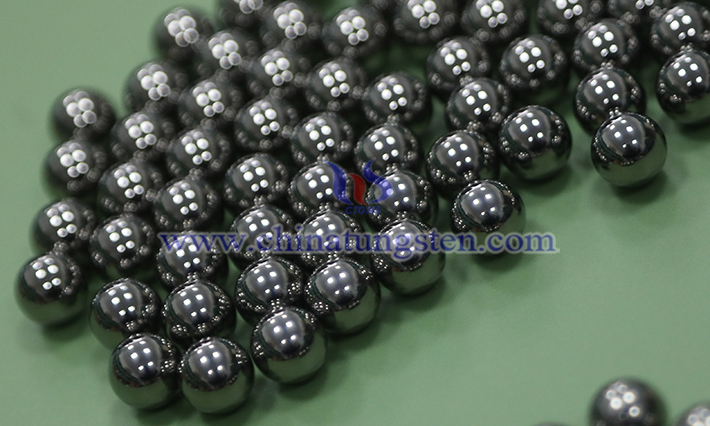
Tungsten cemented carbide balls possess exceptional wear resistance, tens to hundreds of times greater than that of traditional steel balls. They can operate stably and long-term under harsh conditions such as high loads, high speeds, and severe corrosion, significantly reducing equipment wear and maintenance costs.
I. Data Supporting Tungsten Cemented Carbide Balls Wear Resistance
1. Hardness
Tungsten cemented carbide balls generally have a hardness of ≥90.5 HRA (Rockwell hardness), approaching that of diamond (100 HRA) and far exceeding that of ordinary steel (e.g., 45# steel, approximately 20-25 HRC). This high hardness directly determines their wear resistance, allowing them to maintain dimensional accuracy even under high-pressure friction.
2. Density and Wear Resistance
With a density of approximately 14.9 g/cm3, the high-density structure allows for tighter bonding of the material's internal particles, effectively resisting micro-cutting and fatigue wear, and extending service life.
II. Technical Principles of Wear Resistance of Tungsten Cemented Carbide Balls
1. Material Composition Design
Carbide Matrix: Primarily composed of tungsten carbide (WC) or titanium carbide (TiC), it offers high hardness and strong chemical stability, forming a wear-resistant framework.
Metal Binder: Cobalt (Co) or nickel (Ni) serves as a binder phase, enhancing material toughness and preventing brittle fracture while maintaining high hardness.
Trace Additives: Such as tantalum carbide (TaC) refine the grain size, further improving wear resistance and thermal shock resistance.
2. Powder Metallurgy Process
Vacuum sintering or hydrogen reduction furnace sintering achieves uniform distribution of carbide and binder, eliminates internal defects, ensures material density, and thus enhances wear resistance.
3. Surface Treatment Technology
Fine Grinding and Polishing: Improve surface finish, reduce friction coefficient, and minimize wear.
Coating Technologies: Such as physical vapor deposition (PVD) coatings can form a nanoscale hard layer, further enhancing wear resistance and corrosion resistance.
III. Wear Resistance Application Verification
1. Precision Bearings
Carbide bearing balls used in high-speed machine tool spindles have a lifespan 5-10 times that of steel balls and can withstand higher speeds, reducing downtime for maintenance.
2. Petrochemical Industry
Valve balls in sandy and corrosive media are made of carbide, which resists erosion and chemical corrosion, extending their service life by dozens of times compared to stainless steel valve balls.
3. Machining
Punching balls can be used in sheet metal stamping, achieving tens or even hundreds of thousands of punches per cycle, significantly improving production efficiency.