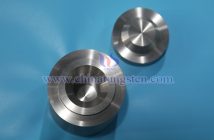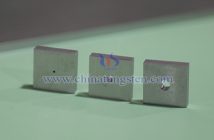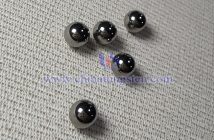
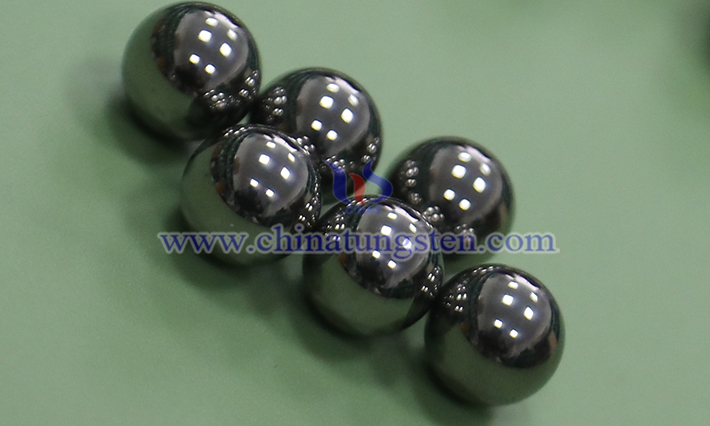
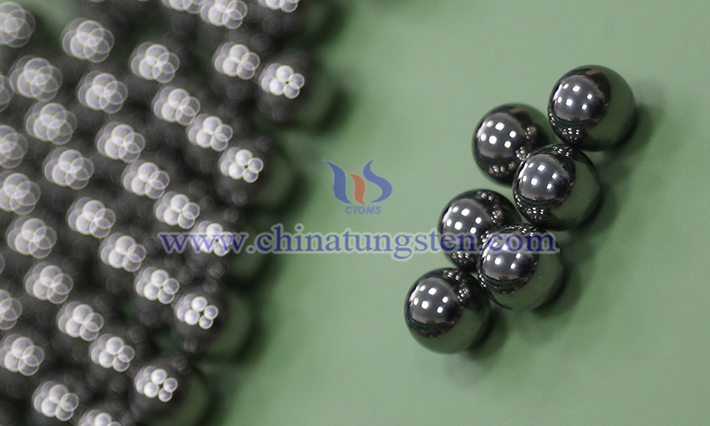
Tungsten cemented carbide balls are spherical products made by sintering refractory metal tungsten carbide (WC) powder as the primary component, with cobalt (Co) or nickel (Ni) as the binder, using a powder metallurgy process. The formation of internal stress is primarily due to microstructural heterogeneity during material preparation. The specific mechanisms and impacts are as follows:
I. Internal Stress Formation Mechanisms
1. Difference in Thermal Expansion Coefficients
During the sintering process, the thermal expansion coefficients of the cobalt (Co) binder and the tungsten carbide (WC) matrix differ significantly. When the material cools from high temperature to room temperature, the different contraction rates between the two phases generate residual stress at the interface. This stress manifests itself in the tungsten cemented carbide ball as tensile stress in the cobalt phase and compressive stress in the tungsten carbide phase. The absolute value of the stress increases with decreasing volume percentage of the phases. 2. Grain Size Effect
WC Grain Size: Changes in WC grain size directly affect the thermal stress distribution within each phase. For example, increasing WC grain size reduces tensile stress in the cobalt phase while increasing compressive stress within the WC grains.
Cobalt Layer Thickness: A higher cobalt content increases the mean free path of the binder phase (cobalt layer thickness), reduces the alloy's coercivity, and leads to a more uneven internal stress distribution. Fine-grained alloys, due to their larger grain boundaries, experience a slower internal stress release rate, resulting in higher residual stress levels than coarse-grained alloys.
3. Phase Transformation and Microstructural Inhomogeneity
Phase transformations (such as the transformation from γ-Co to ε-Co) or microstructural inhomogeneities (such as cobalt phase segregation) that may occur during sintering can further exacerbate internal stress. For example, the martensitic transformation of the cobalt phase during cooling after sintering produces volume changes, leading to localized stress concentrations.
II. Effect of Internal Stress on Properties
1. Mechanical Properties
Strength and Toughness: Internal stress reduces the flexural strength and fracture toughness of tungsten cemented carbide balls. Fatigue Life: Internal stress accelerates the initiation and propagation of fatigue cracks. Under alternating stress, high-stress areas (such as the interface between the cobalt phase and the WC grains) are prone to becoming fatigue sources, significantly reducing fatigue life.
2. Dimensional Stability
Internal stress can cause tungsten cemented carbide balls to creep or change in size during storage or use. For example, carbide molds that have not been cryogenically treated can easily deform during processing due to the release of internal stress, affecting product precision.
3. Wear and Corrosion Resistance
Wear Resistance: Internal stress reduces the wear resistance of tungsten cemented carbide balls. Stress concentration areas are prone to microcracks during friction, accelerating material wear.
Corrosion Resistance: Internal stress can damage the passivation film on the alloy surface, reducing its stability in corrosive environments. For example, in acidic media, stress corrosion cracks tend to propagate along high-stress areas.
III. Internal Stress Control and Optimization
1. Cryogenic Treatment Technology
Cryogenically treating tungsten cemented carbide balls at extremely low temperatures can significantly reduce internal stress. The principles behind this process include:
Slowing the stress release rate: At low temperatures, atomic diffusion rates decrease, leading to more uniform internal stress release and reducing the risk of crack initiation.
Crystal structure optimization: Cryogenic treatment promotes the reverse transformation of the cobalt phase into martensitic phase, eliminating phase transformation stresses while also refining the WC grains and improving microstructure uniformity.
Reducing porosity and cracks: Low-temperature shrinkage closes micropores and reduces stress concentration sources. For example, cryogenically treated cemented carbide molds exhibit improved dimensional stability and extend their service life by over 30%.
2. Process parameter optimization
Sintering temperature and time: Appropriately increasing the sintering temperature or extending the holding time can promote uniform distribution of the cobalt phase and reduce internal stress. However, overheating, which can lead to grain coarsening, should be avoided.
Cooling rate control: A graded cooling process (e.g., rapid cooling followed by slow cooling) can reduce thermal stress.
3. Material composition design
Cobalt content adjustment: While maintaining strength, appropriately reducing the cobalt content can reduce the volume fraction of the binder phase and lower internal stress levels. For example, the internal stress of YG6 alloy (6% cobalt content) is lower than that of YG8 alloy (8% cobalt content).
Additive introduction: Adding small amounts of elements such as Ni and Cr can improve the toughness of the cobalt phase and alleviate stress concentration. For example, Ni-containing cemented carbides exhibit lower fatigue sensitivity than pure cobalt alloys under low stress ratio loading.