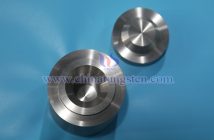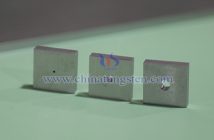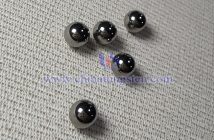
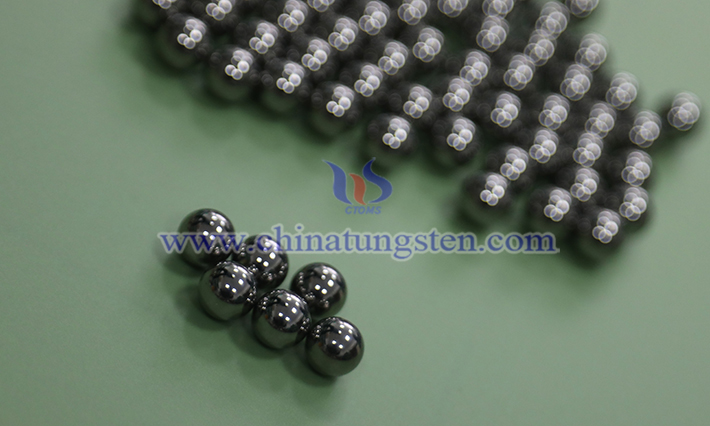
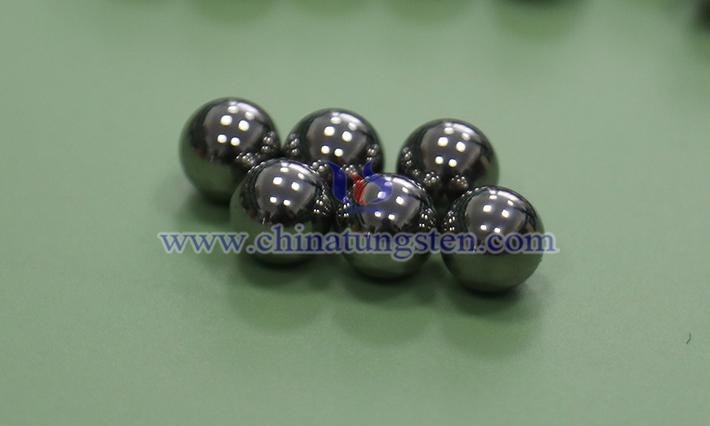
Tungsten cemented carbide balls are powder metallurgy products made from a matrix of high-hardness, refractory tungsten carbide powder, with cobalt (Co), nickel (Ni), or molybdenum (Mo) as a binder, sintered in a vacuum furnace or hydrogen reduction furnace. Their hardness characteristics and key influencing factors are as follows:
I. Hardness Range and Performance Advantages
1. Core Hardness Index
The hardness of tungsten cemented carbide balls generally ranges from HRA 86-93. Some high-performance products (such as YG6x and YT15) can reach a hardness of ≥90.5 HRA. This value far exceeds that of ordinary steel balls (Rockwell hardness of approximately HRC 60, equivalent to around HRA 80), and is 1.2-1.5 times harder than steel balls. 2. Performance Advantages
Wear Resistance: Wear resistance is tens to hundreds of times greater than that of traditional steel balls, making it suitable for high-friction applications.
High-Temperature Resistance: Hardness remains essentially unchanged below 500°C, and at 1000-1100°C, it maintains a hardness of HRA 73-76 (equivalent to HB 430-477), significantly superior to the softening properties of steel balls at high temperatures.
Corrosion Resistance: Stable performance in corrosive environments such as acids and alkalis, whereas steel balls are susceptible to corrosion, resulting in a decrease in hardness.
II. Key Factors Affecting Hardness
1. Composition Ratio
Tungsten Carbide (WC) Content: WC is the primary contributor to hardness. A higher WC content results in higher hardness. However, excessively high WC content can increase brittleness, which must be balanced with a binder.
Binder (Co/Ni/Mo) Content: Cobalt (Co) is the most commonly used binder. Increasing its content reduces hardness but increases toughness. For example:
YG6 (containing 6% Co) has a hardness of approximately HRA 91.5 and is suitable for applications requiring high hardness.
YG8 (containing 8% Co) has a hardness of approximately HRA 90 and offers improved toughness, making it suitable for applications subject to impact loads.
Tungsten Carbide Grain Size
Grain refinement can significantly increase hardness. For example, tungsten cemented carbide balls with nano-sized WC grains can achieve a hardness 5-10 HRA higher than conventional products.
Grain coarsening reduces hardness but may improve impact resistance.
3. Production Process
Sintering Temperature and Time: Underfiring (insufficient temperature or short sintering time) increases porosity and reduces hardness; overfiring (excessive temperature or long sintering time) may cause abnormal grain growth, also reducing hardness.
Molding Pressure: High-pressure forming (such as cold isostatic pressing) can reduce porosity, increase density, and increase hardness.
Post-processing: Grinding and polishing can eliminate surface defects, indirectly improving hardness performance in actual use.
III. Typical Application Scenarios and Hardness Matching
1. High Hardness Requirements
Precision bearings and instruments: Choose YG6x (HRA ≥92) or YT15 (HRA 91-93), leveraging their high hardness and wear resistance to ensure long-term accuracy.
Hardness testers: Tungsten cemented carbide balls with an HRA ≥90 are required as standard anvils to ensure measurement accuracy.
2. High Toughness Requirements
Oilfield valve ball seals: Choose YG8 (HRA 90) or YN12 (HRA 89-91), balancing hardness and impact resistance to withstand high-pressure environments.
Brake pumps and extrusion holes: Required to withstand transient impact loads, YG13 (HRA 88-90) is a common choice.
3. Extreme Environments
Aerospace: For high-temperature environments exceeding 1000°C, Tungsten cemented carbide balls with stable high-temperature hardness (such as specialty alloys with HRA 73-76) are required. Hydrochloric acid laboratory: high corrosion resistance is required, and cobalt-based binder tungsten cemented carbide balls (such as YG series) are the first choice.