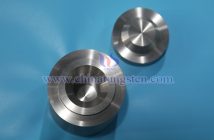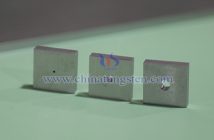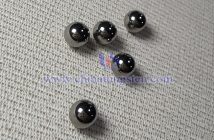
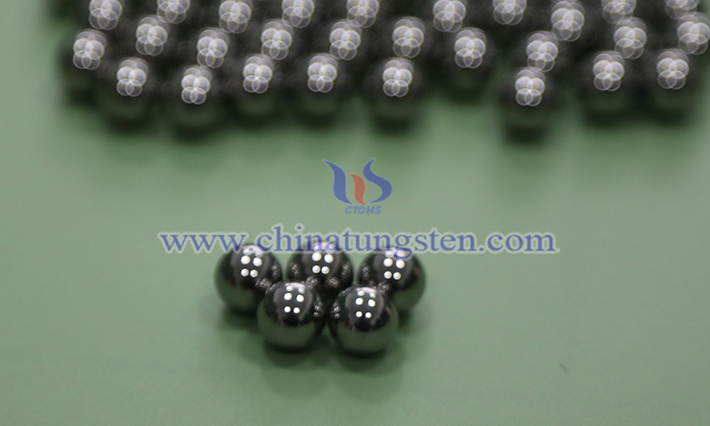
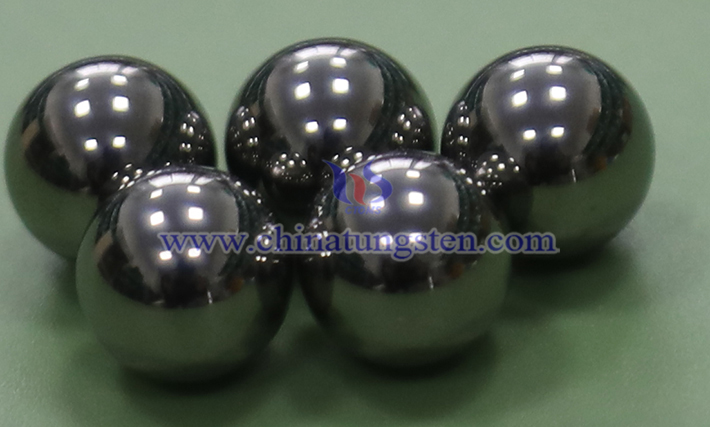
Tungsten carbide balls are spherical materials made primarily from tungsten carbide powder, a high-hardness refractory metal, combined with a binder and sintered using a powder metallurgy process. Their chemical composition can be summarized as follows:
I. Core Components: High-Hardness Refractory Metal Carbides
1. Tungsten Carbide (WC)
Content Range: Typically 75% to 97% of the total mass of the tungsten carbide ball, it is the primary component.
Function: Provides extremely high hardness and wear resistance, forming the foundation for the high strength and wear resistance of tungsten carbide balls.
2. Titanium Carbide (TiC)
Content Range: Added to some grades, it can reach 43% to 45%.
Function: Further enhances hardness and high-temperature resistance, making it suitable for high-temperature, high-speed, and wear-resistant environments. 3. Other Carbides
Tantalum Carbide (TaC) or Niobium Carbide (NbC): Added to tungsten-titanium-tantalum (Nb) cemented carbides (YW series) to enhance adhesion and diffusion wear resistance.
II. Binder: Metallic Binder Phase
1. Cobalt (Co)
Content Range: 3% to 25%. Common grades include YG6 (6% Co) and YG8 (8% Co).
Function: Serves as a binder, tightly binding carbide particles and improving the material's toughness and impact resistance. A higher Co content improves toughness, but also reduces hardness and wear resistance.
2. Nickel (Ni)
Content Range: In some grades, it replaces or coexists with Co, reaching 18% to 20%.
Function: Improves corrosion resistance and is suitable for corrosive environments.
3. Molybdenum (Mo)
Content Range: Added in small quantities.
Function: Synergistically acts with Co or Ni to optimize the material's high-temperature performance and creep resistance.
III. Other Trace Elements
1. Chromium Carbide (Cr?C?)
Content Range: 1.5%-2%.
Function: Inhibits grain growth, refines the structure, and improves hardness and wear resistance.
2. Vanadium (V), Yttrium (Y), etc.
Content Range: Extremely small amounts (e.g., 0.1%-0.5%).
Function: Further refines the grain size, enhancing the material's high-temperature hardness and oxidation resistance.
IV. Typical Grades and Composition Examples
1. YG6 Tungsten Carbide Balls
Composition: WC 94%, Co 6%.
Features: High hardness (HRA 89.5-90.5) and high wear resistance, suitable for bearing balls, punching dies, etc.
2. YT15 Tungsten Carbide Balls
Composition: WC 85%, TiC 15%, Co in appropriate amounts.
Features: High-temperature resistance and anti-sticking properties, suitable for cutting tools and wear-resistant parts.
V. Relationship between Composition and Properties
1. High WC Content: Improves hardness and wear resistance, but reduces toughness.
2. High Co Content: Enhances toughness and impact resistance, but sacrifices hardness and wear resistance.
3. Additions of TiC, Cr?C?, etc.: Refine the grain size, improving high-temperature performance and wear resistance.
4. Additions of Nickel and Molybdenum: Improve corrosion resistance and high-temperature stability.