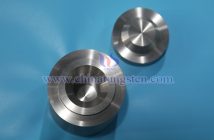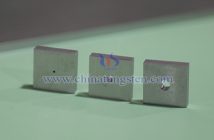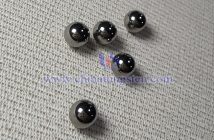
Tungsten carbide balls are manufactured using a powder metallurgy process, combining high-hardness refractory metal carbides as the hard phase and transition metals as the binder phase. Material selection should be centered around core performance requirements. The following is a detailed analysis:
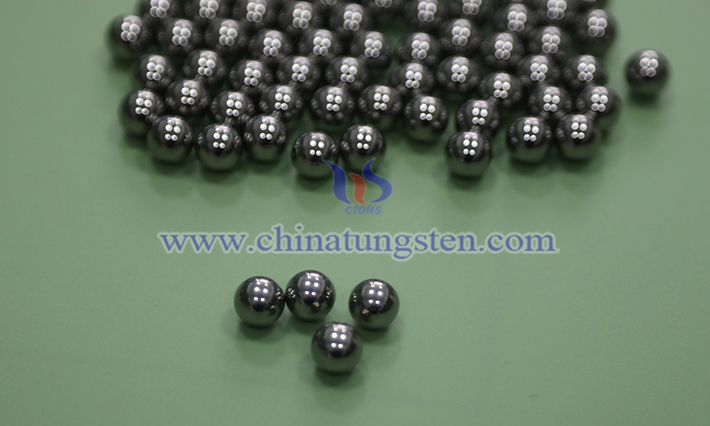
I. Hard Phase Material Selection: The Synergistic Effect of Tungsten Carbide (WC) and Titanium Carbide (TiC)
1. Tungsten Carbide (WC)
Core Advantages: WC is the primary hard phase in tungsten carbide balls, boasting a microhardness of 2000-2500 HV and wear resistance far exceeding that of steel. WC grain size directly impacts performance:
Fine grains (0.5-1μm): Improve hardness and bending strength, making them suitable for high-precision applications such as precision bearings and instrumentation. Coarse grains (3-5μm): Enhanced impact resistance, suitable for heavy-duty applications such as oilfield drilling and punching.
Typical Applications: YG6 and YG8 tungsten carbide balls (containing 6%-8% Co) are widely used in pen manufacturing, spray coating machines, sealing valves, and other fields.
2. Titanium Carbide (TiC)
Core Advantages: TiC has higher hardness and melting points than WC and excellent chemical stability (resistant to hydrochloric and sulfuric acid corrosion).
Synergistic Effect: In YT5 and YT15 grades, the combination of TiC and WC significantly improves red hardness, making them suitable for high-speed cutting tools and high-temperature wear-resistant parts.
Typical Applications: YT15 tungsten carbide balls (containing 15% TiC) are used for machining difficult-to-cut materials such as stainless steel and heat-resistant steel.
II. Binder Material Selection: Optimizing the Ratio of Cobalt (Co), Nickel (Ni), and Molybdenum (Mo)
1. Cobalt (Co)
Core Function: Co is the most commonly used binder in cemented carbide. It offers excellent toughness (fracture toughness ≥12 MPa·m1/2) and effectively inhibits crack propagation.
Influence of Co Content:
Low Cobalt (3%-6%): Improves hardness and is suitable for high-wear applications such as precision grinding balls and metering balls.
High Cobalt (10%-15%): Enhances impact resistance and is suitable for dynamic load conditions such as punching balls and bearing balls.
Typical Applications: YG6X tungsten carbide balls (6% Co) are used in precision mold stamping, and YG13 (13% Co) is used in crushing mining machinery.
2. Nickel (Ni) and Molybdenum (Mo)
Nickel (Ni): Offers superior corrosion resistance to Co and is suitable for corrosive environments such as hydrochloric acid laboratories and marine engineering.
Molybdenum (Mo): Improves high-temperature strength and is suitable for high-temperature applications such as aircraft engines and gas turbines. Composite Applications: YN6 and YN9 grades utilize a Ni-Mo composite binder, offering both wear and corrosion resistance. They are used in chemical valves, food processing machinery, and other fields.
III. Gradient Structure and Dual-Bond Technology: Breaking the Performance Limits of Traditional Materials
1. Gradient Structure Tungsten Carbide Balls
Design Principle: By controlling the WC grain size distribution, a gradient structure with fine surface grains (high hardness) and coarse core grains (high toughness) is formed.
Performance Enhancement: Improved impact and wear resistance, making them suitable for continuous mining under extreme conditions (such as coal mining and subway construction).
2. Dual-Bond Tungsten Carbide Balls
Technical Principle: Composite sintering of WC-Co hard phase balls with a Co/Ni matrix results in a high hard phase volume fraction.
Performance Advantages: Improved elastic modulus and wear resistance, making them suitable for high-stress applications such as geological drill bit teeth and die punches.
IV. Material Selection Decision Tree: Optimization Based on Application Scenario
1. High-precision applications (e.g., instrumentation, pen manufacturing)
Recommended material: Fine-grained WC with low-cobalt Co (e.g., YG6X).
2. Heavy-duty applications (e.g., oilfield drilling, punching and extrusion)
Recommended material: Coarse-grained WC with high-cobalt Co (e.g., YG20) or gradient-structured alloys.
3. Corrosive environments (e.g., hydrochloric acid laboratories, marine engineering)
Recommended material: WC with Ni or Ni-Mo composite binder (e.g., YN9).
4. High-temperature applications (e.g., aircraft engines, gas turbines)
Recommended material: WC-TiC composite with molybdenum binder (e.g., YW1) or dual-bond alloys.