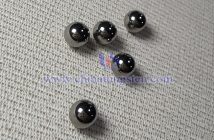
Tungsten cemented carbide balls processing equipment is primarily determined by the production process, involving multiple steps such as pulverizing, mixing, pressing, sintering, and finishing. The following are common types of processing equipment and their functions, organized based on the characteristics of tungsten cemented carbide balls production:
1. Pulverizing Equipment
Ball Mill: Used to grind raw materials such as refractory metal carbides (such as tungsten carbide (WC) and titanium carbide (TiC)) into micron-sized powders. Ball mills use high-speed rotation and grinding media (such as carbide or steel balls) to crush the raw materials to the desired particle size.
Jet Mill: Used for ultra-fine grinding to ensure uniform powder size, suitable for the production of high-precision tungsten cemented carbide balls.

2. Mixing Equipment
Wet Mill: Mixes powder with a binder (such as cobalt (Co) or nickel (Ni)) and a liquid medium for wet grinding to form a uniform slurry. Wet grinding machines effectively control the uniformity of powder mixing.
Mixer blenders: Used to further blend powder and molding agents to ensure a uniform formulation.
3. Drying and screening equipment
Spray dryers: Dry the wet-milled slurry into a granular mixture for subsequent pressing and molding.
Vibrating screens: Used to screen the dried mixture to remove uneven particles and ensure raw material quality.
4. Molding equipment
Cold isostatic presses: Use high pressure to press the mixture into spherical blanks, ensuring uniform density and suitable for the production of high-precision tungsten cemented carbide balls.
Automatic presses: Used for initial pressing and molding, suitable for large-scale production.

5. Sintering equipment
Vacuum sintering furnaces: Use high-temperature sintering under vacuum or protective atmosphere to combine powder particles into dense tungsten cemented carbide balls, enhancing hardness and wear resistance.
Hydrogen reduction furnaces: Used in specialized sintering processes to remove oxides and improve material properties.
6. Finishing Equipment
Grinding Machine: Precision-grinds sintered tungsten cemented carbide balls to ensure surface finish and dimensional accuracy.
Polishing Machine: Further improves the surface quality of the balls, suitable for high-precision applications such as bearings and valves.
CNC Machine Tool: Used for machining special-shaped or non-standard cemented carbide balls.
7. Inspection and Auxiliary Equipment
Optical Microscope/Scanning Electron Microscope: Used to inspect the microstructure and surface quality of the balls.
Hardness Tester: Measure the hardness of tungsten cemented carbide balls (such as high-hardness WC-based alloys).
Roundness Measuring Instrument: Ensures the geometric accuracy of the balls to meet the requirements of high-precision applications.